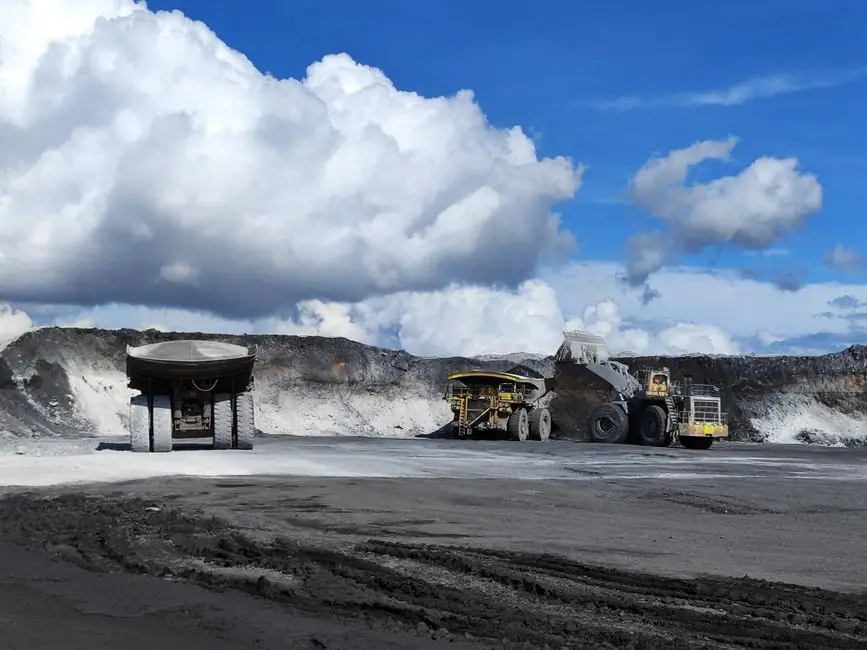
The decision is between a manually operated chain, hook, or spring-assisted latch and an air cylinder controlled from the cab. Air release reduces rear-of-truck exposure and labor, while mechanical release remains simpler and less costly.
Tailgate release decision by operating duty
A mechanical chain-and-hook latch is the lowest-cost option because it requires no actuator, air lines, electrical wiring, or dashboard switch. Its operating limitation is procedural: the driver releases the latch before raising the body and re-secures it after the body lowers [S1].
Spring assistance keeps the latch mechanical but reduces the force needed to swing a loaded gate and pull it closed. It does not remove the need to walk to the rear of the truck, so it improves manual handling rather than cab-controlled operation [S1].
Use a mechanical latch for occasional service, low utilization, or fleets unable to support air-system maintenance. For broader vehicle selection, compare the operating requirements of a dump truck with those of a mining dump truck.
Air release versus mechanical latch: explicit comparison
S1 describes chain-and-hook systems as mechanically simple and cheap to manufacture, while air-release systems permit remote cab operation.
On driver exposure, air release ranks first because the driver remains in the cab while the gate opens and closes. Mechanical systems rank lower because the driver must approach the rear of the body to release and re-latch it, while spring assistance changes only the force required, not the work sequence [S1].
This makes the air cylinder an actuator rather than the primary structural locking element.
On maintenance, the air option has more failure points: cylinder seals, air lines, a control valve, an optional electric solenoid, and the electrical circuit if electric control is selected. Mechanical hardware exposes fewer systems, but a stretched chain, worn hook, damaged spring, or seized latch can still delay a cycle [S1].
Air-cylinder geometry and installation constraints
Buyers Products kit 3010071 Rev. C lists six cylinder options. Model TGC25006V has a 6 in cylinder, 4.2 in dimension A, 91 degree angle, 17.25 in dimension B, 0.50 in dimension C, and 2.25 in dimension D. Model TGC25008V uses the 8 in cylinder and retains 4.2 in, 91 degrees, 0.50 in, and 2.25 in for the corresponding dimensions, with dimension B increasing to 20.25 in [S4].
Larger kits include TGC32506V at 6 in and TGC32508V at 8 in, with dimension D increasing to 3.00 in. The TGC25X06TRCV and TGC25X08TRCV versions use 0.38 in for dimension C, while their dimension B values are 16.00 in and 18.00 in.
Controls, plumbing, and operating safeguards
The S4 document contains headings for a tailgate air cylinder with an electric solenoid and for a tailgate air cylinder with a push-pull valve.
Do not use a service-brake chamber as an improvised tailgate actuator without engineering the full load, stroke, mounting, and control circuit. Discussion of that substitution identifies the brake chamber as a possible air-actuation device, but it does not establish suitability for a tailgate [S3].
Failure modes and maintenance controls
Air loss must not convert the tailgate into an unlocked gate.
Inspect cylinder seals, clevis pins, bell-crank welds, air-line routing, and the over-center latch. Keep the control lines clear of the hinge path and preserve the manufacturer’s specified geometry. For high-lift bodies, verify the chosen cylinder stroke and latch engagement before installation, because tailgate motion and body articulation are coupled [S7].
Specification checklist for fleet procurement
Specify the cylinder part number and stroke, bell-crank geometry, cross-shaft mounting, latch over-center condition, line and wire routing, dashboard control, and preventive maintenance provisions. Kit 3010071 Rev. C provides individual cylinder variants from 6 in to 8 in stroke and documents the associated bracket dimensions rather than leaving them to informal fabrication [S4].
For a fleet evaluating body configurations, aerial work trucks generally have different material-handling requirements, so their tailgate specification should not be copied from a heavy dump body. A mining application may justify a cab release for exposure control, but the decision remains driven by cycle frequency, latch geometry, service support, and fail-safe locking rather than vehicle class alone [S1].
Track gate-related downtime separately from hoist downtime and record failures by subsystem: latch, bell crank, cylinder, controls, air supply, or operator sequence. The next verification point is a full-stroke bench check confirming that the latch reaches and remains in over-center position with the control circuit disconnected.