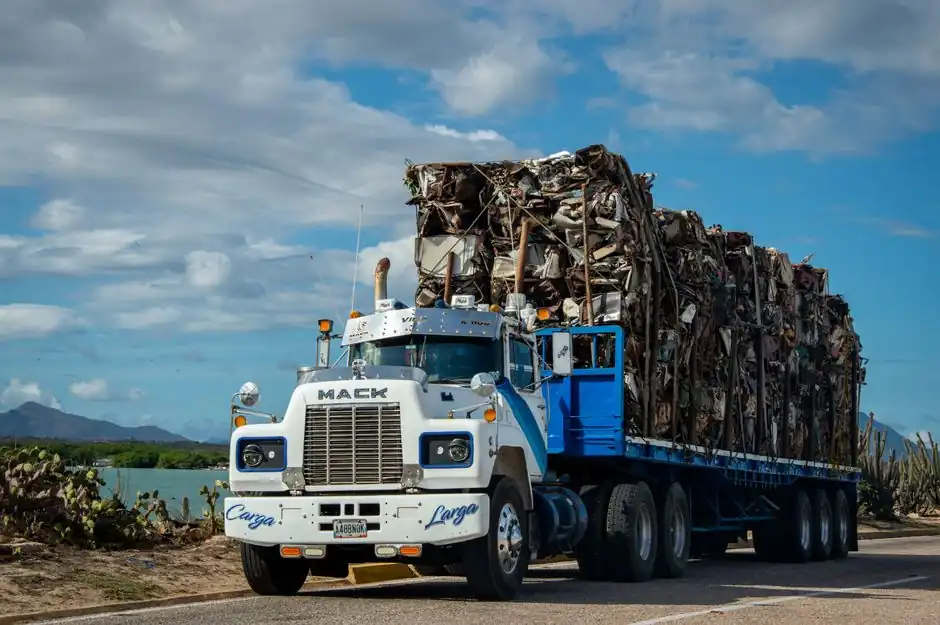
A dump-truck sideboard extension can increase usable body volume above the factory rail, making it practical for lightweight mulch, leaves, wood chips and loose insulation [S1].
The correct conversion depends on material density, extension weight, loading-equipment clearance, overall vehicle height and the legal limits of every jurisdiction on the route [S1][S2].
Where Sideboard Extensions Add Capacity
Sideboards increase body volume by adding usable height above the factory side rail [S1]. This matters for low-density materials such as mulch, leaves, wood chips and loose insulation, where a dump body reaches its volume limit before it reaches its legal weight limit [S1].
This advantage depends on the difference between body volume and legal payload. A 17.5 ft end-dump body with 60 in sides was reported with a 24 ton payload capacity, but stone and sand could already pile above the factory boards [S3]. That example shows why one body can have unused volume for light materials while being weight-limited for dense materials.
For a broader view of the underlying equipment, compare the bed and axle arrangement described in the dump truck classification guide. Extension planning should start with the body dimensions, actual scale weight and payload rating, not an assumed cubic-yard figure.
Material Selection: Steel, Wood and Mesh
Sideboards increase a dump body's volume by adding height above the factory side rail, and their added weight can affect legal-weight compliance. That rigidity does not create additional legal payload.
A dump-trailer owner stated a preference for wood side extensions when the trailer will be loaded with a CUT or skid steer.
Stainless steel extension kits for dump inserts use brackets with 2 x 12 boards, adding height and usable space [S4]. Mesh or expanded-metal panels reduce weight and airflow resistance but require the retained material to remain in place, making them less suitable for loose material unless loading and tarping are controlled.
Loading Clearance and Extension Geometry
Alternative mounting arrangements include factory-style slots for 2 x lumber and stake pockets on dump trailers [S5]. Load Trail also sells a bracket kit for wooden side extensions designed to slide into dump side pockets, with application to 10, 12 and 14 ft bodies [S6].
Loading direction matters as well. The specification should therefore include loader bucket width, dump clearance and the operator’s loading path, not only the sideboard material.
Weight, Height and Route Compliance
Every extension adds fixed vehicle weight and changes overall height, so the usable payload is the legal gross-vehicle or axle rating minus the truck’s actual scaled weight, including the extension [S1]. A sideboard that is effective for mulch can become an overweight liability when the same body carries sand, wet soil, demolition debris or asphalt millings [S1].
State rules differ on dump-body extensions, overall height, load visibility and material containment. A configuration legal in one state may violate requirements in a neighboring state, particularly on interstate routes [S1]. Operators should record the empty weight, extension weight, gross weight and loaded height for each configuration before accepting a load.
Tarp compatibility is another constraint. Containment rules may require loads to be covered, while standard tarp systems are commonly sized for factory body height, making a taller sideboard configuration harder to cover [S1]. A higher perimeter must not be treated as a substitute for an effective cover.
Failure Modes and Serviceability
The most common failure mode is loading beyond the legal weight limit because the body still appears partly empty [S1]. A second failure mode is contact between the loader and the upper board during loading or tipping, particularly where the sideboards project above the loader’s usable discharge height [S2].
The extension must transfer side and end loads into the dump body rather than relying on a thin top board to bridge unsupported spans.
Material loss is another operating risk. Higher boards can retain material during tipping if the material is cohesive, wet or loaded against the extension. Operators also need to inspect board fasteners, welds, brackets and the factory side rail, with particular attention to repeated impact from buckets and rock.
Specification Checklist for Lightweight Bulk Hauls
Specify the intended material first, then calculate the required volume and extension height from its density rather than adding boards by trial and error. The calculation should state body length, factory width, factory side height, added extension height, extension material, approximate extension weight and the target payload [S1][S2].
Then validate the result against four criteria: gross-weight margin, axle loading, maximum route height and loader clearance. A 24 in extension may increase capacity materially on a low-density mulch load, but it can be unusable with a short-reach skid steer and unsuitable for a route with a lower height limit [S1][S2].
Finally, document the mounting arrangement and containment system. Options supported by the research include sliding boards in side pockets, bolt-on brackets and removable sheet-metal sections [S2][S5][S6]. The completed configuration should be weighed and measured, not assumed from catalog dimensions.
For fleet-level economics, the 2026 tandem-axle 16-yard dump truck price guide provides a separate reference for comparing an extension project with acquiring a larger body.
The next trackable signal is the measured empty weight and loaded height of the proposed truck with its extension installed, checked against the licensed weight and every jurisdiction on the intended route.
