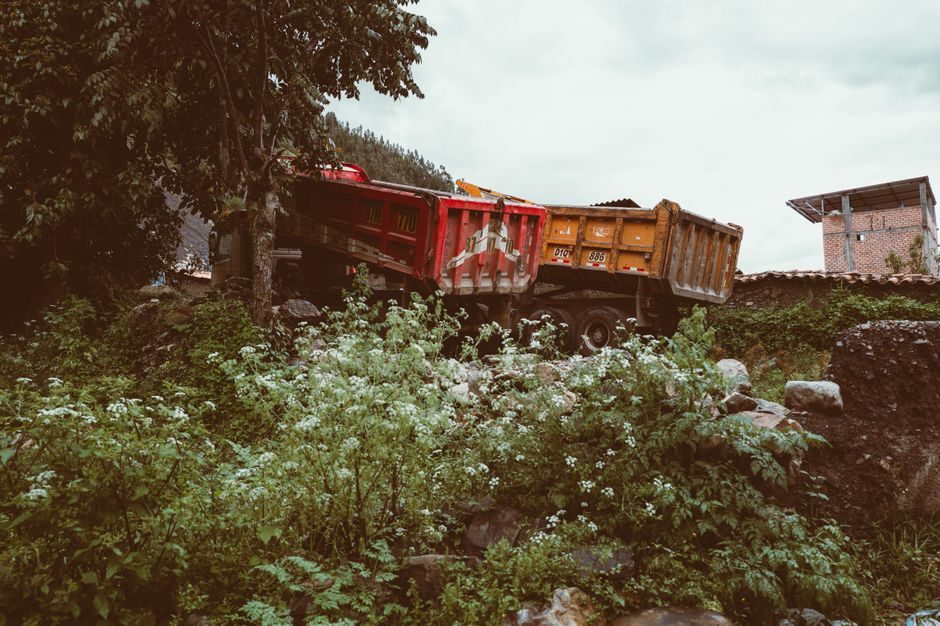
A 6x4 rigid dump truck running 1,500-2,500 hours per year accumulates $1.20-$1.80 per tonne-km in total operating cost once purchase, fuel, tyres, maintenance, driver wages, and residual are summed across a 7-10 year holding period [S2][S7].
The purchase invoice is the smallest line on that stack. TCO discipline forces the spec writer to treat capital, energy, labour, and consumables as a single ledger so that a cheaper truck with worse fuel economy or a heavier body rarely wins on life-cycle cost [S3][S4]. For a fleet operator sizing a dump truck fleet, that single constraint drives 80% of the specification decisions on tyres, body liner, and powertrain.
Cost stack: where the money actually goes over 10 years
Acquisition (including financing) accounts for 35-45% of TCO on a conventional 25-40 tonne GVW rigid dump truck held for 8 years at 1,800 hours/year [S2][S7].
Tyres (cut-resistant compounds, 12.00R20 or 315/80R22.5 fitments, 6x4 = 10 tyres plus spare rotation) account for 5-8% of TCO; body liners, brake wear, and PM servicing add another 3-5% [S7]. Insurance, licensing, and overhead typically take 4-6%.
Residual value is the single biggest correction factor and is treated as a negative cost in TCO. A well-maintained 6x4 with documented service history typically retains 30-40% of acquisition value at year 8; a hard-worked mining dump truck in aggregate duty holds 25-35% with engine rebuild records [S2].
Driver ranking: which spec line moves the total first
Fuel consumption is the highest-leverage TCO driver on any diesel rigid. A 5% fuel-economy gap (achieved by automatic tyre inflation, predictive gear mapping, or reduced body weight) outweighs a 3-5% acquisition discount on the same truck [S2]. Tyre selection is the second lever: closed-shoulder drive tyres on a 6x4 deliver 25-40% longer tread life than open-shoulder lug designs on mixed surfaces, at a 5-8% price premium.
Body liner choice is the third lever and the most underrated. A 450 HBW quenched-and-tempered steel liner (8-12 mm thickness) on a quarry body typically lasts 2.5-3.5x longer than mild-steel AR400 in high-impact granite duty, doubling or tripling the liner-replacement interval inside the 10-year envelope [S7].
Total cost of ownership analysis exposes hidden costs that budget planners routinely miss: financing carry, downtime opportunity loss, and end-of-life dismantling/cleanup fees together add 6-10% on top of the obvious opex line [S4][S7]. For dump-truck fleets, downtime opportunity loss alone can reach $800-$1,500 per unscheduled service day for a 30-tonne rigid operating on a contractor rate.
Powertrain comparison: diesel, hybrid, BEV, and CNG
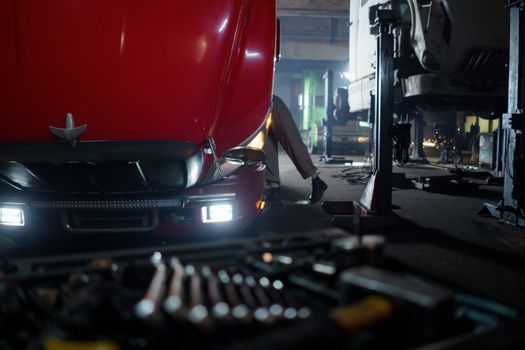
Battery-electric vehicles produce zero tailpipe emissions, which from an environmental point of view makes their use the most acceptable option during operation [S2]. The capital premium is 2.0-2.5x a comparable diesel rigid and battery replacement at year 6-8 is a 15-20% residual wipe, so the TCO crossover only happens when diesel is sustained above roughly $1.40/L and routes stay within 150-200 km/day to keep the pack sized below ~400 kWh [S2][S10].
Diesel-electric hybrid (typically a 50-100 kWh buffer pack with a smaller engine running at constant sweet-spot load) recovers 15-25% of fuel in stop-and-go urban construction duty, but the premium rarely pays back below 2,500 operating hours/year [S2].
Conventional diesel remains the lowest TCO option for high-hour, high-tonnage quarry and off-road mining duty in 2026, because the BEV and hybrid premiums have not yet closed for routes above 200 km/day or payloads above 25 tonnes [S2]. Specifiers should size powertrain to route, not to fleet-average mileage.
Cost-driver breakdown: purchase vs operating split by duty cycle
On a 25-tonne 6x4 rigid at 1,800 hours/year for 8 years, capital is roughly 40% of TCO and opex is 60% [S2][S7]. On a 40-tonne off-road mining rigid running 5,500 hours/year, capital drops to 20-25% of TCO and opex climbs to 75-80% because fuel, tyres, and component life are scaled by hours, not years.
On a light-duty 4x2 dump truck under 12 tonnes GVW doing municipal work at 1,200 hours/year, capital rises to 50-55% of TCO because the truck is rarely worked hard enough to amortise fuel savings — a different rule of thumb applies entirely, and a 4x2 spec should prioritise body durability and corrosion protection over fuel mapping [S7]. Comparing an aerial work truck class vehicle to a rigid dump truck against the same hours is misleading: truck-mounted platforms are capital-dominated (60-70%) because they idle on site and rarely accumulate mileage.
Total cost of ownership: lifetime formula and worked framing

The standard TCO formula, taken from established cost-engineering practice, is: TCO = Acquisition + Operating + Maintenance + Downtime + Disposal − Residual. Acquisition covers purchase, financing, registration, and initial body fit-out; operating covers fuel/energy, driver wages, insurance, and licences; maintenance covers scheduled service, tyres, brakes, and wear-part replacement; downtime converts unscheduled hours to lost revenue at the contracted rate; disposal covers end-of-life dismantling; and residual is the expected trade-in or auction value at horizon [S3][S4][S7].
Replacing a standard body with a HARDOX 450 liner and 315/80R22.5 closed-shoulder tyres typically drops that figure by 4-7% on high-abrasion duty, more than the savings from chasing a 3% purchase discount on the chassis.
Spec selection logic: who TCO is for, and where it fails
TCO discipline is built for fleet owners and contract bidders who hold the asset across the holding period and bear operating risk; it is poorly suited to short-term rental fleets, seasonal agricultural operators, or any buyer who plans to flip the asset inside 24 months, because residual dominates and operating savings never accrue [S4][S7]. For those cases, acquisition cost and resale liquidity matter more.
TCO also breaks down when comparing radically different duty cycles (urban delivery rigid vs off-road mining rigid) on the same form, because hours-per-year, payload factor, and surface severity skew every line item. The acceptable answer is a duty-weighted TCO with two or three scenario lines, not a single number [S2]. For detailed body geometry and axle-class guidance, the dump truck type map sets the boundary conditions that any TCO model has to honour. For route-side field verification, the dump truck installation guide covers acceptance specs that lock in residual value at handover.
Limits, failure modes, and what to watch in 2026
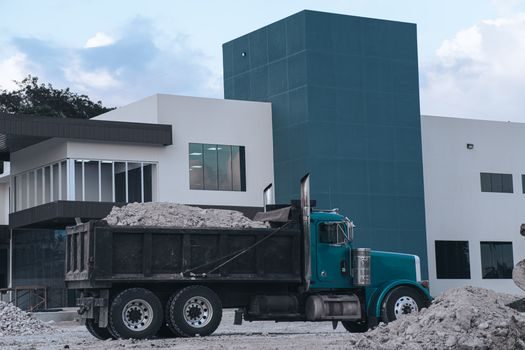
TCO models are only as good as the operating-hours and load-factor inputs. Fleet managers who plug a vendor-quoted 1,500 hours/year into a 3,200-hours/year real-world operation will understate fuel and tyres by more than 50% [S2]. The other common failure is ignoring site severity: a truck on blasted granite faces 2-3x the liner and tyre wear of the same truck on crushed-stone haul, and a single TCO line hides that.
Trackable signals for 2026: diesel retail index relative to a $1.40/L crossover, grid electricity tariff trajectory below $0.18/kWh, BEV rigid availability at 25-40 tonne GVW with 350 kWh+ packs, and the publication of a credible 10-year residual curve for battery-electric off-road trucks. Until those four inputs settle, TCO for dump-truck acquisitions should be run as a sensitivity range, not a single point estimate [S2][S10].