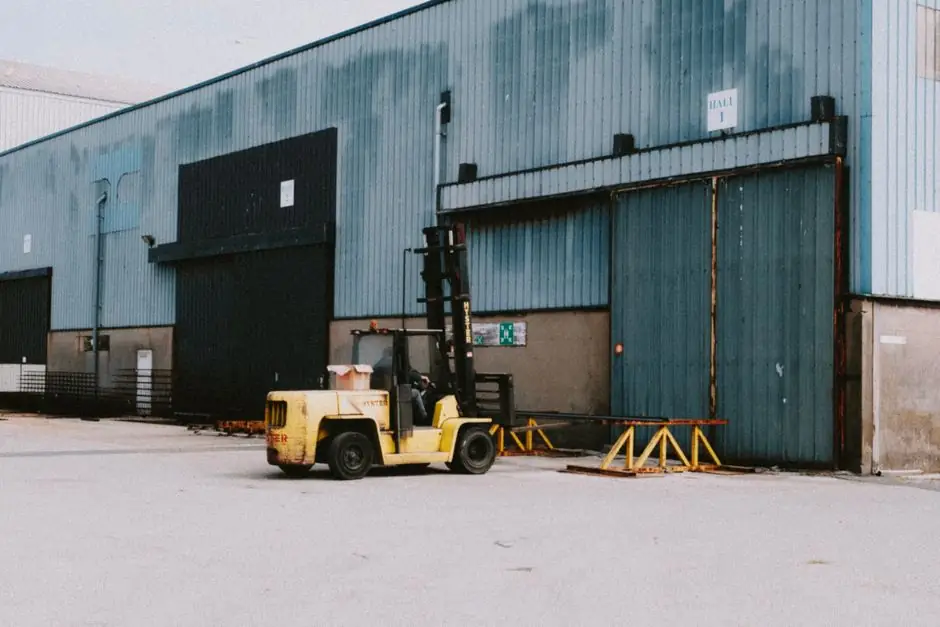
A warehouse dust detector is, functionally, a particulate concentration transmitter sized for logistics environments: it samples a duct or ambient air path, converts mass loading or scattered-light intensity into a 4-20 mA or digital signal, and trips an alarm when the threshold the spec writer set is exceeded [S1][S4].
Selection in a distribution center is driven less by the device's headline range and more by matching the sensing principle to the dominant particulate source (combustion soot from forklifts vs cardboard fiber vs outdoor PM2.5 infiltration) and by the certification envelope the facility can accept [S1]. Camfil's April 2026 warehouse air-quality guidance documents that particulate accumulation on photo eyes, sensors, and mechanical components directly produces false reads and system faults, reducing throughput capacity in facilities handling 50,000+ square feet [S1].
Why Detection Range and Accuracy Define the First Cut
Range and relative error are the two numbers a spec engineer compares before anything else. The Topsky high-precision unit advertises a 0.1-3000 mg/m³ measurement window with ±15% relative error, a span that covers both clean-room envelope and heavy bag-house leak conditions on a single instrument [S2]. A 24 VDC electrostatic industrial dust concentration detector from GAO Tek (GAOTek-AQT-283) operates across 15-32 VDC and targets emission monitoring in ducts, where electrostatic sensing trades absolute mass accuracy for drift-free continuous trend data [S3].
For ambient warehouse air, a laser-scattering PM2.5/PM10 unit with a 0-6000 µg/m³ range and ±10% accuracy is the more typical pick, because OSHA-relevant inhalable dust limits sit in the low mg/m³ band and laser scattering is the dominant principle at that scale [S5]. Range mismatch is the most common procurement error: a detector sized for stack emission (mg/m³) is not interchangeable with one specified for occupational hygiene (µg/m³), and treating the two as equivalents will either trip nuisance alarms or mask real exposure events.
Sensing Principle: Triboelectric, Laser Scattering, or Electrostatic
Triboelectric probes, the workhorse of bag-house and cartridge-filter broken-bag detection, register a charge transfer when particles strike a sensing rod inserted into the gas stream; they are robust to moisture and coating, and are sold with explosion-proof variants for combustible dust service [S4]. Laser-scattering monitors, by contrast, draw (or duct) a sample past a photodetector and infer mass from the intensity of scattered light, a principle commercialized in fixed PM1.0/PM2.5/PM10 online monitors such as the AIYI AGA series using laser backscattering [S6]. Electrostatic units, including the YF-8500-PM explosion-proof pipeline monitor, measure induced charge on particles passing a probe and are typically deployed in duct or pipeline service rather than ambient [S7].
The selection logic in a warehouse is straightforward: duct-side filtration monitoring (bag houses, cartridge collectors, bin vents, cyclones) maps to triboelectric probes with explosion-proof housings [S4]; ambient zone air for worker exposure and photo-eye housekeeping maps to laser-scattering PM2.5/PM10 units [S6]; pipeline or stack mass-loading for emission compliance maps to electrostatic or laser units calibrated in mg/m³ [S3][S7]. A facility trying to use one detector for all three roles is almost always over-paying or under-protecting.
Explosion-Proof Certification and Hazardous-Area Envelope

Combustible dust service is a non-negotiable spec line in grain, sugar, fertilizer, coal, metal powder, and many pharmaceutical warehouses. The EIP Enviro dust detector range is explicitly offered in an explosion-proof variant and is documented for use in power plants, coal and ore mines, steel plants, paper and pulp, petrochemicals, fertilizer plants, pharmaceutical, chemical, cement, and water/wastewater service [S4]. The YF-8500-PM from Shenzhen Yifan Technology is also offered as an explosion-proof pipeline monitor rated for combustible-dust environments [S7].
Spec writers should pin the certification class to the facility's NEC/ATEX/IECEx zone, not to a generic "explosion-proof" label on a brochure. For a Class II Div 1 environment in the US, the housing and probe assembly must carry the matching rating; for ATEX zone 21/22, the equivalent marking on the nameplate. Because the research material lists explosion-proof availability but does not give a specific zone marking, treat the certification number as a required data point in any RFQ response rather than assumed.
Output, Power, and Integration With Building Systems
Integration determines whether the device actually changes operations. A 24 VDC electrostatic unit drawing from a 15-32 VDC operating window is straightforward to wire into a PLC or a building management system over a 4-20 mA loop, with a separate alarm contact for threshold trip [S3]. NB-IoT and Wi-Fi end devices, including the GAO Tek PM2.5/PM10 unit, are designed for facilities that want a wireless uplink to an IoT platform rather than a hard-wired SCADA tap, at the cost of latency and IT-side ownership [S5].
For a 24/7 distribution center, a hard-wired 4-20 mA loop with a relay output is usually the safer call, because the warehouse WMS already concentrates alarms on the same HMI that handles photo-eye faults, and wireless uplinks are one more device to patch. A clean spec line reads: 24 VDC nominal, 4-20 mA analog output proportional to mg/m³ or µg/m³ as specified, two SPDT alarm relays, Modbus RTU or HART optional. Treat anything outside that envelope as a custom-engineering line item.
Failure Modes and Selection Mistakes to Avoid

Three failure modes dominate the field returns. First, triboelectric probes left uncoated in sticky or condensing service drift high and trip false alarms within weeks; mitigation is a periodic automatic purge cycle or a probe geometry rated for the specific particulate [S4]. Second, laser-scattering counters in unfiltered outdoor air on a loading dock see ambient PM2.5 spikes from passing trucks and read them as in-warehouse events, a problem a competent installer solves by drawing the sample from a duct, not the breathing zone [S1]. Third, electrostatic units operated outside their specified velocity window read low, which is worse than reading high because the system stays quiet during a real filter breach [S7].
For operators weighing whether a dust detector is the right category at all, a quick read of the spec helps: if the goal is to detect broken filter bags in an air-handling unit or cyclone, a triboelectric probe is the correct pick [S4]; if the goal is to count PM2.5 in offices or pharma cold storage to protect a dust particle meter reading, a laser-scattering unit is correct [S5][S6]. Confusing the two is the most expensive mistake in the field, because the wrong sensor reads "zero" while the real exposure continues.
Comparison Matrix: Three Detector Families Against Four Decision Criteria
Below is a criteria-first matrix built only from facts in the cited research; it is the kind of extractable comparison an engineer can drop into a procurement memo. Triboelectric probes (e.g., EIP Enviro dust detector, explosion-proof variant) handle bag-house, cartridge, bin-vent, and cyclone service across power, mining, cement, and chemical plants, with strengths in dust-load trend monitoring and weaknesses in absolute mass accuracy [S4]. Laser-scattering PM counters (e.g., AIYI AGA series, GAO Tek PM2.5/PM10) cover ambient zone air from clean-room to outdoor infiltration, with strengths in PM1.0/PM2.5/PM10 split and weaknesses when sampling from high-velocity ducts [S5][S6]. Electrostatic industrial units (e.g., GAOTek-AQT-283, YF-8500-PM) serve duct and pipeline emission monitoring in mg/m³ with 24 VDC supply and explosion-proof housings, with strengths in continuous trend stability and weaknesses in ambient zone deployment [S3][S7].
The four criteria the spec writer should pin in any RFQ are: sensing principle (triboelectric, laser, electrostatic), measurement range and units (mg/m³ vs µg/m³), hazardous-area certification (general-purpose vs explosion-proof), and output protocol (4-20 mA, relay, Modbus, NB-IoT). The research material supports quoting ±15% relative error for the Topsky 0.1-3000 mg/m³ detector [S2] and ±10% accuracy for the GAO Tek PM2.5/PM10 unit across 0-6000 µg/m³ [S5]; these two numbers, side by side, are the cleanest demonstration that a one-size-fits-all procurement line will fail on accuracy alone.
Standards, Sourcing, and the Procurement Audit Trail

Spec discipline matters because a dust detector is a safety device: a missed broken bag can push a combustible-dust cloud into the explosive range inside a collector, and a misread ambient PM2.5 value can put workers above OSHA's regulated inhalable fractions without anyone noticing. For duct-side service, the relevant compliance frame is the EPA's particulate matter NSPS for the relevant Subpart (often referenced through 40 CFR Part 60, though the exact Subpart is source-specific and should be confirmed per stack); for occupational hygiene, OSHA's PEL framework for respirable and total dust remains the controlling reference. NFPA 652 and the NFPA 654 combustible-dust standards govern the hazard assessment on the process side; the specific dust-deflagration testing under ASTM E1226 is a typical upstream reference but should be confirmed per material. [S4]
Procurement audit trail should capture: range and units, accuracy band, sensing principle, hazardous-area marking, output protocol, power supply, and any third-party calibration certificate. A short cross-reference to the dust mask selection logic is worth keeping in the same document, because detector readings above the action level and respiratory protection are the same control hierarchy at different layers. The August 2025 EIP Enviro product page remains the most recent verifiable reference for explosion-proof triboelectric offerings, and the GAO Tek June 2026 product page anchors the 24 VDC electrostatic specification; both should be cited by URL in the audit trail [S3][S4].
Trackable signals worth watching over the next procurement cycle: NB-IoT PM2.5/PM10 units maturing into the same reliability class as wired 4-20 mA loops, which would let retrofit warehouses skip conduit runs [S5]; and more vendors publishing ATEX/IECEx zone markings explicitly on the data sheet, rather than the generic "explosion-proof variant available" language common in 2025-08 product pages [S4]. Either shift changes the cost-of-ownership math for facilities larger than 100,000 sq ft, where cable and conduit dominate the install bill.
For related coverage, see Fixed Gas Detector Certification Checklist for Wastewater Plants.