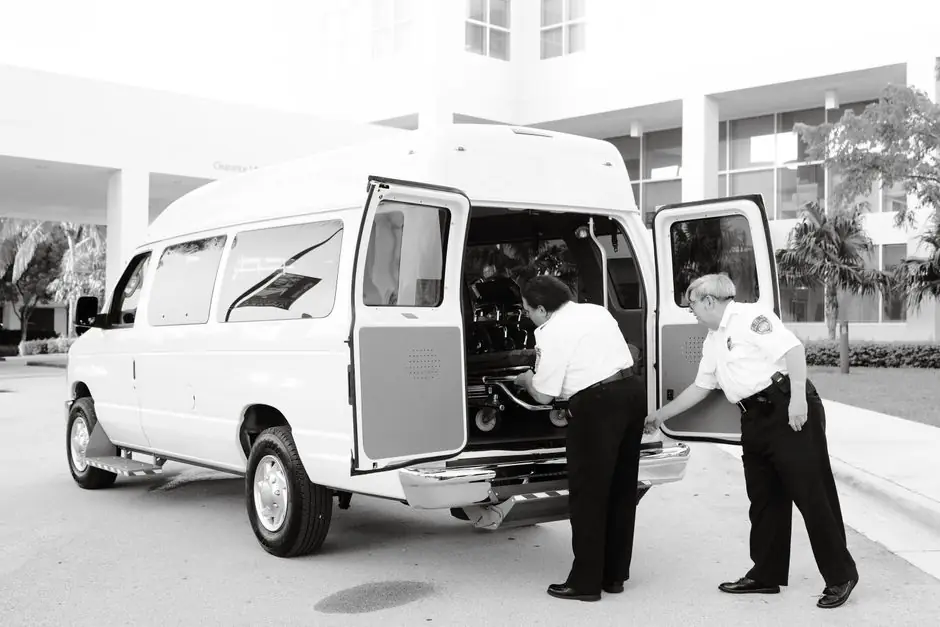
Stretchers divide into four structural families (basic, flexible, wheeled, specialty) and at least 12 named variants, with each type tied to a specific patient condition, terrain, or transport leg [S7][S2].
Specifying teams should treat stretcher choice as a function of (a) patient acuity, (b) lift/load mechanism, and (c) environment, because the same body of work, intra-hospital patient move versus vertical alpine rescue, demands entirely different equipment [S3][S8].
Four top-level structural classes
The Wikipedia classification of stretchers groups every variant under basic, flexible, wheeled, and other/specialty, a taxonomy most EMS textbooks and supplier catalogs follow verbatim [S7]. Basic stretchers are simple rigid or folding frames carried by two or more responders, while flexible stretchers use canvas or polymer sheet material that conforms around the patient for tight-quarter extraction [S7][S6]. Wheeled stretchers, commonly called gurneys or trolleys, integrate a height-adjustable chassis with a patient platform and are the dominant in-hospital transport device [S2][S7].
The "other types" bucket covers specialty rescue and clinical variants: basket (Stokes basket), scoop, spine board, stair chair, and a long tail of clinical-application trolleys (mortuary, bariatric, MRI, ophthalmic, neonatal) [S7][S2]. For a broader framing of how lifting and patient-handling equipment fits inside a hospital's capital inventory, see the construction machinery and equipment reference, which uses similar capacity/load-class logic.
Specialty rescue variants: basket, scoop, spine board, stair chair
Basket stretchers use rigid high-density polyethylene or aluminum shell with integral runners, and are specified for wilderness, vertical, and steep-terrain rescue where the patient may be dragged or lifted on rope systems [S1][S3]. Scoop stretchers split longitudinally into two halves, allowing responders to "scoop" a suspected spinal-injury patient without performing a log roll, a maneuver that is contraindicated in unstable spinal trauma [S1][S4].
Spine boards are flat rigid polyethylene panels, typically 16 mm to 18 mm thick, used to maintain spinal alignment during transfer from the scene to a gurney; they are also used by lifeguards and ski patrollers [S1][S4]. Stair chairs (sometimes "staircase stretchers") recline at roughly 90 degrees and ride on rear track or wheel sets that grip stair edges, allowing a single responder to evacuate a non-ambulatory patient from a multi-floor building when no elevator is available [S1][S3][S4]. For facilities standardizing patient-handling equipment across acute care, the stretcher encyclopedia entry cross-references these rescue classes against wheeled hospital variants.
Wheeled stretchers: emergency, trauma, mortuary, infant, ophthalmic
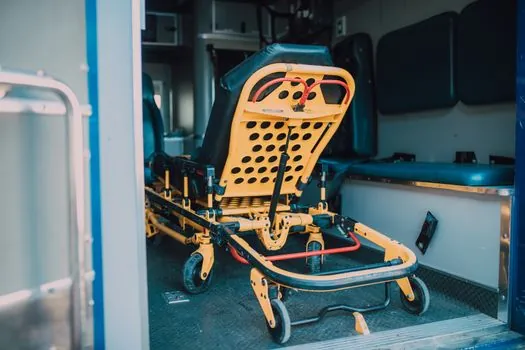
Wheeled stretcher trolleys subdivide by application, with five main variants called out in supplier guidance: emergency, trauma, mortuary, infant, and ophthalmic [S2]. Emergency trolleys are engineered for fast ambulance loading, with self-loading removable tops that separate from the chassis at the touch of a button; trauma trolleys add full Trendelenburg and reverse-Trendelenburg positioning for ER-to-ICU hand-off; mortuary trolleys run on concealed roller systems for body transport inside the morgue; infant trolleys are sized to carry closed incubators; ophthalmic trolleys are short, narrow-chassis units built for outpatient eye-procedure rooms [S2].
Additional wheeled sub-types include pediatric, bariatric (rated to 250 kg to 450 kg SWL depending on model), and radio-transparent or non-magnetic MRI variants, the last using aluminum and brass hardware instead of ferritic steel so the patient can be scanned directly on the platform [S2]. Standard adjustment features across this class are variable height (hydraulic or electric), adjustable backrest, Trendelenburg/reverse-Trendelenburg (often foot-pedal controlled), and self-loading deck mechanisms for ambulance dock compatibility [S2][S8].
Portable carry and flexible models
Portable stretchers, also called folding or flat stretchers, are the original military-derived design: a folding aluminum or composite frame with integral handles and a canvas or vinyl patient surface, sized to stow in a vehicle compartment or wall-mounted cabinet [S3][S5]. They are the lowest-cost option and are typically rated between 159 kg and 200 kg SWL depending on frame material [S3].
Flexible stretchers drop the rigid frame entirely and use a single sheet of heavy-duty fabric or polymer, sometimes with integral carrying handles sewn along the perimeter; the design lets two responders slide the material under a patient in a confined space where a rigid board will not fit, and it is the standard for industrial and confined-space rescue kits [S6]. The trade-off is capacity: a flexible stretcher will not support the same load as a wheeled trolley, and heavier patients typically require a switch to a scoop or basket device mid-evacuation [S3].
Selection criteria and a side-by-side comparison
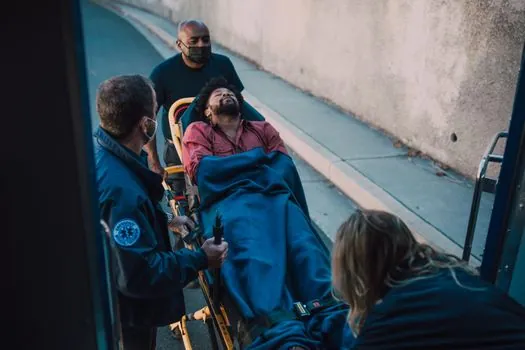
Stretcher type is selected against four decision axes: (1) patient acuity and suspected injury pattern, (2) terrain and access route, (3) load rating and patient mass, and (4) whether imaging or specialist clinical workflow is required on the same platform [S1][S2][S3]. A spinal-injury suspicion rules out flexible and standard portable carry models and points to scoop or spine board; multi-floor stair evacuation rules out wheeled gurneys and points to stair chair; bariatric patients require reinforced frames typically rated 250 kg and up [S2][S3].
A condensed comparison of the main variants against these criteria:
- Basic/portable carry: low cost, light weight, 159-200 kg typical SWL, suitable for short on-scene carries; cannot be used for suspected spinal injury without additional immobilization [S3].<br>- Flexible stretcher: very low stow volume, ideal for confined space; lowest load rating in the family, not for suspected spinal or bariatric patients [S6].<br>- Scoop stretcher: split-blade design eliminates log roll for suspected spinal injury; aluminum and thermally-treated polymer variants available, both with smooth, easy-clean surfaces [S1][S4].<br>- Spine board: rigid flat panel for full spinal alignment during transfer to gurney; standard 16-18 mm HDPE construction, widely used by lifeguards and ski patrol [S1][S4].<br>- Basket stretcher: HDPE or aluminum shell for vertical, wilderness, and rough-terrain rescue; compatible with rope haul systems and Stokes-litter bridles [S1][S3].<br>- Stair chair: 90-degree recline with rear track or wheel set for stair evacuation; single-responder operation, limited to non-spinal patients [S1][S3].<br>- Wheeled trolley (emergency/trauma): height-adjustable, Trendelenburg capable, self-loading deck for ambulance dock; MRI variants use non-magnetic hardware for in-bore scanning [S2].
For matching these categories against clinical capacity, duty cycle, and procurement criteria, a working stretcher buying guide walks the same shortlist against SWL, hydraulics, and bariatric use.
Safety constraints and failure modes
Weight limit is the single most-cited failure point: a flexible or foldable stretcher cannot support the same load as a wheeled trolley, and a heavier patient often forces a mid-rescue equipment swap [S3]. Leg-engagement failure on wheeled hospital stretchers is the next-highest cause of tip-and-drop incidents, which is why pre-shift checks of leg locks, brakes, and restraint integrity are standard JCI/ACHS audit items even though no stretcher-specific ISO number governs the device as a whole [S3].
Spinal immobilization is the most frequent misuse case: responders will sometimes default to a flexible stretcher for a suspected spinal injury simply because the rigid device will not fit the scene, but this substitution can worsen the injury and should be avoided in favor of a scoop or full vacuum-mattress package [S3][S1]. Trendelenburg positioning is also commonly misunderstood, since reverse-Trendelenburg and standard Trendelenburg have different physiological targets, and the pedal control must be confirmed before any patient with a head injury is tilted on a trauma trolley [S2].
Standards, sourcing, and procurement signals
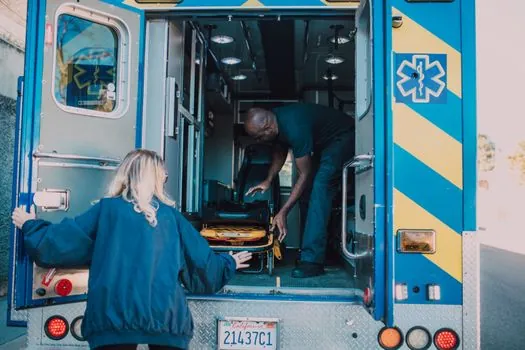
Stretcher trolley specifications typically reference ISO 13485 quality-system compliance at the manufacturer level, with many US-market units also carrying FDA 510(k) clearance as Class I non-measurement surgical/patient-handling devices, while ambulance-loading interfaces often follow EN 1865 (patient handling equipment used in road ambulances) for European procurement [S2][S4]. Operator-side requirements such as restraint count, SWL marking, and decontamination compatibility are typically spelled out in the device IFU rather than in a single overarching standard [S2][S3].
Trackable signals over the next procurement cycle include (a) bariatric-rated trolley SKUs dropping into the 250-450 kg SWL band as standard offerings, (b) MRI-compatible non-magnetic hardware becoming a baseline feature rather than an upcharge, and (c) electric self-loading decks replacing hydraulic ones in mid-tier emergency trolleys, which is consistent with the lighting equipment and electric lamps shift toward lower-voltage onboard power in mobile medical platforms.