A dust detector selection in 2026 is governed by four sequential spec lines: measurement range, sensing principle, output/integration architecture, and hazardous-area compliance, with laser backscatter (0–1000 mg/m³, ≤10 s response, IP66) and electrostatic/PM2.5/PM10 units (0–10000 mg/m³, RS485/4-20 mA, -20 to 60 °C) covering the majority of laboratory and light-industrial use cases [S3][S4].
The decision tree starts with concentration band, not brand: sub-1000 mg/m³ indoor air and fume-hood work is laser backscatter territory, while duct, cyclone, and baghouse service where excursions cross an order of magnitude is electrostatic induction, and broken-bag detection on a fabric filter is tribo-electric [S1][S4]. Once the band and principle are fixed, ATEX/IEC dual-certification for combustible-dust hazardous areas and ±10–15% indication error become the gating filters [S3][S4].
Lock the Measurement Range Before Choosing the Sensor
Range selection is the first spec line to lock because re-ranging a detector in the field means recalibration, not a menu change, and a wrong range floor either clips excursions or drowns low-concentration work in noise [S4]. AGA-series laser backscatter units offer selectable 0–100/500/1000/4000 mg/m³ ranges with a minimum detectable particle size ≥5 µm in both workshop and pipeline modes, wavelength 650±20 nm, optical power density <5 mW/m², and T90 response ≤10 s [S3]. The Topsky high-precision detector widens the envelope to 0.1–3000 mg/m³ with ±15% relative error for higher-range spot checks [S4]. For lower-concentration indoor-air and cleanroom-adjacent work, a 0–6000 µg/m³ (±10%) PM2.5/PM10 module with LCD readout is a common wall- or bench-mount form factor [S4].
The three envelope bands map cleanly to the use case rather than to a brand: 0–1000 mg/m³ laser backscatter with sub-10 s response fits fume-hood and biosafety-cabinet work, 0–3000 mg/m³ (±15%) suits batch-process verification, and 0–10000 mg/m³ electrostatic covers duct, cyclone, and baghouse service [S4]. A dust detector sized above the expected peak by more than 10× loses low-end resolution; sized below the peak will saturate and the reading becomes a clipped process variable, not a measurement.
Sensor Principle Trade-Offs: Tribo-Electric, Laser, Electrostatic
Tribo-electric probes register particle impact on a sensing rod, and the design suits baghouse broken-bag detection, cartridge filter leak finding, bin-vent monitoring, and cyclone-outlet verification; the family is offered in explosion-proof variants for combustible-dust stacks [S4]. The probe output is proportional to mass loading but is sensitive to humidity and probe fouling, so the technology is not the first choice for cleanroom or low-concentration bench work [S4].
Laser backscatter drives a 650±20 nm source into the sample volume, recovers scattered light with a high-sensitivity photodiode, and converts via micro-computer firmware to a continuous mg/m³ reading; the 0.7–5 m free-space path lets a single head cover a bench or small room, while the 0.7–20 m in-duct path supports stack and large-duct installations [S3][S4]. Electrostatic induction charges incoming particles and measures the induced current on a sensing element, then runs AD sampling plus temperature compensation in firmware; it covers PM2.5, PM10, and TSP, supports diffusion, pumped, and pipeline sampling, and offers a T90 <1 s [S4]. The static-electricity approach resolves down to 0.01 mg/m³ on the lowest range, which suits trace particulate work where laser backscatter's lower-range floor becomes the limit [S4]. A standalone reference for facility-wide indoor air quality is a dust particle meter, not a duct-mounted dust detector; the two are complementary, not interchangeable.
Output, Integration, and Calibration Architecture
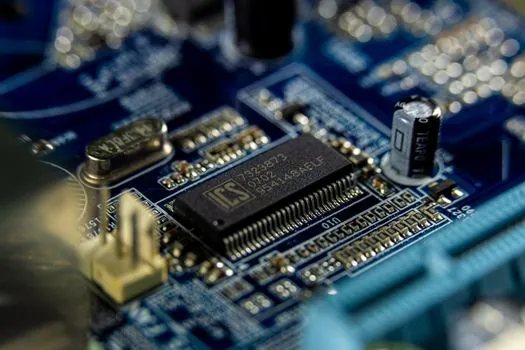
Standard outputs decide how cleanly a detector drops into a lab data-acquisition system or a plant DCS. AGA-series laser units provide a standard output signal that uploads dust concentration to PLC, DCS, or IPC, and run on 24 VDC with ≤2.5 W draw and IP66 ingress [S3]. YF-8500 electrostatic units accept 10–24 VDC, draw 1.2 W, cover -20 to 60 °C with 0–100% RH (non-condensing), and emit both 4-20 mA (16-bit, 1 km loop) and RS485 MODBUS RTU (2 km) [S4].
Calibration architecture is the second integration gate: AGA-series units offer online calibration without disassembly, which matters for duct installations where removing the head costs a production hour [S3]. Drift ≤2% F.S. on the laser family means annual zero/span checks are sufficient for most QA programs; electrostatic units with wider thermal envelopes need temperature-compensation verification after any firmware revision [S3][S4]. For applications where the detector reading drives a dust mask decision (respirator fit-testing, OEL threshold verification), the detector's calibration certificate and traceability chain are part of the safety case, not paperwork.
Compliance: ATEX, IEC, and Hazardous-Area Classification
AGA-series units carry double certification of gas explosion-proof and dust explosion-proof (AGA6050 variant), suiting hazardous areas, and the manufacturer documents ATEX compliance and IEC compliance as part of the QC chain with calibration certificate and verification certificate shipped per unit [S3]. For combustible-dust service, NFPA and ATEX standards govern both the detector and the connected collector: explosion venting or suppression, isolation valves on dirty and clean air ducts, spark detection, and grounding/bonding are all in scope [S1].
Compliance is not a checkbox; it is a zoning exercise. A dust detector mounted in a Zone 21 enclosure (combustible-dust cloud likely during normal operation) needs the dust-explosion-proof rating, not just the gas rating, and the certification body must be acceptable to the AHJ (Authority Having Jurisdiction) in the install country [S1][S3]. Online calibration without enclosure breach is the practical enabler, because opening a Zone 21 enclosure for routine span checks usually requires a hot-work permit and gas test [S3].
Collector-Side Sizing: Air-to-Cloth Ratio and Filter Area
The detector reading is only as useful as the collector's ability to respond to it. Cartridge dust collector sizing starts with airflow in CFM at the collector inlet, summed from extraction points and ducts, then selects an Air-to-Cloth Ratio (A/C) of 1.5–2.5 ft/min depending on dust type [S1]. Filter area is then CFM ÷ A/C; a 10,000 CFM system at A/C 2.0 ft/min needs 5,000 ft² of filter media, which at 200–350 ft² per cartridge (≈250 ft² typical) means 20 cartridges [S1].
Baghouses deliver >99% collection efficiency for fine particles and are the reference for fabric-filter performance, while cartridge collectors are the compact alternative for sub-micron particulates in metalworking, smoke, and fume service [S2]. The linear guide and crossed-roller guide hardware inside automated pulse-jet cleaning carriages is a separate spec line entirely, but the pulse-air capacity, fan static pressure, hopper discharge, and noise limits must all be validated against the chosen filter count [S1].
Comparison: Sensor Families Against Four Decision Criteria
Lining the three main sensor families against concentration range, response time, hazardous-area rating, and integration ease gives a single-page decision matrix. Tribo-electric probes lead on broken-bag and filter-leak detection with a hazardous-area option but trail on humidity tolerance and cleanroom suitability [S4]. Laser backscatter leads on indoor-air and bench work with 0–1000 mg/m³ range, ≤10 s T90, and IP66, but the 0.7–5 m free-space path is the practical ceiling for a single head [S3][S4]. Electrostatic induction leads on range width (0.01–10000 mg/m³ effectively), T90 <1 s, and PM2.5/PM10/TSP coverage, and trails on humidity-induced drift and probe-fouling sensitivity [S4].
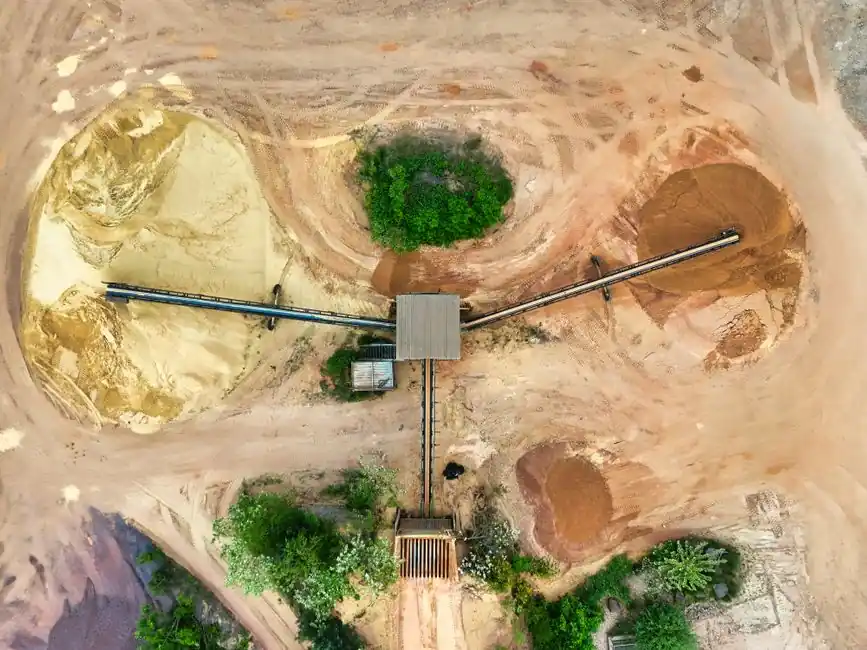
For duct, cyclone, and baghouse service in construction machinery and equipment and aggregate plants, the order is reversed: tribo-electric on the baghouse outlet for broken-bag detection, electrostatic on the duct for trend, and laser backscatter only at the stack for emissions trending where the higher accuracy justifies the cost [S1][S4]. The GASTiger2000-P6 portable laser-scattering counter covers PM0.3/PM5.0/PM10 with ±20% indication error, 6000 mAh battery, 16+ hours continuous runtime, and stores 50,000 data sets for walk-down surveys [S5].
Who Should NOT Pick the Mainstream Laser Backscatter Option
Laser backscatter is the wrong first pick when the dust is combustible, the duct is >20 m from the sensor head, or the expected peak is an order of magnitude above 1000 mg/m³. Combustible-dust stacks need the AGA6050 dual-certification variant, not the standard laser head, and the certification delta is the spec line, not a price band [S3]. Ducts longer than 20 m need an in-duct probe, not a free-space head, because the optical path scatters off the duct wall and biases the reading low [S3][S4].
Applications with expected peaks above 4000 mg/m³ should not be forced into a laser head even with the 0–4000 mg/m³ range selected, because the top decade of any range band carries the worst linearity error and the highest drift [S3][S4]. For very high range work, electrostatic induction with pumped sampling is the correct architecture, accepting the humidity-sensitivity trade-off in exchange for range width and sub-1 s response [S4].
Sourcing, Standards, and Shortlist Logic
For a 2026 shortlist, the gating checklist is: (1) measurement range band matched to expected peak with 10× headroom; (2) sensing principle matched to dust type and installation (tribo-electric for filter leaks, laser for indoor air and fume hoods, electrostatic for ducts and stacks); (3) ATEX/IEC dual certification for any Zone 21 dust hazard; (4) IP66 ingress minimum for washdown or outdoor service; (5) 4-20 mA plus RS485 MODBUS RTU for DCS integration with documented drift ≤2% F.S. and online calibration [S3][S4]. The associated collector sizing, A/C ratio, and filter media selection follow from the detector's range and the dust Kst/St class, not from the detector brand.
Trackable signals over the next procurement cycle: confirmation of ATEX/IEC certificate validity per serial number, validation of 4-20 mA loop integrity across the 1 km cable length, and verification of online calibration without enclosure breach on Zone 21 units [S3][S4]. For related plant-side spec work, the sight glass selection reference and the overhead conveyor types reference cover adjacent instrumentation and material-handling spec lines.