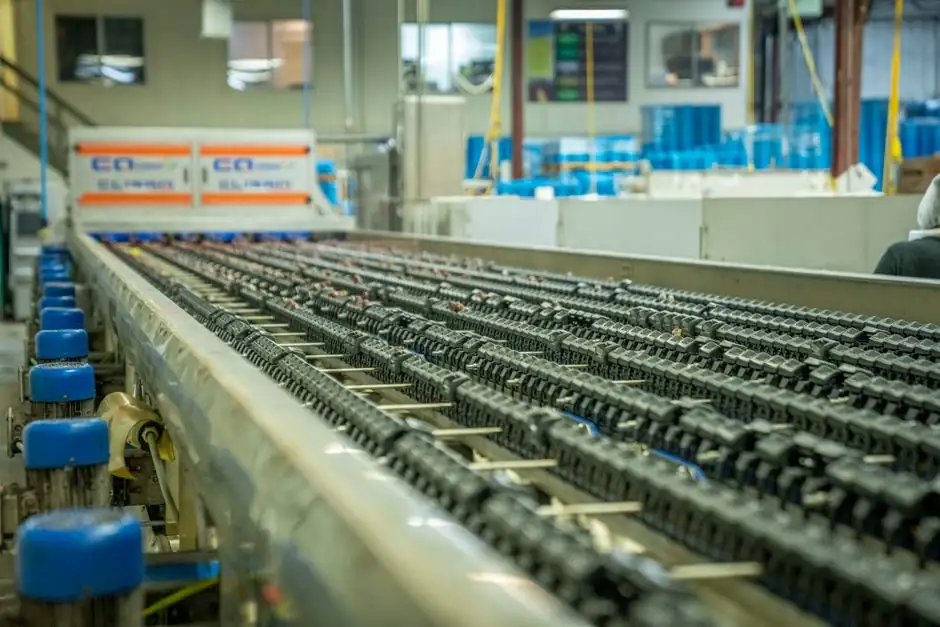
An overhead conveyor is a track-suspended mechanical transport system in which the rail, drive, and load-carrying components run above the working floor, and the category is defined less by a single machine and more by a matrix of drive, track, orientation, and load-class choices [S1][S4].
Overhead conveyors are standard in paint shops, surface treatment lines, assembly flows, and buffer systems because they preserve floor space for booths, ovens, robots, and forklifts while still giving the load 360-degree access from above [S3][S4]. The four-axis taxonomy most often used in vendor documentation runs: movement system (hand-pushed, motorized, power-and-free), track style (I-beam vs enclosed track), installation orientation (overhead, inverted, or floor-level), and rated hook or carrier load, which spans roughly 1 lb to 10,000 kg across the commercial range [S2][S4][S6].
Drive Classification: Hand-Pushed, Motorized, and Power-and-Free
Hand-pushed systems are the simplest overhead conveyor: trolleys ride in a track and an operator physically moves the carrier from station to station, which keeps capital cost low and suits low-throughput, heavy, or irregular loads [S2][S5]. Free overhead conveyors also move in multiple directions and require no motor, but they trade that simplicity for continuous manual labour, which limits their fit on any takt-driven line [S5].
Motorized monorail systems, sometimes called hook conveyors, use a continuously driven chain to index every carrier along a fixed path at a controlled speed, which is the workhorse configuration on assembly and finishing lines [S2][S4]. Power-and-free systems separate the driven chain from the free-moving trolleys on a second rail, so individual carriers can stop, accumulate, buffer, and be selectively released; this is the architecture that solves a ten-minute paint-line stop by allowing upstream carriers to hold position without halting the chain [S3][S4]. The decision between them is usually a takt question: synchronous flow picks motorized monorail, while accumulation, sorting, or variable-speed needs push the design toward power-and-free [S3][S5]. For a deeper look at how a storage cage interacts with an overhead loop on automotive lines, the carrier hook rating is the shared constraint.
Track Profile: Enclosed Track, I-Beam, C-Section, and Cruciform
Track style is a separate decision axis from drive type, and the two multiply: an enclosed-track motorized system and an I-beam motorized system are both legal configurations with very different load ceilings [S2][S3]. The Jervis Webb Unibilt enclosed track is the dominant modular enclosed profile, built around a universal-link chain, and the standard product line is rated for individual loads up to 250 lb (115 kg) with shorter-radius curves and tighter tangent spacing than open I-beam layouts [S2].
I-beam systems typically use 3 in, 4 in, or 6 in high-carbon I-beam rails and dominate heavy-duty transporter and gantry applications because the open profile exposes the bearing surface but raises the per-hook load ceiling and simplifies field installation [S2][S3]. C-section and fabricated cruciform profiles sit between the two, used where the track must mate to specific trolleys or where a fabricator wants a custom geometry without committing to a full I-beam section [S3]. Open track is easier to install and generally carries more per carrier, but it leaves both rail and load exposed to plant contamination; enclosed track protects the bearing surfaces and, when inverted, helps confine dust, grease, and oil away from painted parts [S2][S5].
Installation Orientation: Overhead, Inverted, and Floor-Level
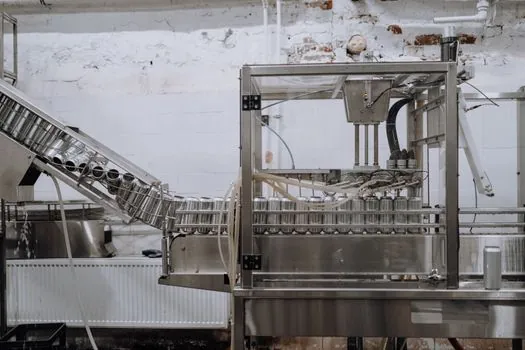
Most overhead conveyors are installed in the conventional overhead orientation, but the same components can be flipped and run inverted at floor level for paint finishing, where dust, dirt, or oil dripping from the chain onto wet or powder-coated parts is a real defect risk [S2]. The inverted configuration is therefore a process-control decision as much as a layout decision, and it is one of the cheapest ways to clean up a paint line without re-routing the track.
Transporter systems extend the same idea to gantry-style I-beam or universal-beam setups, where motorised or non-motorised trolleys move heavier or oversized loads across long spans, often in combination with overhead bridge cranes for very large parts that the conveyor alone cannot index [S3]. A practical rule of thumb: if the carrier cycles vertically through ovens, pretreatment wash, or drying and curing stages, the track profile and orientation should be specified together, because the inverted variant changes how condensate drips and how heat is shed from the chain.
Load Class: Light, Medium, and Heavy Duty
Vendor load classes give a quick sizing envelope, even though every line is engineered to its own takt. A common published breakdown is light duty from 1 lb to 75 lb per hook, medium duty from 75 lb to 200 lb per hook, and heavy duty above 200 lb per hook, with specialised transporter systems rated up to 10,000 kg per carrier for gantry and bridge applications [S3][S4][S6].
The load class also sets the chain pitch, the drive kW, and the curve radius, so undersizing a class by one step usually shows up first as trolley bearing wear and chain stretch rather than as a single overload event. Where accumulation is required, the quoted per-hook load should be cross-checked against the accumulation density in carriers per metre, because a power-and-free buffer can multiply the static load on the drive section by 3 to 5 times the running load. A simple comparison matrix for the four main types:
Process Fit: Paint, Heat, Wash, and Assembly
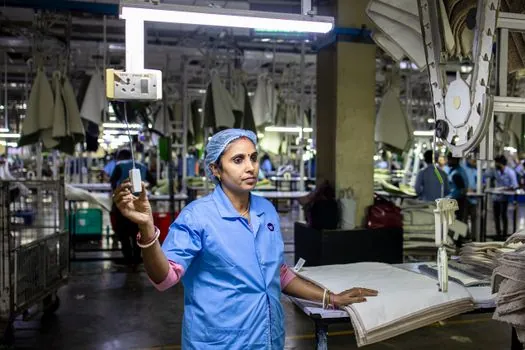
Overhead conveyors are the default transport through pre-treatment washing, drying, and curing, where the load must cycle through high-temperature, wet, or chemically aggressive zones while the floor below stays clear for operators and forklifts [S3][S4]. They are also the standard carrier for powder coating and wet paint, because the suspended load presents a consistent surface to spray guns and keeps overspray off the transport hardware.
The category overlaps with belt conveyors and roller conveyors at the line ends, where the overhead loop hands off to a floor-level accumulation conveyor or to a construction-machinery-and-equipment workstation, and that hand-off is where most chronic jam faults actually originate. In advanced cells, PLC, SCADA, HMI, identification, tracing, and recipe management turn the loop from a transport device into an integrated production asset where movement follows process logic rather than simple mechanical circulation, and carriers are tracked part-by-part through every station [S4].
Selection Criteria, Limits, and Sourcing Signals
Selection should start from five engineering inputs: load per hook, routing complexity, accumulation and buffering requirement, process environment (heat, wash, chemical, or cleanroom), and required control integration. If any of those five is wrong, the line will pay for it in stoppages rather than in obvious mechanical failure, which is why paint-line operators measure downtime in queued work-in-process, not in conveyor minutes. [S4]
On sourcing, the published 2026 vendor base spans specialist system integrators with multi-decade install histories, and the practical signals to track are per-hook load certification, curve radius at rated load, drive kW at peak accumulation, and the controls package (PLC brand, HMI, and tracing). One trackable signal worth watching: the wider use of inverted enclosed-track conveyors in new EV battery and appliance paint shops, where drip-control and chain-bearing contamination drive the spec; another is the gradual shift of power-and-free systems from mechanical indexing to servo-driven accumulation zones, which changes the spare-parts profile but not the underlying classification matrix. For teams cross-checking specifications, the overhead conveyor reference page consolidates the load, track, and orientation terms used here.