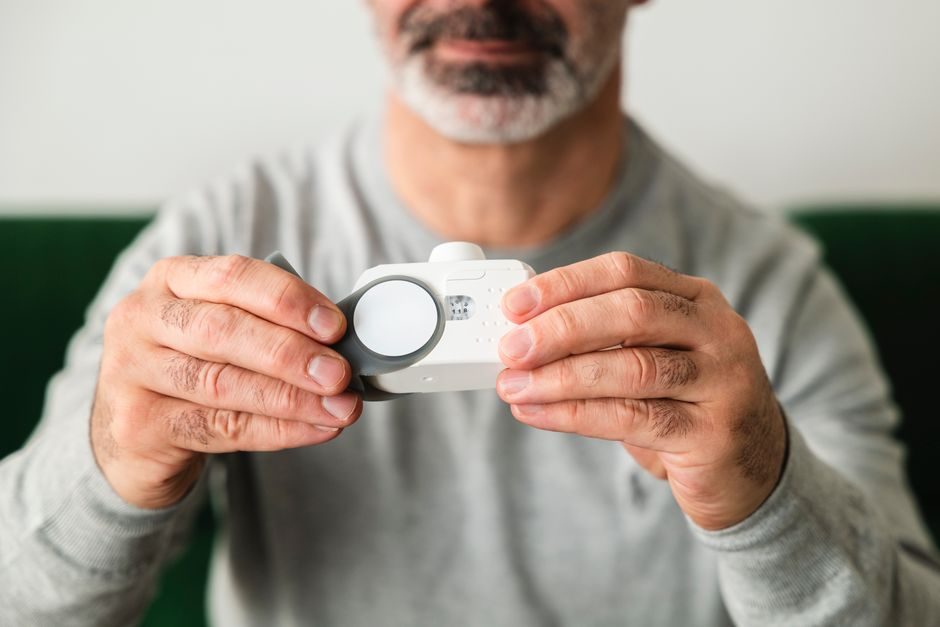
A dust detector and a fixed gas detector are distinct instruments aimed at different physical hazards: the former reports airborne particulate in mg/m³ or particles/L, the latter reports gas concentration in ppm or %LEL on a continuous 4-20 mA / RS485 Modbus loop [S5][S1].
Dust meters and portable multi-gas units are commonly sold side-by-side by the same safety OEMs in 2026, reflecting two parallel detection programs in mining, chemical and confined-space work rather than a single converged product [S3].
Measurement Target and Sensing Principle
A dust detector (also called a dust meter or dust particle meter) infers particulate loading from light-scattering, beta-attenuation, or gravimetric filter methods; portable units typically output PM1.0/PM2.5/PM10 mass concentration, while fixed-loop dust meters feed 4-20 mA or RS485 into a plant DCS [S3]. A fixed gas detector exposes a target gas to a specific transducer — electrochemical cell for toxic gases such as H2S, CO or O2, NDIR (non-dispersive infrared) for hydrocarbons and CO2, PID (photo-ionisation) for VOCs, and catalytic bead / pellistor for combustible gases below the lower explosive limit [S1][S2][S6].
The two signal chains are not analogous: dust readings drift with humidity, optical window contamination, and stack velocity, while gas readings drift with sensor depletion, cross-sensitivity, and poisoning by silicone or lead compounds [S1][S6]. Specifiers should consult the dust detector and fixed gas detector reference pages before cross-substituting either device on an existing safety loop.
Output, Wiring and Loop Integration
Explosion-proof fixed gas detectors in 2026 are widely offered in 2-, 3- and 4-wire architectures with 4-20 mA and RS485 Modbus outputs, and many carry both UL and ATEX certification on the same SKU (e.g. the K800 series) [S5]. Controllers from Dräger and Eranntex accept multiple detector heads and provide relay logic, display, and Modbus/Ethernet uplink to the plant DCS or SCADA [S1][S2].
Dust meters on the same Chinese B2B catalogs are paired with a separate dust controller, and ship as RS485 Modbus or 4-20 mA nodes with the same wiring colour codes as gas detectors, but with calibration in mg/m³ rather than ppm [S3]. For a gas detector installed in a hazardous area, the bus protocol, cable gland and conduit sealing must satisfy the same ATEX/IECEx zone rating as the gas sensor head; dust detectors mounted in non-classified baghouse stacks normally use IP65 housings without Ex certification.
Certification Scope: ATEX, UL, IECEx
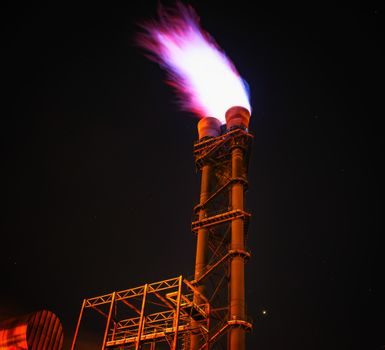
Fixed gas detectors on 2026 supplier linecards ship with ATEX and UL explosion-proof ratings as a default for hazardous-area zones, and many also carry IECEx for international EPC work [S5]. Dust detectors are almost always supplied as general-purpose IP65 instruments; the sensing head sits outside any classified zone, so ATEX/IECEx certification is the exception rather than the rule [S3].
Where a dust sensor is mounted downstream of a flammable-solvent process inside a classified enclosure, the specifier must add an Ex-rated enclosure and barrier, or it must be sourced as a purpose-built Ex variant — a 2026 catalog check of Chinese OEM pages does not show a standard dust meter with ATEX certificate [S3][S5]. Combustible-gas service requires an Ex d or Ex i certified combustible gas detector; a dust detector cannot be wired to a combustible-gas controller in place of the sensor.
Selection Criteria: Which Hazard Drives the Choice
Use a dust detector when the hazard is airborne particulate — baghouse filter rupture, powder-handling spillage, silica or coal-dust exposure, or cleanroom compliance to PM2.5/PM10 limits. It is the right instrument where an OSHA or local equivalent PEL on respirable dust is the binding regulatory number, and where a dust particle meter reading in mg/m³ can be mapped directly to PPE triggers. [S1]
Use a fixed gas detector when the hazard is a chemical vapour or gas with a TLV/STEL or LEL — H2S, CO, O2 deficiency, methane, VOC, or refrigerant leak. Sensor choice is hazard-specific: electrochemical for H2S at 0-100 ppm with T90 typically under 30 s, NDIR for CO2 at 0-5% vol, catalytic bead for CH4 at 0-100% LEL, PID for benzene at low ppb [S1][S2][S6]. For routine confined-space work, the cheaper complementary tool is a dust mask — a respiratory PPE item, not a detector, and not a substitute for either instrument.
Comparison Matrix: Dust Detector vs Fixed Gas Detector
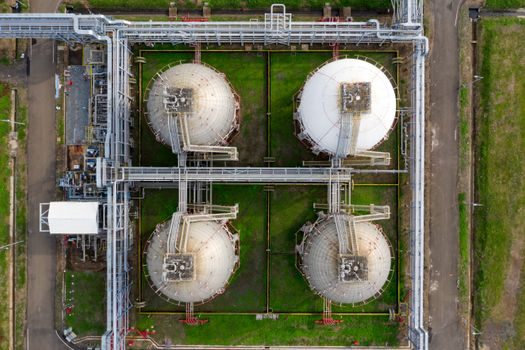
The two product classes diverge on every dimension a process engineer normally writes into a purchase order. The following matrix is drawn from 2026 OEM linecards and should be used as a decision table before adding either device to a bid sheet. [S2]
1) Measurement target: dust detector measures solid/liquid aerosol mass (mg/m³) or count (particles/L); fixed gas detector measures gas concentration (ppm, %vol, %LEL) [S3][S5]. 2) Hazard: dust = respirable/ combustible particulate exposure and filter condition; gas = toxic exposure, oxygen displacement, flammable atmosphere [S1][S3]. 3) Sensing principle: light scattering, beta attenuation, or triboelectric for dust; electrochemical, NDIR, PID, catalytic bead for gas [S1][S3][S6]. 4) Loop output: 4-20 mA + RS485 Modbus in both; dust adds SDI-12 in some environmental monitors, gas adds HART and relay in addition to Modbus [S3][S5]. 5) Certification: dust typically IP65 general-purpose; gas typically ATEX + UL + IECEx explosion-proof [S3][S5]. 6) Calibration interval: dust usually 6-12 months optical-clean check; gas 3-6 months with span gas, sensors replaced on 12-24 month cycle [S1][S6].
Failure Modes and Cross-Interference
Dust detectors under-read on sticky, hygroscopic or sub-micron particles that do not scatter predictably, and over-read on window contamination by oil mist [S3]. Fixed gas detectors suffer electrochemical sensor poisoning by silicone (RTV sealants), acid gases, and high humidity; NDIR units fail on condensation in the optical cell; catalytic bead sensors are poisoned by silicone, lead, sulphur, and halogenated compounds, and lose sensitivity in oxygen-deficient atmospheres [S1][S6].
Cross-instrument interference is rare because the transducers are physically different, but PID lamps can be blinded by high dust loading — when both dust and VOC are present (paint spray, resin processing), the PID head should be mounted downstream of a particulate filter or in a separate sample line [S6]. Real-world 2026 use cases for a toxic gas detector on a chemical line and a gas alarm controller are documented in the buying guide and the loop comparison reference.
Use Cases and Where the Two Are Deployed Together
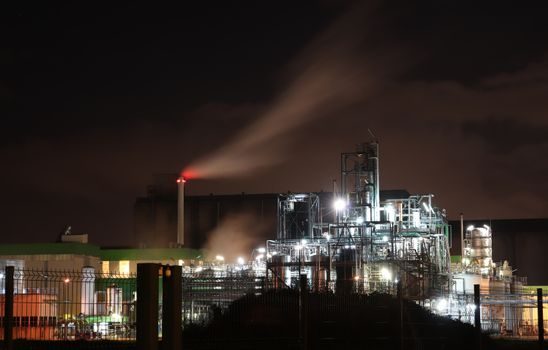
In a 2026 coal-preparation plant the baghouse discharge stack is monitored by a dust detector for filter-break detection, while each transfer point is fitted with a fixed CH4 catalytic-bead head to alarm on methane release from the coal seam; the two loops are independent and report to the same DCS [S1][S3]. A grain silo installation adds a dust detector for combustible-dust compliance and a fixed gas detector for CO from spontaneous combustion, with separate alarm setpoints at 10 g/m³ particulate and 30 ppm CO [S3][S5].
Confined-space entry on a chemical site uses a portable multi-gas detector (LEL, O2, CO, H2S) plus a portable dust meter for particulates generated by abrasive blasting, with the fixed-loop instruments providing continuous area coverage while work is in progress [S3]. The combined specification for a baghouse outlet typically calls for a dust detector range of 0-200 mg/m³, accuracy ±5% FS, response time under 60 s, and a fixed gas detector for solvent vapours with 0-100 ppm range, T90 under 30 s, and 24-month sensor warranty [S1][S3][S6].
Trackable signals over the next procurement cycle: (1) Chinese OEM catalogs in mid-2026 still list dust meters and fixed gas detectors as separate product families, with no converged SKUs visible on Eranntex, Kelisaike or Gri linecards [S2][S3][S6]; (2) ATEX/IECEx dual-certified dust meters remain a minority niche, so any baghouse in zone 21 will need an Ex enclosure or an Ex variant sourced as a special order [S3][S5].