
Selecting a dust mask for confined space entry is governed less by the mask's filter class than by the air inside the space: OSHA 29 CFR 1910.146 treats any atmosphere below 19.5% oxygen, above 23% oxygen, or above 10% LEL as immediately dangerous to life or health (IDLH) [S3].
A disposable N95 or FFP2 particulate respirator is rated for ambient particulate filtration, not for oxygen-deficient, toxic-gas, or unknown atmospheres, so it can only be worn as a supplementary comfort layer under a supplied-air respirator or SCBA during CSE work [S3].
Why a standard dust mask fails the confined space entry test
A dust mask is engineered to filter particulates from breathable air, with the typical three-layer construction of outer non-woven, melt-blown filter, and inner non-woven layers [S4]. That construction removes airborne dust such as silica, wood dust, or welding fume, but it does not generate oxygen and does not adsorb vapors or gases [S4].
For confined space entry, the dominant fatalities are asphyxiation, hazardous-substance exposure, and traumatic injury, not nuisance dust alone, which is why a clearance measurement with a dedicated gas detector is required before any worker enters [S3]. A NIOSH-certified N95 such as the Dräger X-plore 1350 (10-pack pricing at $21.00 retail, with bulk orders up to $378.00 as of August 2026) is a valid choice for the post-entry dust phase, not for the entry itself [S2].
Selection criteria: atmosphere first, mask second
The first gate is atmospheric testing: oxygen between 19.5% and 23%, LEL below 10%, and toxic contaminants below their permissible exposure limit [S3]. If any reading fails, OSHA 29 CFR 1910.146 mandates a supplied-air respirator (SAR) or self-contained breathing apparatus (SCBA) with an IDLH rating, not a particulate mask [S3].
The second gate is the permit-to-work (PTW) system, which must document the gas readings, rescue plan, communication, and PPE matrix for the specific vessel or vault [S3]. The third gate is PPE hierarchy: head, eye, fall protection, communications, then respiratory protection matched to the hazard class [S3]. A practical risk-assessment matrix then scores likelihood against severity to define which respirator category the entry crew needs [S3].
Comparison: respirator types vs. confined space entry scenarios
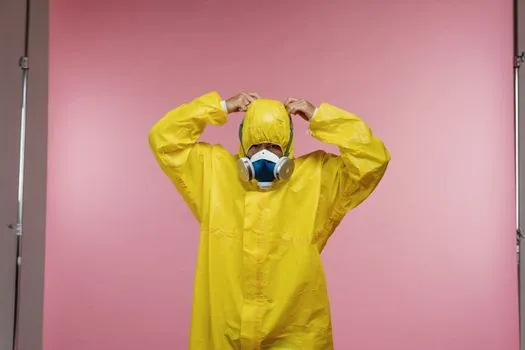
Three respirator categories cover the CSE spectrum, and a dust mask appears only in the fourth row: [S2]
1. SCBA (positive-pressure, IDLH-rated): required when oxygen is below 19.5% or the atmosphere is unknown. Closed-circuit models give 60-240 minutes of air, open-circuit 30-60 minutes. 2. Supplied-air respirator with Type C continuous-flow airline: works in non-IDLH but toxic-gas environments where a compressor can supply Grade D breathing air. 3. Air-purifying half-mask or full-face with multi-gas cartridge: usable only when the contaminant is identified, the concentration is below the cartridge's rated capacity, and oxygen is above 19.5%. 4. N95/FFP2 dust mask: suitable only for the dust-phase after atmospheric clearance, never as the entry respirator.
Dräger's X-plore 1350 N95 with exhalation valve is NIOSH-certified, an example of the post-entry dust layer that workers can wear inside a clean, ventilated vessel, but it does not replace SCBA or SAR when the atmosphere is unverified [S2].
Who should use a dust mask in CSE, and who must not
Dust masks are appropriate for the standby attendant working outside the vessel in dusty ambient air, for decontamination crews brushing residue off PPE after exit, and for the post-entry inspection phase once continuous monitoring confirms a breathable atmosphere [S3].
Dust masks are not appropriate for the entrant in an unknown atmosphere, for any IDLH condition, for oxygen levels below 19.5% or above 23%, for LEL above 10%, or for atmospheres containing gases the mask cannot adsorb (carbon monoxide, hydrogen sulfide, volatile organic compounds) [S3]. Common mistakes in CSE deployments include skipping the four-gas pre-entry test, using only a single-gas monitor, and assuming a particulate mask will protect against vapors [S3].
Real use cases and failure modes
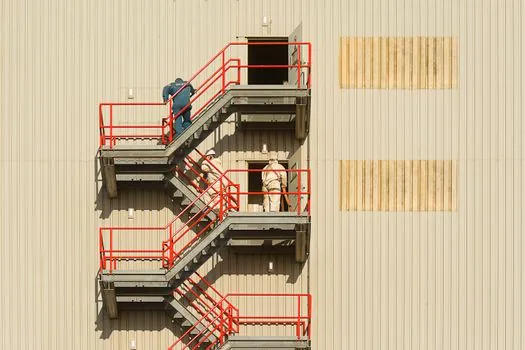
Confined spaces in oil and gas, wastewater, brewing, marine, and chemical manufacturing share three failure modes: oxygen displacement by nitrogen purging or by CO2 from fermentation, hydrogen sulfide buildup in manholes, and residual solvent vapor after a tank cleaning [S3]. In every documented case, the entry crew needed continuous four-gas monitoring plus SCBA or SAR, with the dust phase addressed only after the atmosphere was confirmed safe [S3].
Lab and electronics spaces are a useful counter-example where the air is breathable but the particulates are hazardous, and that is where a fitted FFP2 or FFP3 respirator becomes the primary PPE; the spec logic for that case is laid out in Lab Dust Mask Selection: FFP Class, Fit Factor, Filter Spec.
Standards, certifications, and sourcing
The governing rules are OSHA 29 CFR 1910.146 (Permit-Required Confined Spaces), NIOSH 42 CFR Part 84 for respirator certification (the standard that defines the N95 class), and EN 149 for FFP1/2/3 ratings used in Europe [S2]. Air-purifying cartridges fall under NIOSH CBRN or multi-gas approval when used in CSE, and supplied-air compressors must deliver Grade D breathing air per CGA G-7.1 [S3].
Distributor sourcing as of August 2026 puts NIOSH-certified N95 respirators with exhalation valve at $21.00 per 10-pack retail and up to $378.00 for bulk 180-case orders, while entry-grade SCBA and four-gas monitors are a separate capex line that belongs to the plant safety budget rather than the consumable PPE budget [S2].
For process engineers mapping respiratory protection to classified-area logistics, the side-by-side hazard zoning logic in AMR selection for chemical shipping: classified-area spec map carries over directly to where a particulate mask may and may not be worn.
Track these signals over the next two quarters: OSHA citation trends under 29 CFR 1910.146 for respirator-program violations, NIOSH 42 CFR Part 84 updates for powered air-purifying respirator (PAPR) use in CSE, and EN 149 revision activity affecting FFP2/3 marking for post-entry dust work.
Spec-level background on the components involved: dust detector, and dust particle meter.