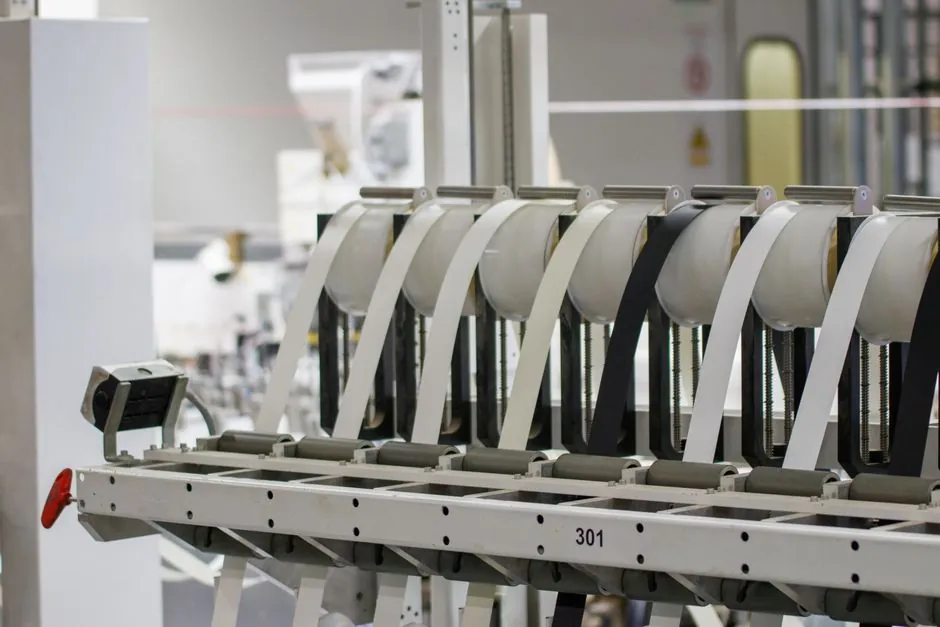
An e-axle line for passenger EV, light pickup, and LCV programmes in 2026 is dominated by hairpin-wound PMSM stators, single-speed reducers, and SiC inverters integrated into a single housing; equipment selection therefore spans precision stator/rotor machining, hairpin winding and laser welding, magnet insertion, reducer gear cutting and grinding, and end-of-line dyno testing, with each work cell running under IATF 16949 controls [S2].
The reference facility benchmark in 2026 is a 240,000-unit/yr greenfield in the Querétaro automotive corridor, USD 300 million CapEx, expandable to 360,000 units, qualifying four parallel OEM PPAP streams inside one commissioning window, with USMCA Regional Value Content at 75% and IRA Section 45X qualifying-component sourcing as binding constraints from day one [S2].
Process cells and equipment list inside the e-axle
A modern passenger-car e-axle collapses three legacy ICE workstreams, motor, transmission, and power electronics, into one assembly, and each subsystem drives its own equipment list: stator lamination stacking and hairpin winding, rotor magnetisation and shaft assembly, reducer gear cutting (typically hobbing plus gear grinding for NVH class), and SiC inverter PCB assembly plus housing integration [S1][S2].
The LCA literature treats the e-axle as a functionally integrated unit, and the FITGEN H2020 demonstrator quantified a 10% climate-impact and 17% energy-consumption reduction versus a 2018 SoTA e-drive, gains that come from tighter tolerances, lower copper/aluminium mass, and integrated thermal management rather than from exotic materials, which is why equipment choices matter more than chemistry swaps [S1]. Functional integration is what lets a Tier-1 replace a multi-station drivetrain line with a tighter, fewer-fixture cell; the same physics shows up in commercial-vehicle e-axles such as Allison eGen Power, which package motor, inverter, and oil cooling into a drop-in axle module [S3].
Hard tolerances, and why they pick the machine tool
Stator and rotor manufacturing requiring concentricity tolerances of ±5 µm, hairpin winding placement accuracy of ±0.1 mm, and rotor balancing to G2.5 grade are substantially tighter than legacy ICE powertrain equivalents, and that fact alone rules out general-purpose CNC machining centres [S2]. For stator and rotor machining, the practical floor in 2026 is a thermally stabilised horizontal machining centre with direct-drive spindles, in-process probing, and a fixturing system that constrains lamination stack eccentricity to single-digit microns.
Hairpin winding equipment must hold ±0.1 mm placement and bond or laser-weld the strip ends with controlled heat input; the working cell typically pairs a multi-axis winding head, a strip-forming and insertion module, a laser or resistance welding station, and a 100% electrical end-of-line test. Rotor balancing to G2.5 (ISO 1940-1 G2.5) is the default for traction e-machines, and the balancer, demag station, and magnet insertion press must be co-located to avoid a re-handling tolerance penalty. EOL dynamometers must spin the assembled e-axle, exercise the inverter at rated SiC switching frequency, and capture NVH, efficiency, and partial-load maps in one cycle. For a spec-led view of adjacent process tooling, see the construction machinery and equipment spec map, which carries useful cross-references for high-inertia rotating-assembly fixtures.
Compliance stack that decides line acceptance
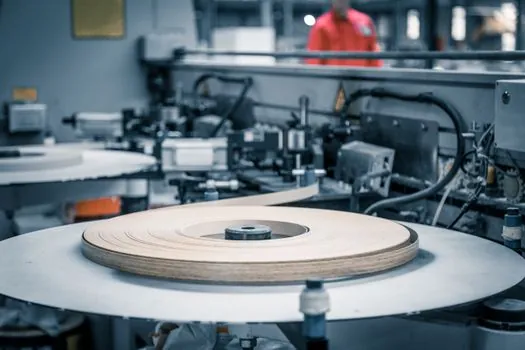
The compliance stack that actually gates sign-off in 2026 is four deep: USMCA Article 4.5 Regional Value Content at 75% for core automotive parts, IATF 16949 automotive QMS, IRA Section 45X qualifying-component sourcing rules, and customer-specific PPAP packages per OEM [S2]. Each work cell needs traceability from raw electrical steel, copper, and NdFeB magnet batch, through the e-axle serial number, into the OEM PPAP file.
Equipment selection must therefore support sub-component-level trace capture, not just unit-level test data. Magnet supply is the single largest geopolitical risk: NdFeB magnet production concentrated 87% in Chinese production creates a clear IRA Section 45X non-qualification risk, and buyers in 2026 are expected to qualify a non-Chinese NdFeB source (Australia, US, Vietnam, or recycled magnet feedstock) in parallel [S2]. Dual sourcing is not optional; it is a Section 45X eligibility check before PPAP starts. Material flow audits are typically run as MES-level events, which is why the linear guide selection criteria matter for the high-precision transfer and positioning axes that move stators and rotors between cells.
CapEx envelope and plant-level numbers
The reference 2026 greenfield in Querétaro, a 240,000-unit/yr e-motor and integrated e-axle plant sized for Phase 2 at 360,000 units, carries a CapEx envelope of USD 300 million, covering precision-machining floors, stator winding and rotor stacking equipment, e-axle final assembly, end-of-line dynamometers, and the IT/OT stack for Industry 4.0 traceability [S2]. The facility supports three product families (passenger EV, electric pickup, and light commercial van), which means tooling must flex between two motor lengths and a common reducer family without re-fixturing.
State and federal incentives materially shift the economics: the Querétaro engagement secured an MXN 92 million state employment subsidy and IMMEX duty-deferral structure aligned to USMCA cross-border flows, which together offset a meaningful slice of operational cost in the first three to five years [S2]. A 240k-unit plant at this CapEx level implies roughly USD 1,250 per unit of annual capacity, before working capital and PPAP tooling, a useful sanity check for any buyer comparing turnkey bids in 2026. Cross-axis precision on the assembly lines depends heavily on crossed roller guide class components, which set the positional repeatability ceiling for the hairpin and magnet-insertion cells.
Selecting equipment vendors and cells
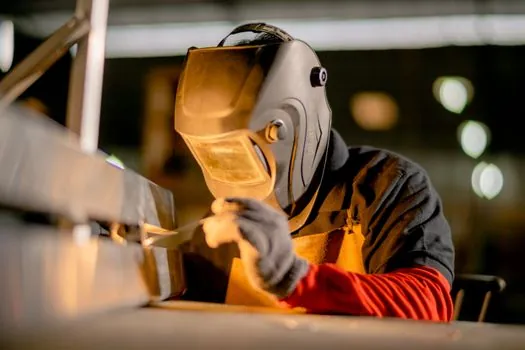
Selection criteria for e-axle work cells in 2026 sit on five axes: achievable tolerance (concentricity, runout, balance grade), cycle time and OEE at the rated takt, electrical and thermal test coverage at EOL, traceability and MES integration, and dual-region manufacturing support for OEM PPAP across North America, Europe, and Asia. Equipment OEMs that can ship, install, and run tryout in parallel at two or more sites score materially better, because a 240k-unit greenfield rarely starts cold on a single line. [S2]
The cautionary tale from the 2026 build cycle is labour: the Querétaro cluster is ICE-trained but thin on e-mobility skills, especially in hairpin winding, electrical end-of-line testing, and SiC inverter calibration, so vendor scope must include on-site training, run-at-rate support, and capability-study templates that line up with each OEM's PPAP [S2]. Buyers that treat vendor selection as a pure spec-and-price event usually discover the skills gap at PPAP gate 3, not at kickoff. For complementary guidance on process tooling that is often co-specified on the same line, the additive manufacturing material reference covers low-volume prototype stator and reducer housings used during PPAP build phases.
Failure modes and constraints to plan for in 2026
Three failure modes recur across 2026 e-axle greenfield projects: magnet supply disqualifying a line under Section 45X, hairpin weld quality drifting under high humidity without controlled-atmosphere stations, and dual-OEM PPAP running past the 12-month mark because capability-study sample sizes were under-scoped [S2]. Each one is preventable at equipment-selection stage but expensive to retrofit.
A second-tier risk is EOL dyno throughput: a 240k-unit/yr plant needs roughly 20 dyno cells at 75% OEE to keep up, and dyno lead times in 2026 are the longest single line item on the critical path, so early PO matters. A third is rework of out-of-spec hairpin joints, which is rarely a design issue and almost always a winding-machine calibration issue; spec the machine with auto-cal and not just a calibration procedure.
Real use cases: passenger EV, pickup, and LCV on one line

The reference 2026 facility runs three product families on shared equipment: passenger EV, electric pickup, and light commercial van e-axles, with motor, single-speed reducer, and SiC inverter as the common building block [S2]. The same equipment set covers a commercial-vehicle e-axle architecture such as Allison eGen Power, which integrates inverter, oil cooling, and drum or optional air disc brakes into a drop-in axle module for medium- and heavy-duty applications [S3].
The pragmatic 2026 pattern is a common front-end (stacking, hairpin, rotor) and product-family-specific back-end (reducer ratio, inverter rating, brake interface).
Trackable signals to watch over the next two quarters: Section 45X guidance updates on qualifying-component definitions, non-Chinese NdFeB magnet capacity announcements (Lynas, MP Materials, HyProMag, Cyclic Materials), and OEM PPAP gate-3 timing from the first wave of USMCA-aligned e-axle greenfields. For context on adjacent industrial procurement cycles, the Counter-UAS and procurement reality check digest covers the same nearshoring-era buyer behaviour, and the cut-off machine lifespan and service tiers reference is a useful template for EOL test-cell planning. NDT equipment selection matters for hairpin-weld crack inspection, while anti-static equipment is non-negotiable for stator winding cells to avoid insulation damage during hairpin insertion.