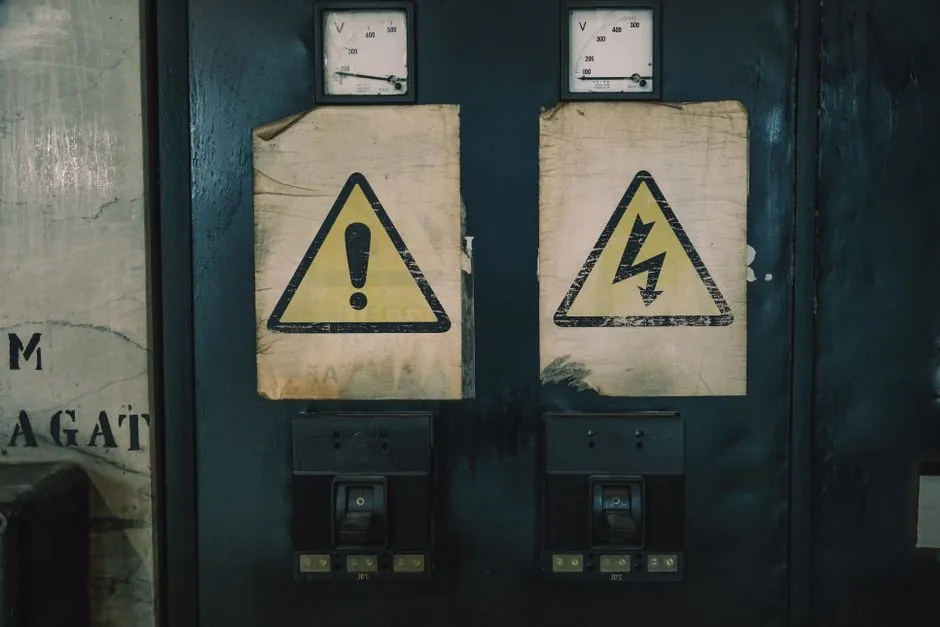
Earth ground resistance testers listed in 2026 cover a measurement range of 0.01-30 kΩ across 2-wire, 3-wire, 4-wire and clamp-on topologies, with 200 V-1000 V earth-voltage handling and 0.03-2000 Ω core resistance spans [S2][S3][S7].
Distributor catalogues for the same year show Megger DET4TC2 4-wire units at USD 3,045-3,386, Fluke 1630-2 FC clamp meters at USD 2,785.99, AEMC 6416 clamps at USD 1,602, and used industrial stock from HP at AU $215.24 on secondary markets [S4][S5]. Buyers comparing those five price points against measurement method, electrode count, and data-logging need a criteria map before they spend.
Measurement Method: Fall-of-Potential vs Clamp vs Staked
The fall-of-potential (staked, 3-wire or 4-wire) method applies a known current between the electrode under test and two auxiliary rods, then derives resistance from voltage drop; it is the IEEE 81 reference technique for isolated grounding electrodes and remains the workhorse for substation and tower work [S5][S6]. Clamp-on ground testers like the Fluke 1630-2 FC (1000 V, 40 Hz-1 kHz) and AEMC 6416 (1500 Ω, 40 A) inject a known voltage on the clamp and read loop resistance through a bonded multi-rod system, which is faster but only valid where grounds are bonded in parallel [S5].
2-wire testers, such as the 2000 Ω / 600 V units on eBay, measure between the test point and a known low-resistance reference (often a water pipe), and are acceptable only for quick sanity checks on building services where a 3-wire setup is impractical [S2]. The Cirprotec G-TEST, certified to EN 62561-6:2018, adds residual-voltage measurement and early-streamer-emission diagnostics for lightning-rod verification in PV, EV-charging, telecom, and water-treatment sites [S1]. 4-wire digital testers extending to 30.00 kΩ (e.g. C5E8) cover high-resistivity soil and large ground-grid sweeps where lead resistance must be cancelled [S3][S7].
Selection Criteria: Resistance Range, Lead Length, Data Logging
Four numbers decide most 2026 spec sheets: maximum resistance, test voltage/current, number of wires, and on-board memory. eBay listings for 2026 show 0.01-500 Ω 3-wire units with 500-group data storage at the entry tier [S3], 0.03-2000 Ω general-purpose clamps and staked units at the mid tier [S4], and 30.00 kΩ 4-wire lab-grade meters for soil-resistivity Wenner arrays at the top tier [S7].
Buyers should also check: IP rating for outdoor work (not in the research material, so do not assume); test-current compliance with local code (e.g. IEEE 81 for substation ground grids); accessories (leads, stakes, rechargeable battery); and Bluetooth/USB export for 500+ group logging [S5]. For buyers whose primary duty is verifying lightning-protection down-conductors rather than soil resistivity, the Cirprotec G-TEST fits the residual-voltage + ground-quality combo the EN 62561-6:2018 framework calls out for ESE (early streamer emission) lightning rods [S1]. For buyers chasing a cheaper daily-driver clamp, the REED R5710 (USD 1,295) and Megger DCM300E (USD 635.25) bracket the field-service mid range [S5].
Comparison: 2-Wire vs 3-Wire vs 4-Wire vs Clamp
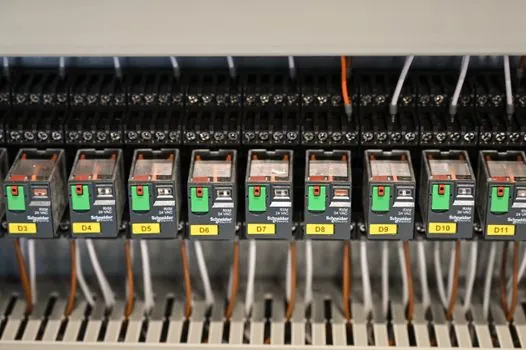
Across the four topologies on sale in 2026, the decision matrix runs on three axes: valid electrode configuration, accuracy in high soil resistivity, and operator time on site. The 2-wire unit (2000 Ω, 600 V, ~USD 215-526) is the cheapest but only suits bonded or referenced grounds, with accuracy degraded by the unknown return path [S2][S4].
3-wire staked testers (0.01-500 Ω, 500-group memory, ~USD 480-700 on secondary market) handle isolated electrodes per the fall-of-potential method and dominate telecom-tower and small-substation work [S3][S4]. 4-wire digital testers up to 30.00 kΩ (~USD 716) cancel lead resistance and are mandatory for Wenner four-equal-probe soil-resistivity surveys or where long leads run across site [S7]. Clamp-on units (AEMC 6416 1500 Ω/40 A; Fluke 1630-2 FC 1000 V; REED R5710 USD 1,295) are the fastest on bonded multi-rod systems but cannot measure a single isolated rod and are useless where the return path is broken [S5]. Megger's DET4TC2 4-wire kit (USD 3,045) and DET4TCR2 rechargeable variant (USD 3,386.25) sit at the top of the staked-4-wire range and target utility-scale ground-grid acceptance testing [S5].
Who Should Use Which Tester (And Who Should Not)
Field-service electricians maintaining commercial buildings, EV chargers, and small PV arrays are the natural buyers for 2-wire and clamp-on units: the ground system is bonded, the operator is on a ladder, and a 5-second clamp reading beats driving two rods into tarmac [S2][S5]. Telecom-tower crews and substation commissioning engineers should default to 3-wire or 4-wire staked units because their electrodes are isolated and the IEEE 81 fall-of-potential curve is the auditable method [S3][S5][S6].
Buyers who should NOT pick a clamp-on: anyone testing a single new ground rod before bonding, anyone running a soil-resistivity survey for a green-field substation, and anyone trying to verify lightning-rod ESE electronics, which require a residual-voltage measurement the clamp topology cannot deliver [S1][S5]. Buyers who should NOT pick a cheap 2-wire unit: anyone documenting an IEEE 81 acceptance test, anyone working in high-resistivity rock soil where 1000 Ω+ readings are routine, and anyone needing 4-wire lead-resistance cancellation for runs longer than about 20 m [S2][S7]. For an overview of where earth ground testing fits next to adjacent low-voltage insulation diagnostics, see the reference entry on insulation resistance testers and on the earth ground tester family itself.
Standards, Calibration, and Sourcing Signals
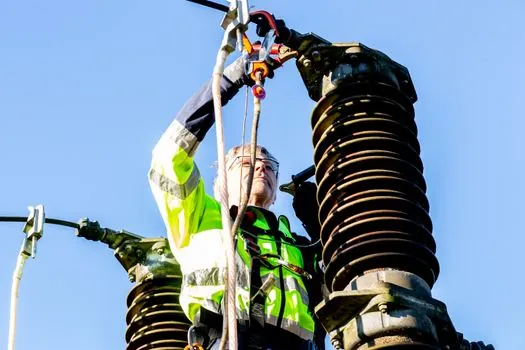
EN 62561-6:2018 governs the Cirprotec G-TEST family for lightning-protection-component testing, including residual-voltage and ground-quality checks on ESE rods in PV, EV-charging, and telecom applications [S1]. Fluke's published guidance echoes the same priority: confirm grounding-system design before energising equipment, because an undersized ground path shows up as downtime, equipment failure, and personnel-safety events rather than as a tripped breaker [S6].
Distributor and marketplace data for 2026 confirms a wide supply pipeline: eBay Australia lists 362 active Earth Ground Resistance Meter SKUs, with Megger (22), Fluke (9), Hioki (5), Kyoritsu (4), and GE (3) dominating the brand mix; origin skews heavily to China (103 SKUs) versus United States (11) and Japan (9) [S4]. Distributor GlobalTestSupply stocks 111 ground-resistance SKUs and explicitly differentiates clamp, staked, and multi-point kits with bundled leads, stakes, and batteries for field deployment [S5]. Reconditioned units with NIST-traceable calibration, such as the REED R5710-NIST at USD 1,500, address buyers in regulated utility or aerospace QA where traceability is a contractual line item [S5]. Two trackable signals to watch: clamp-on Bluetooth/FC connectivity (Fluke 1630-2 FC) becoming the default for cloud-logged ground-test records, and 4-wire digital resolution extending past 30 kΩ as PV farm ground-grid acceptance tightens [S5][S7].
Spec-level background on the components involved: linear guide.
For related coverage, see Smart camera price and cost guide: from EUR 110 trail units to industrial vision systems.