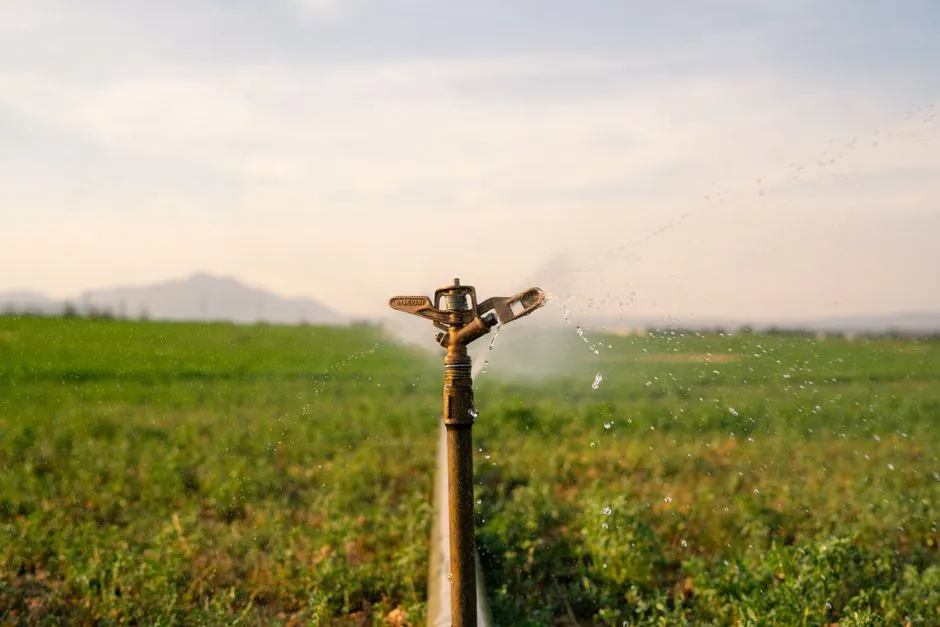
An irrigation actuator should deliver the valve’s required quarter-turn, multi-turn, or linear travel with adequate torque or thrust under the specified differential pressure [S2].
Final selection must combine mechanical sizing with valve size, water pressure, electrical supply, operating cycles, environmental exposure, mounting, feedback, and fail-position requirements [S1][S2][S7].
Start with Valve Travel and Load Path
Valve motion is the primary actuator-selection criterion: quarter-turn actuators suit ball, butterfly, plug valves, and dampers; multi-turn actuators suit valves needing repeated shaft or stem rotations; linear actuators suit globe valves and other straight-travel mechanisms [S2]. This decision must be made before considering actuator price, physical size, or extra features [S2].
A 90-degree actuator category is not a model selection. After confirming travel, calculate the worst-case load from valve geometry, maximum allowable working pressure, flow force, stem or shaft geometry, and friction [S2][S6]. For irrigation valves, specify the pressure at which sizing is valid rather than using line pressure alone.
The resulting actuator family must match the valve interface. ISO-style pad mounting may simplify quarter-turn installation, but flange, stem, shaft diameter, height, rotation, and coupling details still need confirmation from the valve drawing [S2][S6].
Compare the Three Electric Actuator Families
The practical comparison is mechanical travel, environmental compatibility, and control capability. Quarter-turn units address 90-degree valves, multi-turn units address rotating stems, and linear units address globe-style straight travel [S2]. Electric, pneumatic, and hydraulic actuators convert energy into mechanical motion, and selection depends on application-specific requirements [S4].
Actuator selection depends on application requirements, with [S4] identifying heavy-duty motion as a case in which a hydraulic actuator would be the obvious choice. The broader mechanical comparison between electric actuators, hydraulic actuators, and pneumatic actuators helps identify the correct power source before model sizing.
Electric valves in irrigation can also be specified as actuator-equipped assemblies. If the purchase package is valve-centric rather than actuator-centric, globe valve selection for irrigation systems should be reviewed before the actuator model is fixed.
Size Torque and Thrust at the Worst Condition
Quarter-turn actuator sizing requires calculated break-to-open and break-to-close torque at maximum differential pressure, with margin for friction, seat design, and service factors [S2][S6]. Linear sizing requires thrust against the closed-valve differential pressure and the resistance of the packing, guide, and connected process load [S7]. Electric valve actuators should be sized by the required torque or thrust rather than by valve size alone [S2].
Do not size from nominal valve diameter or nominal torque alone. Record at least the valve model, valve size, pressure rating, flow direction, closure member, stem material, seat material, and allowable actuator interface [S2]. The selected output must exceed calculated demand, while the actuator drive must not impose a load beyond the valve manufacturer’s permitted stem or shaft limits.
Linear-actuator engineering also requires stroke, speed, duty cycle, mounting geometry, feedback, and control inputs to be treated as a coordinated set rather than separate catalogue options [S7]. An actuator that meets thrust but lacks stroke clearance, travel-time margin, or compatible mounting can still be mechanically unusable.
Specify Power, Controls, and Valve Position Feedback
Irrigation control selection must begin with the available electrical supply, including voltage, phase configuration, frequency, control voltage, and protection arrangement [S2]. The actuator platform and field-control architecture must then match the irrigation controller, solenoid or switching interface, feedback devices, and required fail-safe action [S2].
Electric actuators commonly support feedback and self-diagnostics, enabling more precise positioning and repeatable motion than a basic actuator without position feedback [S4]. For remotely operated irrigation, verify open-limit and closed-limit feedback, local manual override, travel-time supervision, and the exact signal type required by the controller.
Selection tools can narrow candidates, but the entered requirements remain the engineering record. SMC provides an electric-actuator model-selection page [S3], and Intelligent Actuator provides a quick-selection tool for single-axis electric actuators [S5]. Use these tools to filter the range, then validate the result against the valve data sheet, site electrical design, and control philosophy.
Match the Enclosure to the Irrigation Site
The actuator's operating environment should be matched to the project requirements [S2].
Environmental exposure is not limited to weather. Irrigation installations near pumps may experience condensation, vibration, hose or cable movement, and conductive wet soil. Confirm the permitted orientation, whether top-entry or side-entry mounting is required, stem projection, service clearance, and the distance needed to remove the actuator without disturbing the pipework [S2].
Explosion-proof construction should be added only when the application requires it [S2]. For a normal exposed irrigation cabinet without a defined hazardous-area classification, a durable weather-resistant enclosure with compatible corrosion protection is generally a cleaner specification than unnecessary hazardous-area options.
Define Failure Position and Maintenance Access
A fail-safe or fail-open requirement changes the actuator architecture because loss of electrical power removes the motor power needed to travel the valve [S2]. Specify the required state on power loss, whether local storage is needed, and how that state is verified at the valve. A standard spring-return electric actuator and a motor-operated non-spring unit are not interchangeable for this function.
For irrigation networks, fail-open may be mandatory where loss of flow could damage crops, while fail-closed may be selected where continued flow creates a greater hazard. The choice belongs to the hydraulic and operating plan, not to a generic actuator preference. Also identify manual override, local status indication, and remote position feedback before releasing the model for procurement [S2].
Maintenance criteria should include actuator inspection, stem or shaft inspection, seat and seal replacement, cable-entry sealing, and electrical-component inspection. These tasks must be possible in the installed orientation and with the available access space. Selection tools that expose downloadable specifications and manuals help identify serviceable components before a site-specific model is selected [S5].
Use a Procurement Shortlist with Traceable Acceptance Criteria
A purchasable irrigation actuator record should contain the valve manufacturer and model, nominal size, motion, maximum design pressure, calculated operating torque or thrust, required stroke or turns, mounting dimensions, electrical supply, control signals, feedback type, enclosure requirement, corrosion class, fail-position requirement, and required number of operating cycles [S2][S7].
Shortlist a quarter-turn actuator for a 90-degree ball, butterfly, or plug valve; a multi-turn actuator for a rotating-stem valve requiring multiple revolutions; and a linear actuator for a globe or rising-stem valve [S2]. Exclude any candidate that lacks adequate worst-case output, compatible mounting, verified site power, or a clearly defined power-loss position.
The final commercial and technical comparison should place candidates against four criteria: calculated load margin, travel and closure time, enclosure and corrosion suitability, and control-interface compatibility. Verify the chosen model against the manufacturer’s current data sheet and manual rather than relying on a catalogue description or selection-tool result alone [S3][S5].