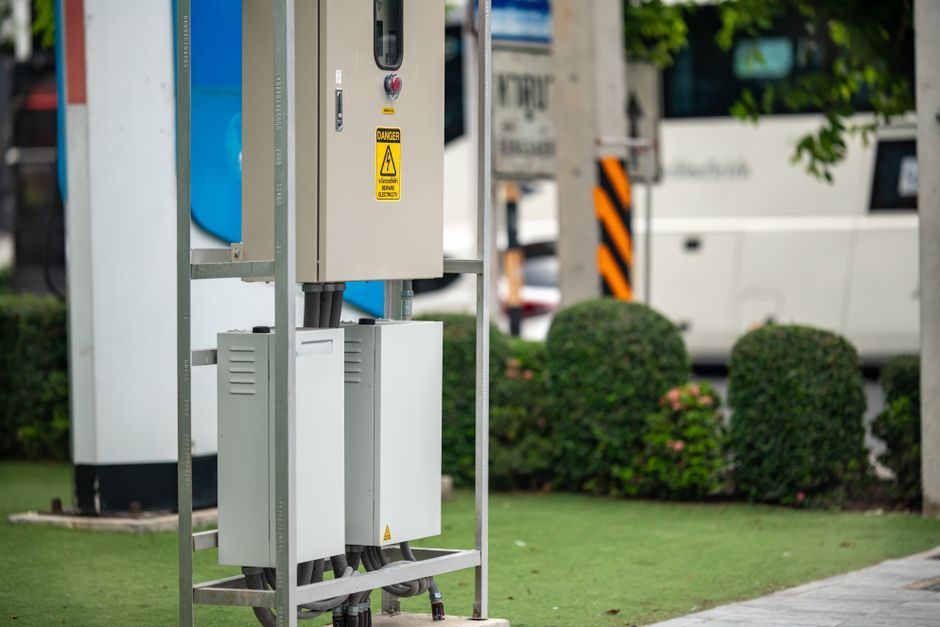
An electric actuator is a motor-driven mechanism that produces rotary or linear thrust to operate a downstream device such as a ball valve, butterfly valve, or HVAC damper. Process-grade units typically span 10 Nm to 10,000 Nm for quarter-turn duty, with multi-turn variants covering higher seating loads [S5][S6].
Selection logic is mechanically identical across vendors: define the load curve, the duty cycle, the environment, and the control signal first, then match a gearbox and motor envelope to that envelope. Skipping any of those four steps is the most common reason an electric actuator fails in service.
Step 1: Quantify the Load Before Looking at a Catalog
For a quarter-turn valve, calculate the required seating and breakaway torque from the valve maker's published curve at the design differential pressure, then apply a safety factor — typically 1.25 to 1.5 for on/off duty and 1.5 to 2.0 for modulating duty — to absorb seat wear, water-hammer surge, and frequency-of-operation derating [S3].
For linear duty (globe valves, dampers, conveyors), the equivalent number is thrust in N or lbf, not torque. Noliac's piezo actuator selection framework flags "constant load vs. spring load" as the first discriminator, because the displacement curve under each load is different and the same part can overheat or stall when misapplied [S3]. The same load-class discipline applies to industrial electric actuators: know whether the load is constant, spring, or inertial before sizing the motor [S3].
Step 2: Match the Drive Train to the Duty Cycle
Three drive families dominate the market, and they trade off against each other in clearly different ways. The reference comparison below lines them up against the criteria a buyer actually uses to shortlist. [S1]
1. Part-turn / quarter-turn electric actuators: 90° or 180° rotation, typically 10 Nm to 10,000 Nm, geared DC or AC motor with limit switches. Best for ball and butterfly valves in isolation or HVAC; common IP65/IP67 enclosure, optional ATEX/IECEx for hazardous areas.
2. Multi-turn electric actuators: continuous rotation through many turns to drive rising-stem gate or globe valves, output thrust up to several hundred kN. Heavier gear train, larger enclosure, slower stroke time; required for high-pressure steam or large-bore gate duties where quarter-turn geometry is unsafe.
3. Linear electric actuators: a motor drives a lead screw or ball screw to push a stem directly. Stroke from 50 mm to 1000+ mm, thrust from a few hundred N up to ~50 kN. Best for globe valves, damper blades, and solar tracking; replaces pneumatic actuators where compressed air is unavailable or expensive.
Across all three, modulating duty (>200 starts/hour, continuous position control) derates the unit versus on/off duty because the motor windings, brushes, and gearbox all run hot under repeated partial strokes. Standard IEC sizing practice assigns different S2/S4 duty ratings to capture this, and a unit rated 500 Nm on-off may only be rated 200 Nm modulating.
Step 3: Environment, Enclosure, and Hazardous Area
Outdoor and washdown installations need at least IP65, and IP67 is now the default for wastewater, food, and marine duty. Offshore and chemical plants typically require IP68 for temporary submersion plus a salt-spray tested coating such as ISO 12944 C5-M [S5].
For flammable gas or dust, the actuator body and terminal box must carry an independent certification appropriate to the zone — typically ATEX category 2 (zone 1) for European sites, or IECEx equivalent for international projects, with the marking visible on the nameplate. Matching the wrong category (e.g. category 3 in a zone 1 area) is a procurement error that fails on first audit.
Ambient temperature band is the second environmental discriminator. Standard industrial actuators are rated roughly -20 °C to +70 °C; arctic and tropical deployments need low-temperature elastomers and greased-for-life gearboxes. For tropical or hygienic duty, stainless housings (typically 316L) and food-grade grease are required.
Step 4: Control Signal and Bus Protocol
Modulating 4-20 mA analog input with 4-20 mA position feedback is the next tier, used in throttling loops where a linear actuator drives a control valve. [S1]
Fieldbus and Industrial Ethernet are now the default on greenfield sites. The dominant protocols are PROFIBUS DP, PROFINET, Foundation Fieldbus, and Modbus RTU/TCP, with HART overlaid on 4-20 mA as a hybrid. Note that HART is FSK superimposed on a 4-20 mA analog loop, not a native digital fieldbus; PROFIBUS PA and Foundation Fieldbus HSE are the native digital options for the same valve. Mixing them up at the DCS marshalling panel is a common commissioning fault.
Where the actuator drives a ball valve in a fail-safe ESD or fire damper, specify a separate SIL-rated shutdown input wired to a safety relay or safety PLC. The actuator's internal MCU is rarely SIL-rated on its own; the loop-level SIL is achieved by the combination.
Who Should NOT Pick a Standard Quarter-Turn Electric Actuator
Three duty classes break a standard electric actuator quickly and are better served by alternatives. First, sub-zero cryogenic service below -30 °C: elastomer seals stiffen and grease thickens; specify a cryogenic bonnet extension on the valve and a low-temp actuator variant, not a stock unit. Second, very high cycle modulating duty (over 1,000 starts/hour): the motor overheats and brushes wear; a hydraulic actuator or a purpose-built servo-electric actuator is the right call. Third, explosive dust environments (grain, sugar, metal powders): the dust-zone certification is different from gas-zone certification, and a gas-rated ATEX/IECEx mark does not automatically cover dust. [S3]
For purely residential or light commercial heating circuits, a thermal electro-thermal actuator (often called a "thermo actuator" in Chinese catalogs) opens a small radiator or underfloor valve with wax-expansion or PTC heater duty, drawing 1-3 W at 24 VAC or 230 VAC [S6]. Picking an industrial rotary actuator for a domestic radiator wastes cost and headroom.
Total Cost of Ownership and Sourcing
Capital cost is only ~30% of the lifetime spend on a valve actuator; the other 70% is commissioning labour, energy, and unplanned-downtime risk. Electric actuators consume power only during the stroke, typically 30-200 W for 10-60 seconds, then idle at single-digit watts, which under continuous cycling is far cheaper than maintaining compressed-air pressure for a pneumatic actuator of comparable output. [S5]
Lead time is a 2026 reality buyers need to plan for: rare enclosure ratings, large multi-turn gearboxes, and certified SIL/ATEX units routinely run 12-24 weeks from European and Japanese vendors, while standard quarter-turn units ship in 2-6 weeks from regional assembly. For selection support that goes beyond catalog torque tables, buyers can also review how related equipment is mapped against duty cycles in adjacent spec guides such as Swing Check Valve Selection for Automotive Service: Body, Bore, and Seat Spec Map.
Watch for three signals over the rest of 2026: ATEX/IECEx certification database updates for hazardous-area enclosures, the rollout of PROFINET over APL (Advanced Physical Layer) replacing copper Ethernet in Ex zones, and tighter IEC 60079 series interpretations on dust-group marking. A shortlist that locks in torque, duty cycle, IP/Ex class, and bus protocol before vendor selection will pass any of those without rework.