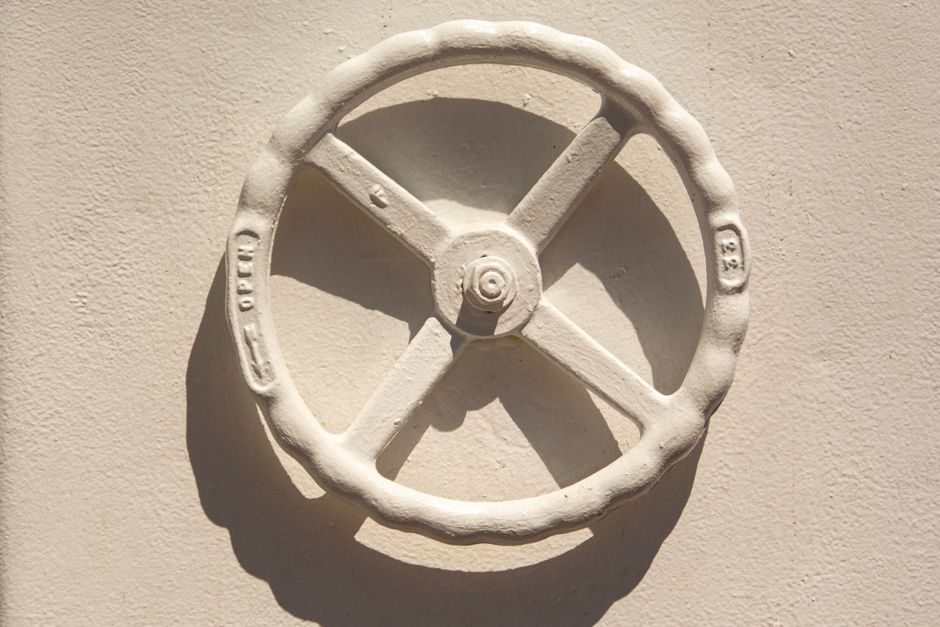
An electric ball valve combines a quarter-turn ball valve with an on-board electric actuator; selection fails when any one of four specs — voltage, torque, body material, or sealing — is mis-sized against the line fluid.
Stock units in 2026 catalogs ship in 2-wire and 3-wire variants at 12 VDC, 24 VDC, 110 VAC, and 230 VAC, with DN15–DN32 brass bodies and DN20–DN25 stainless 316L threaded bodies dominating the small-bore segment [S1][S3][S7].
Body Material vs Media — The First Filter
316L stainless electric ball valves rated 0–1.6 MPa and 0–60 °C are listed as compatible with water, air, oil, and acid/alkali corrosive media of low viscosity [S3]. For larger industrial lines, eccentric semi-ball (double-eccentric) bodies in WCB (A105), CF8 (304), CF8M (316), CF3 (304L), and CF3M (316L) cover PN0.6–PN4.0 MPa / Class 150–Class 900 in DN40–DN1400 sizes, with stainless or hard-alloy sealing [S2]. Brass bodies remain the workhorse for potable water, HVAC, and air-handler dampers; the air-damper SKUs at DC 12 V/24 V with 100/125/150 mm disc sizes are explicitly designed for ventilation ducts rather than pressure piping [S7].
For aggressive chemicals at low pressure and modest temperature, UPVC motorized ball valves (DN15–DN50) appear in the same e-commerce catalogs as their brass siblings, but their pressure ceiling sits well below the 1.6 MPa offered on the 316L threaded series [S3][S7].
Voltage, Control Signal, and Wiring Topology
Catalog wiring options cluster into four families: 2-wire auto-return (capacitor-return) at 230/110 VAC and 9–24 VDC, 3-wire common-line at 6/12/24 VDC, 3-point floating control on AC mains, and proportional 0–10 VDC or 4–20 mA input for modulating duty [S1]. The Runxin 316L threaded series documents open/close times of 12.5 s (standard) and 3 s (fast) at 2 W–4 W motor power and 0.4 W–2.5 W holding power, with EPDM or FKM seal options [S3].
Capacitor-return 2-wire control eliminates the third wire and lets the actuator spring back to a fail-safe position on power loss; this is the topology most retrofit HVAC and underfloor-heating jobs use, and it is the default SKU on several WRA-63 AC and WRA-42 DC families [S1]. For process control, a 0–10 VDC or 4–20 mA proportional input is the path to a true modulating electric ball valve rather than a binary one [S1].
Torque, Port Configuration, and Actuator Sizing
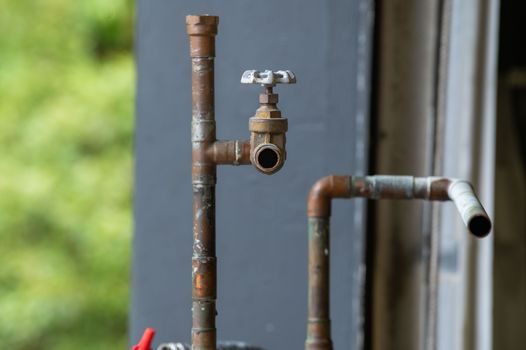
Quarter-turn ball valves need an actuator that can overcome breakaway torque plus seat friction; manufacturers publish torque bands tied to port size and series. Catalog data from a single supplier lists mini series at low N·m ratings, a 10 N·m AC class, and a large-torque WVA4 class for 2-way and 3-way bodies at 230/24 VAC and 24 VDC [S1]. The same vendor's EVO WRA-22 8S/35S series targets 2-way and 3-way bodies with proportional inputs in the 8–35 N·m band [S1].
Seat material also moves the torque budget: PTFE seats have a lower breakaway coefficient than metal-to-metal hard-alloy seats, so a stainless/hard-alloy semi-ball at PN4.0 MPa typically needs a larger actuator frame than a PTFE-seated O-ball at PN1.6 MPa even at the same DN [S2][S3]. For slurries or solids-bearing media, the double-eccentric geometry is specifically marketed as reducing starting torque compared with a concentric O-ball, which keeps the actuator frame smaller and the BOM cheaper [S2].
Sealing, Leak Class, and Verification
Soft-seated electric ball valves are typically rated to Class VI or equivalent bubble-tight shutoff; ISO 5208 is the reference leakage classification system most small-bore product datasheets cite for A–F rate and Class IV–VI band. Hard-seated eccentric semi-ball designs shift to metal-to-metal Class IV–V territory, with the trade-off being higher temperature ceiling and solids tolerance, not tighter shutoff [S2][S3].
Two real numbers to demand on a submittal: the seat-leakage class letter (per ISO 5208) and the cycle-life figure at rated ΔP. The threaded 316L line states 0–1.6 MPa working pressure and 0–60 °C with EPDM or FKM seals and IP65 protection [S3]. The large eccentric semi-ball line states PN0.6–PN4.0 MPa / Class 150–Class 900 in WCB, CF8, CF8M, CF3, CF3M, with stainless or hard-alloy sealing as standard, and an electric drive as the listed actuation method [S2].
Failure Modes and Boundary Conditions
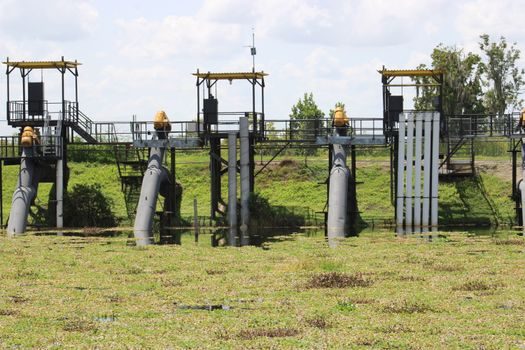
Three failure modes drive most warranty returns. First, water hammer: a fast 3 s closure on a long liquid column can blow a PTFE seat; slow the actuator, add a check valve, or oversize the line. Second, galvanic mismatch: brass motorized ball valves directly coupled to aluminium or zinc-plated fittings pit within months in humid or mildly corrosive atmospheres [S7]. Third, condensate in an IP65 enclosure on a DC unit installed outdoors in a cold climate will still creep past the gasket; a true IP67 housing (the rating carried on the EVO IP67 SKU) is the better outdoor choice [S1].
Media boundaries matter as much as pressure boundaries. The 316L series explicitly states compatibility with low-viscosity acid/alkali media; slurries, pulp stock, and two-phase solid-gas streams are not in that list, and the eccentric semi-ball — DN40–DN1400, double-eccentric — is the documented path for those duty cases [S2][S3].
Application Fit — Who Should Not Pick the Default
A buyer walking into a Chinese OEM/ODM brass-valve plant (Zhejiang cluster, founded 2006, ~220 employees, 4 666 m²) is buying water/HVAC commodity, not a process skid [S6]. Forged 316L threaded bodies and eccentric semi-balls are the right starting point for chemical, steel, or soda-industry service per the supplier's own application list [S2]. UPVC electric ball valves make sense for irrigation and pool chemistry at low pressure, but anyone speccing a 4-inch DN100 line at >1.0 MPa should jump to a flanged metal-seated semi-ball rather than a plastic-bodied SKU [S7][S2].
For a general-purpose process line where modulating control matters, picking a 2-wire on/off unit because it is cheaper is the most common spec error — the right part is a 0–10 VDC or 4–20 mA proportional model from the EVO WRA-22 or WVA4 families, with the 3 s or 12.5 s timing chosen against the loop's expected dead time [S1][S3].
Shortlist Logic and Sourcing Path
A practical shortlist reads as: (1) DN15–DN32 brass, 2-wire capacitor return, 230 VAC, on/off, for fan-coil and zone HVAC; (2) DN20–DN25 316L threaded, 3-wire DC, EPDM or FKM seal, IP65 minimum, for chemical dosing and water treatment; (3) DN40–DN1400 double-eccentric semi-ball, WCB or CF8M, electric drive, ASME or DIN flanged, for steel/soda and solids-bearing media; (4) DN100–DN150 UPVC, on/off, for irrigation and pool chemistry at low pressure [S1][S2][S3][S7]. The OEM/ODM brass cluster in Zhejiang and the Wenzhou specialty-valve makers are the most active Chinese supply nodes; for specification depth on related process equipment, this steel manufacturing route and sourcing map and this knife-gate valve sourcing map for China frame the adjacent product decisions an electric ball valve will sit next to on a P&ID. Verify each shortlisted SKU on four numbers before PO: voltage, torque (or N·m class), seat-leakage class per ISO 5208, and the body/seal material pair against the line fluid.