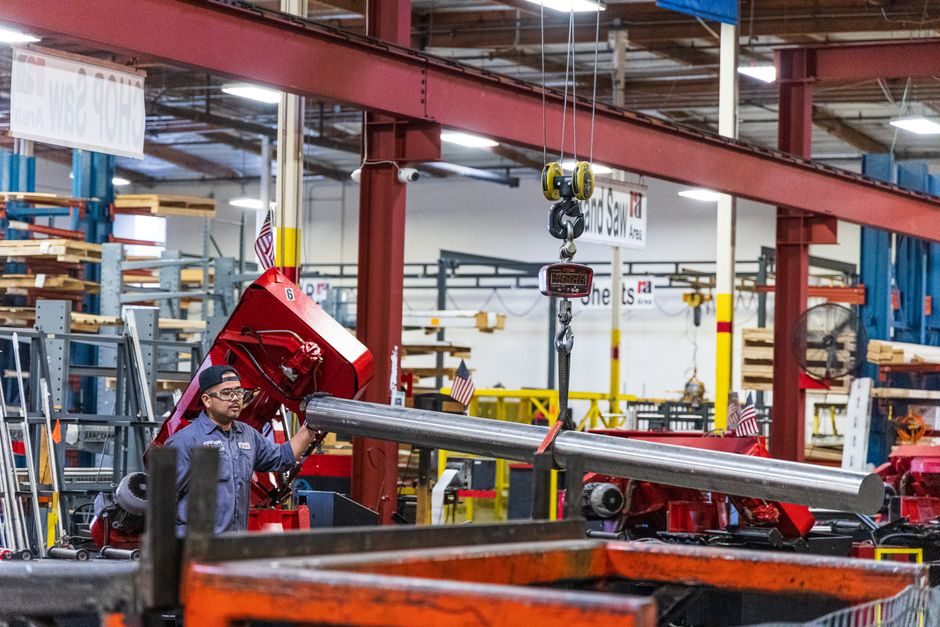
Steel mills divide into two primary process routes — integrated blast furnace / basic oxygen furnace (BOF) plus continuous casting, and electric arc furnace (EAF) fed by scrap or DRI — and equipment selection tracks that split tightly: integrated mills optimize for high tonnage, slag control, and gas cleaning, while EAF shops optimize for melt chemistry speed, energy, and on-spec scrap input [S1][S3].
Across both routes the QA stack is converging: handheld XRF and LIBS for incoming scrap and alloy verification, online non-contact thickness and coating-weight gauges on strip lines, and continuous emissions monitoring for stack gas compliance are the four technology blocks most procurement teams now spec in parallel [S3]. The eBook reference from a global analytical-instrument vendor packages that workflow end-to-end, from raw-material intake to the final coating line [S3].
Process Routes and the Equipment Each One Demands
The EAF route compresses a steel mill into one or two vessels, so a 100-200 ton EAF typically needs an 80-120 MVA transformer, a ladle furnace for chemistry trimming, and a vacuum degasser if the product mix includes plate or forging grades [S3]. EAF shops also live and die by scrap chemistry, which is why handheld XRF and LIBS analyzers are now common at the scrap yard rather than only in the lab — out-of-spec tramp elements such as Cu, Sn, Cr must be rejected before charging [S3].
The integrated BOF route stacks raw-material handling, a sinter plant or pellet plant, coke ovens, a blast furnace at roughly 2,000-3,000 m³ working volume, a BOF vessel, a continuous caster (slab, bloom, or billet), and a hot strip mill or plate mill downstream. E-TECH's scope — Air Cooled Condensers, HRSG casings, finned tubes, pressure parts, ducting, trapezoidal sheets, and expansion joints — sits squarely in the equipment-and-modules tier that feeds both power EPC and steel-mill construction [S1].
Material Specification Bands: Carbon, Alloy, and Stainless Lines
Carbon steel grades (AISI 1008 through 1095, ASTM A36 structural, A516 pressure-vessel plate) dominate the integrated-mill output as hot-rolled coil, plate, and structural sections, and the QA demands are mostly dimensional — thickness tolerance, width, flatness — plus mechanical properties (yield, tensile, elongation) checked at the hot strip mill exit [S3].
Alloy steel grades (4140, 4340, 8620, plus tool steels and Cr-Mo pressure-vessel grades) shift the QA burden to chemistry control at the ladle furnace, vacuum degassing for hydrogen and nitrogen, and ultrasonic testing of billets and bars for internal soundness [S3]. Stainless and silicon-electrical grades push the equipment stack further: argon-oxygen decarburization (AOD) vessels, continuous casting under controlled atmosphere, and 20-roll Sendzimir mills for cold-rolled stainless coil with thickness control down to 0.3 mm and below.
For a buyer's spec sheet the practical rule is: pick the equipment set by steel family first, then by end-form. Plate and heavy-structural mills (single-stand reversing mills) are wrong for cold-rolled sheet; a thin-slab caster cannot feed a heavy plate mill economically. See how linear encoder selection maps to mill-roll position feedback when you are sizing a rolling stand.
Online QA: Thickness, Coating Weight, and Strip Flatness
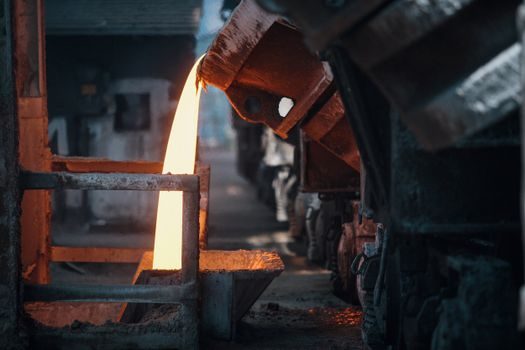
Non-contact thickness gauges using X-ray or isotope transmission, plus coating-weight gauges for galvanized and galvannealed lines, are specified to a thickness tolerance of roughly ±1-2% on cold-rolled strip and a coating-weight tolerance of roughly ±3-5 g/m² on hot-dip galvanizing lines [S3]. Those numbers are vendor-published and procurement engineers should ask for the calibration drift and reference-standard trace documentation before accepting a guarantee. Eddy-current and laser-based triangulation sensors complement the X-ray gauge for strip edge and flatness measurement at the run-out table.
Handheld LIBS has displaced some traditional OES work for in-trough carbon and alloy verification, with measurement times in the 1-10 second range; however, OES remains the higher-precision tool for full elemental coverage including C, S, N, and O below 0.01% — the spec boundary most chemistry QA labs still require [S3]. The industrial magnet chain feeding these melt shops is itself a spec-driven process; see rare-earth process control for the sensor stack used in separation stages.
Emissions Monitoring and Compliance Stack
Continuous emissions monitoring systems (CEMS) for the sinter plant, coke oven, blast furnace stove, and BOF gas cleaning train must measure particulates, SO₂, NOₓ, and CO in real time, and the procurement spec typically calls for heated sample lines, dual-detector redundancy, and a documented calibration schedule against NIST-traceable reference gases [S3]. For EAF dust collection, the baghouse differential-pressure signal is itself a critical control point — bag failure shows up as a step change in ΔP before the opacity monitor flags it.
Stack gas flow measurement typically uses an S-type pitot or an ultrasonic flow meter upstream of the CEMS, with annual relative-accuracy test-audit (RATA) reporting. Coal-fired reheating furnaces and power-recovery turbines on the BOF add a second CEMS node that must be scoped separately from the mill-wide system. Vendor guidance and instrument-selection checklists for this stack are now bundled into a single reference by one analytical-instrument supplier [S3].
Plant Equipment Sourcing: Turkey, Ireland, Jamaica, and China
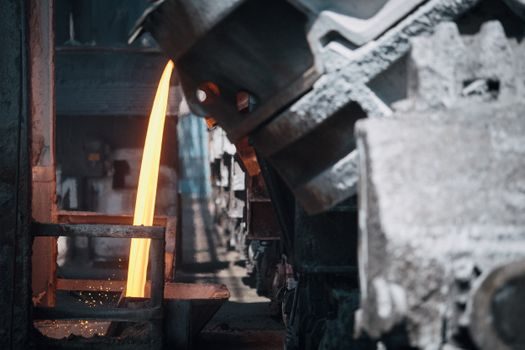
E-TECH ENERGY LTD, an engineering consultancy in Letterkenny, Ireland, represents over 40 steel-manufacture and erection companies in Turkey and Ireland, sourcing ACC bundles, HRSG modules, casings, stacks, LP/HP drums, finned tubes, pressure vessels, and piping spools into international EPC projects — a 20-year scope that has now built 2025-2023 and 2022-2016 reference-project stacks [S1]. For buyers this is a viable channel when a Western EPC wants a fabrication yard outside the EU without engaging each Turkish mill directly.
Steel Craft Limited, on Constant Spring Road in Kingston, Jamaica, has been serving Jamaica and the Caribbean for over 55 years with custom fabrication and industrial equipment — the kind of regional fabricator typically used for replacement parts, structural steel, and on-site weld repair rather than new-mill construction [S2]. Where scope crosses demolition or on-site steelwork, an angle grinder spec map helps right-size the handheld tools in the maintenance kit.
For Chinese-sourced equipment the working channel is the analytical-instrument and mill-electrification vendors themselves; one global supplier publishes a downloadable eBook that consolidates the equipment-selection workflow from raw-material inspection to final coating, and uses that channel to route leads into its CEMS, XRF/LIBS, and thickness-gauge product lines [S3].
Selection Boundary: When a Mill Project Is Not a Mill Project
If the tonnage is below roughly 200,000 tonnes per year, the plant is almost always built around an EAF-mini-mill footprint, not a full BOF+continuous-caster layout — capital cost per tonne tracks this boundary closely. If the product mix is dominated by rebar and merchant bar, a continuous billet caster plus a bar mill is the correct minimum configuration; if the mix is plate, a single-stand reversing mill is required and that single asset drives the project capex.
If the chemistry mix is mostly carbon steel, secondary metallurgy can be limited to a ladle furnace with no vacuum tank; if it includes more than ~20% alloy and stainless grades, an AOD or VOD unit becomes a non-optional investment. Buyers can use the rock wool panel price 2026 map as a reference for the secondary cost lines — building enclosure and insulation — that often get under-scoped in mill-capex reviews.
Drive Trains, Couplings, and Rolling-Mill Mechanical Equipment
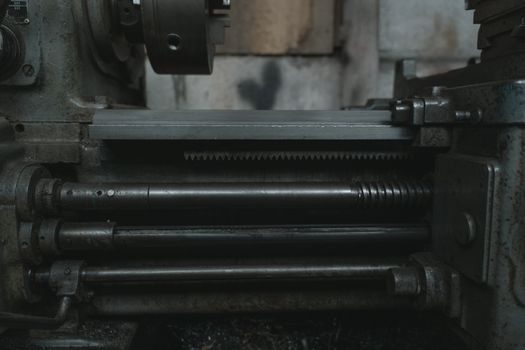
Rolling-mill main drives typically use 5-8 MW AC motors with twin-pinion gearboxes, and the soft-start and torsional-vibration problem is solved with a fluid coupling or a VFD on the motor — a fluid coupling is the lower-maintenance option but trades efficiency at part load. Sizing and filling procedures for these couplings are standardized; see fluid coupling installation for the alignment and fill-volume protocol.
The selection boundary between a fluid coupling and a VFD depends on the duty cycle: reversing mills and cold-stand drives that cycle more than ~20 starts per hour favor a VFD, while single-direction roughing stands with steady loads run cleanly on a fluid coupling for decades. Vendor-supplied selection tables and disadvantage catalogues are a useful sanity check on this — see fluid coupling advantages and selection boundary for a full trade-off map. Crane and roller-table drives in a mill are also spec-driven; industrial magnet types covers the lifting magnet half of that mechanical stack.
Standards, Tolerances, and Sourcing Signals
Common steel-product standards in this equipment set include ASTM A36 for structural shapes, ASTM A516 for pressure-vessel plate, ASTM A240 for stainless plate/sheet, and API 2H / 2W for offshore structural grades. Mill-side reference standards for QA include ISO 9001 for the QMS backbone, ISO 17025 for the test lab, and ASTM E415 / E1086 for OES analysis of carbon and low-alloy steels. None of the four promotional sources publish complete mill-equipment specs, so a buyer's spec sheet is built from these standard references plus vendor datasheets [S1][S2][S3].
Trackable next signals: the E-TECH 2025-2023 reference-project list is the cleanest indicator of new steel-fabrication awards out of Turkey into MENA and European EPCs [S1]; the industrial magnet supplier sourcing map and the phosphate rock suppliers 2026 map cover adjacent feedstock and consumables that feed the same metallurgical industry stack.
For the relevant spec sheets and selection criteria, see additive manufacturing material.