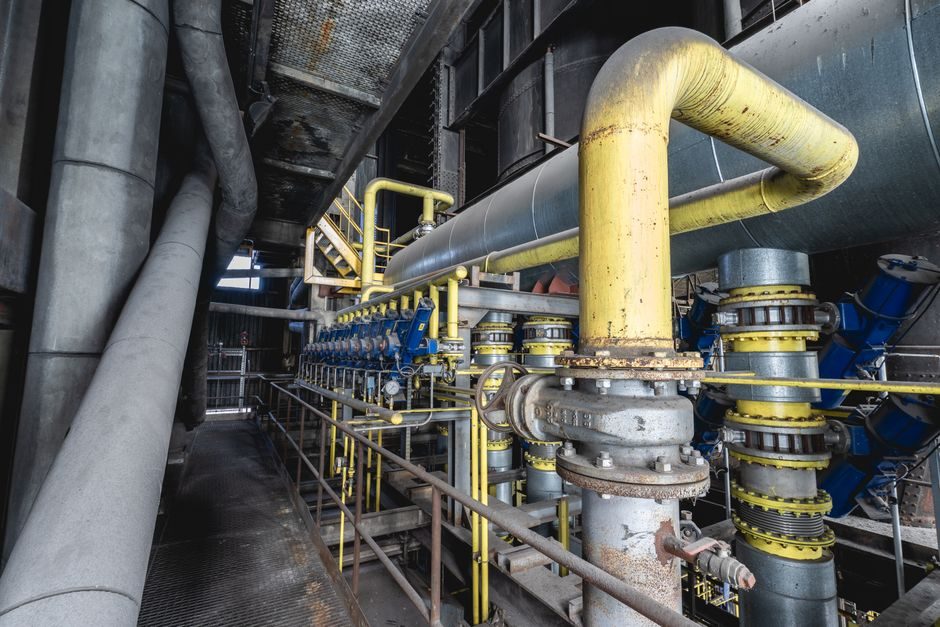
An electric ball valve's temperature envelope is governed by four independent limits — media, ambient, seat/seal, and actuator housing — and a single datasheet usually only prints two of them clearly [S9].
The practical decision order is media chemistry first, seat/seal second, ambient/IP third, and control signal last, because seal failure destroys the valve while a wrong signal only breaks control [S9][S7].
Media temperature limits by seat and seal material
EPDM seats in threaded stainless electric ball valves are typically rated for media from 0 °C to 60 °C at operating pressures of 0–1.6 MPa, while FKM (Fluororubber / Viton-class) is offered as the higher-temperature upgrade on the same body [S9]. PTFE seats on commodity ball valves generally run −29 °C to +200 °C media in PN16–PN40 service, and metal-seated variants extend the upper media limit to roughly +400 °C — but only on flanged bodies in higher pressure classes per GB/T 12237-2021 [S5]. Three-way brass-body variants with female NPT ends in sizes 1/2" to 2" cap out at 375 psi (25 bar) working pressure and 158 °F (70 °C) media, with a close-off differential of 87 psi (6 bar) [S8]. For steam and condensate service above 150 °C, the spec point shifts entirely: ball valves are no longer the right geometry and a steam trap (疏水阀) takes over the role of removing condensate without passing live steam [S10].
Ambient temperature and actuator housing class
Quarter-turn electric actuators on motorized ball valves are commonly rated to an ambient window of −20 °C to +70 °C, with IP65 standard on small threaded units and IP67/IP68 on field-installed quarter-turn models [S9][S4]. The IP68 rating is not a free temperature upgrade — submersion-rated seals still need to be confirmed against the fluid temperature, because the housing class covers water-ingress, not thermal endurance [S4]. For modulating duty on water and steam, single-phase actuators accepting 24–240 V AC with milliampere or voltage control inputs are a common form factor, and the AC supply window itself becomes a hard limit when the actuator is mounted in sub-zero cabinets without anti-condensation heaters [S1]. When the actuator environment sits below −20 °C, the spec should call out low-temperature grease, space heaters, or a separate enclosure — the IP and ambient fields in the catalogue are not interchangeable [S4].
Electrical and signal compatibility at the actuator
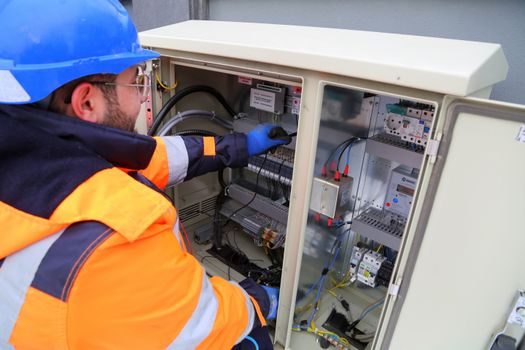
Supply voltages offered on current-production motorized ball valves include 230 VAC, 110 VAC, 24 VAC, 24 VDC, 12 VDC, 3 VDC, and 9–24 VDC, with control modes covering on-off, 3-point (floating), and proportional 0–10 VDC / 4–20 mA [S7]. Capacitor-return designs are widely used for fail-safe close or fail-safe open on power loss — the return spring rides on the same capacitor that runs the open stroke, so supply voltage tolerance (typically ±10% of nominal) becomes a hidden temperature/ageing variable [S7]. A 100 Nm basic modulating actuator on 220 VAC with IP68 lists around US$ 402 per piece in current Asian trade listings, while compact quarter-turn electric actuators for stainless/brass ball and butterfly valves sit in the US$ 185–455 range depending on torque and IP class [S4]. These prices are not temperature upcharges by themselves — the cost jump comes from FKM/PTFE seats, IP68 sealing kits, and the capacitor-return option being added on top of the base 24 VAC/4–20 mA actuator [S4][S7].
Mechanical interface: ends, sizes, and pressure class
Threaded-end electric ball valves in stainless 316L ship in DN20 with G3/4 thread as a typical small-port configuration, with stem material 316L and optional alloy upgrade to Harley-class B or C for higher temperature duty [S9]. For petroleum, petrochemical and allied-industries service, GB/T 12237-2021 covers flanged and butt-welded steel ball valves in PN16–PN100 and Class 150–Class 600, with NPS-matched sizes DN15–DN600, while GB/T 15185-2016 covers flanged iron and copper ball valves and GB/T 38202-2019 covers installation, operation, and maintenance of fully-welded-body ball valves [S5]. Three-way NPT brass bodies are limited to 1/2"–2" line size and 375 psi (25 bar), so any spec above 2" line size or above Class 300 service should jump directly to a flanged steel body [S8][S5]. For larger line sizes and higher pressures, the torque demand on the actuator grows faster than the pressure rating — a 1.6 MPa threaded unit on DN20 is roughly 8–10 seconds open/close, but DN50 and above in flanged PN40 typically crosses 30–60 seconds open/close on capacitor-return designs [S7][S9].
Application-fit check: where electric ball valves are not the right pick
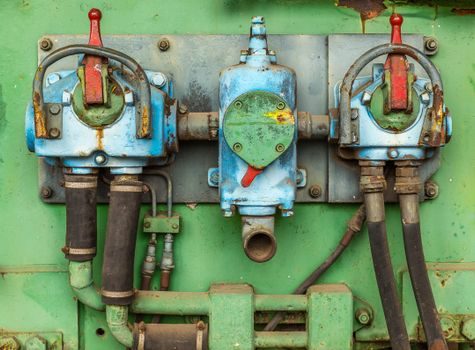
For animal-husbandry equipment with continuous cycling in damp, mildly corrosive atmospheres, threaded stainless electric ball valves with EPDM seals and IP65 housings have been a field-proven configuration, with multi-year service life reported on OEM-supplied lots since 2014 [S2]. Steam and condensate systems above ~180 °C media are not a ball-valve application — a steam trap (疏水阀) handles condensate and non-condensables without live-steam leakage, and a ball valve in that line would see seat failure within months on standard PTFE [S10]. Solenoid-driven drain valves with NPT/BSPT threads (NPT & BPST automatic drain variants) are a different category: they are designed for compressed-air condensate drain under timed or float control, not for modulated process temperature service, and their temperature ceiling is usually capped by the solenoid coil class (F-class or H-class) rather than the ball seat [S6]. The 3-way brass body at 70 °C / 25 bar is also a hard ceiling — a process spec that exceeds either number should drop the 3-way geometry and step up to a flanged steel ball valve with metal seats [S8][S5].
Standards and sourcing map for temperature-bound specs
The Chinese national standard stack for ball valves is GB/T 12237-2021 (petroleum/petrochemical steel ball valves, flanged and butt-welded, PN16–PN100, Class 150–600), GB/T 15185-2016 (flanged iron and copper ball valves), and GB/T 38202-2019 (installation, operation, and maintenance of fully-welded body ball valves) — these are the documents specifiers should cite when media temperature and pressure class are tied together [S5]. A spec sheet that only quotes an ambient number and an IP class, without a seat material and a media pressure class, is incomplete; the same valve can be sold at 0–60 °C media on EPDM and 0–180 °C media on FKM in the same housing [S9]. For trade-list sourcing, current 2026 listings cluster compact quarter-turn electric actuators for stainless/brass ball and butterfly valves at US$ 185–455 per piece on IP67/IP68, with the 100 Nm modulating IP68 unit at roughly US$ 402 and high-torque units above US$ 455 [S4]. Next verification step: pin the spec to a standard (GB/T 12237-2021 for flanged steel, GB/T 15185-2016 for flanged iron/copper, or GB/T 38202-2019 for fully-welded), then re-check that the selected seat/seal and IP class are consistent with both the media temperature and the ambient temperature separately [S5].
Trackable signals for a follow-up: the GB/T 12237-2021 standard's effective date and ICS code are fixed (ICS 23.060.10, CCS J16, published 2021-03-09) [S5], and the current trade pricing band for IP67/IP68 quarter-turn electric actuators is a moving reference against torque rating and control signal class [S4].
Spec-level background on the components involved: electric ball valve, ball valve, and limit switch.
See also our earlier report, Spec a check valve on a compressed-air header RFQ: line-by-line field map.