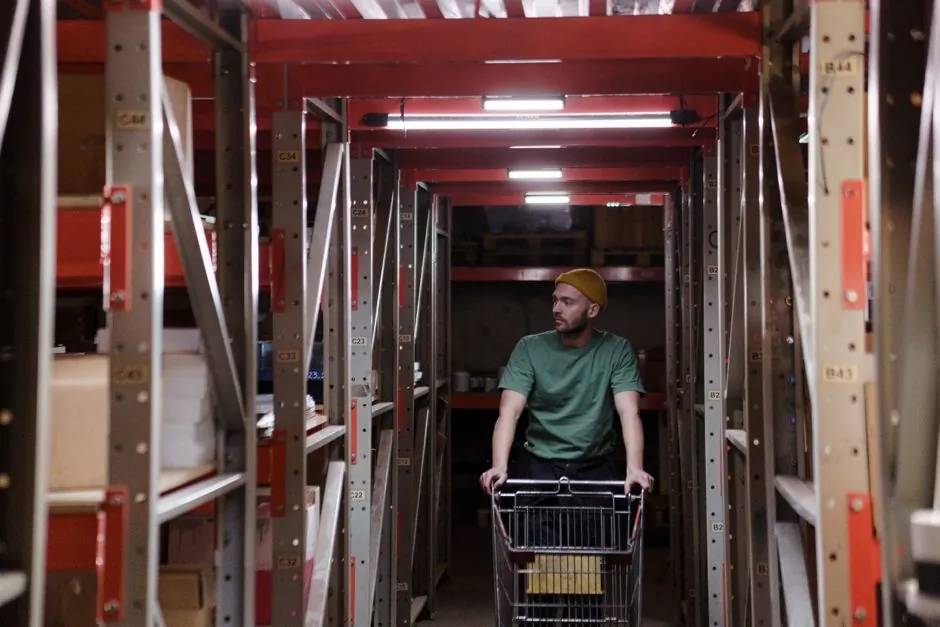
Pharmaceutical distribution centres in 2026 specify electric pallet trucks in the 1500–3500 kg capacity band, with stainless or corrosion-resistant hygienic construction and 1200×1000 mm EUR-pallet compatible forks as the baseline configuration [S3][S4].
Manual hydraulic pallet jacks still dominate small and medium facilities, but electric pallet trucks are gaining traction in large distribution centres, where the volume of pallet movements justifies the capital and battery infrastructure [S1]. For a regulated pharma DC, the selection problem is narrower than for general logistics: hygiene, battery chemistry, and validated cleaning protocols move to the top of the criteria list.
Capacity Band and Chassis Selection
Standard electric walkie pallet trucks in the 1500–3500 kg range cover roughly 90% of pharma palletized SKUs, since outbound pharma pallets rarely exceed 1200 kg including the pallet itself [S3]. When specifying, the rule is to size the truck at approximately 125–150% of the heaviest steady-state pallet weight, so a 2000 kg rated unit is the practical minimum for a finished-goods DC moving cases of vials, blister packs, and bottled liquids.
Heavy-duty walkie pallet trucks rated 6000–30000 lb (≈2700–13600 kg) are engineered for industrial pallet handling beyond standard warehouse electric pallet jacks and are not the right fit for routine pharma pallet moves [S2]. They fit steel, paper, and equipment-assembly lines; pharma buyers should anchor the spec sheet to the 1500–3500 kg walkie class, not the heavy-industrial tier.
Power Source: Lithium-Ion vs Lead-Acid in 2026
Two-ton BOPTs are widely used in medium-sized warehouses and distribution centres and can handle a wide variety of goods, including FMCG products, with battery chemistry as the main 2026 decision point [S6]. Lithium-ion (LiFePO4) packs now dominate new pharma DC orders because they support opportunity charging in cold rooms, emit no hydrogen off-gassing, and eliminate the acid-spill cleaning risk that disqualifies flooded lead-acid in many GMP zones.
Lead-acid remains a lower-capex option for dry, ambient-temperature zones and is still specified where existing charging rooms are already in place; the trade-off is watering maintenance, slower charge cycles, and dedicated ventilation. For a 2-ton class BOPT in pharma, the LiFePO4 premium typically pays back inside 18–24 months on labour and energy when shift patterns exceed one shift per day [S6].
Hygienic Construction and Cleaning Validation
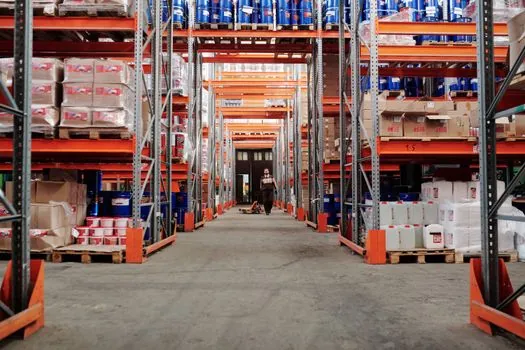
Stainless-steel pallet trucks, both manual and electric variants, are specified at 2000–3000 kg capacity for food, pharmaceutical, and chemical industries specifically because of corrosion-resistant, hygienic design requirements [S3]. In practice this means 304 stainless on fork frames and load wheels for ambient zones, and 316 stainless on hydraulic fittings and exposed fasteners where alcohol-based sporicidal cleaners are used.
Beyond the metallurgy, the cleaning-validation question drives three concrete spec lines: crevice-free fork-to-chassis welds (no horizontal ledges where residue pools), smooth-surface drive covers that survive 70% IPA wipe-downs, and sealed battery compartments rated to at least IP54. Electric pallet jacks are suited to distribution centres, large warehouses, and high-volume operations; the same logic applies in pharma, where picking aisles and dock doors see dozens of pallet cycles per shift [S4].
Fork Geometry, Pallet Compatibility, and Throughput
Standard fork lengths of 1150 mm accept both the 1200×1000 mm EUR pallet and the 1219×1016 mm CHEP pallet, which together cover the majority of pharma pallet pools [S4]. Fork width across the carriage should sit in the standard 550–685 mm band; outside that band, pallet entry geometry and pallet-rack compatibility both suffer, and a pallet rack bay designed for EUR pallets will not safely accept non-standard fork spacing.
For drive units, AC traction with regenerative braking is now the default on most OEM build sheets, including the Hyster DW33ALZ walkie pallet jack used for trailer unloading and parking-lot pallet moves, and on Sroka LWP-series walkies for industrial work [S2][S5]. Regenerative braking matters in pharma because it returns energy on every stop, which is most of the duty cycle in a pick-face replenishment loop, and it reduces brake-dust contamination on the floor, a quiet but real GMP risk.
Option Matrix: Electric Pallet Truck Configurations for Pharma
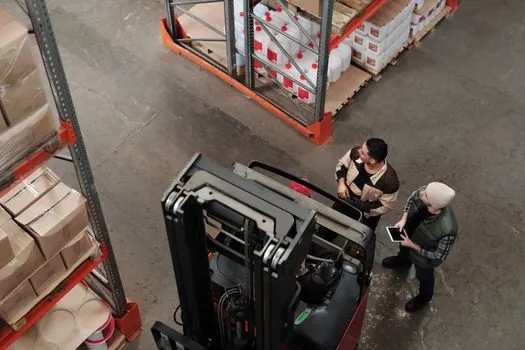
Across the configurations that show up on pharma DC bid sheets in 2026, the four-way comparison below maps the realistic options against the criteria that actually drive purchase decisions in this segment. [S3]
Walkie (operator walks behind) with LiFePO4 battery, 2000 kg capacity, stainless fork frame, IP54 sealed electrics is the default pharma DC specification and the lowest total cost of ownership across multi-shift operations [S2][S3]. Nested walkie configurations such as the Hyster DW33ALZ pair a walkie pallet jack with a motorized sled for final-mile trailer-to-floor moves and are worth specifying when the DC includes a high volume of dock-door unloading [S5]. Rider-type electric pallet trucks with stand-on platforms are designed for longer travel distances and higher-throughput operations, while walkie pallet trucks are typically used where travel distances are shorter, and selecting the wrong configuration can create inefficiency or a handling hazard.
High-lift electric pallet trucks (1000–1500 kg, raising pallets to ergonomic working height) are a separate ergonomic-pick-aid category, not a substitute for a transport truck, and are commonly specified at the picking face while walkies handle horizontal transport between zones [S3]. The decision rule: if the bottleneck is travel distance, choose rider; if the bottleneck is dock-door cycle time, choose walkie; if picking labour injury rates are the driver, add a separate high-lift fleet.
Who the Spec Fits, and Where It Breaks
An electric pallet truck in the 1500–3500 kg walkie class with stainless hygienic construction is the right fit for finished-pharma DCs, 3PL pharmaceutical hubs, and hospital central pharmacy warehouses moving palletized drugs on EUR or CHEP pallets at a rate above 30–40 pallet cycles per shift [S3][S4]. The same spec covers nutraceutical and OTC consumer-health distribution because the GMP envelope is broadly equivalent.
It is the wrong fit for clinical-trial or cell-and-gene-therapy operations where cleanroom ISO 7 or better is required; those environments typically mandate a different equipment class with fully sealed electrical enclosures and dedicated decontamination airlocks. It is also the wrong fit for very small pharmacies or hospital-floor dispensaries, where a 1000–2000 kg manual pallet truck, including low-profile variants for non-standard pallets, remains the cost-effective choice [S3][S4].
Sourcing Standards and 2026 Verification Points

For 2026 procurement, the verifiable signals to track are: OEM build sheets showing 304 or 316 stainless on the wetted surface area, IP54 or higher enclosure rating on the drive and battery compartments, and AC traction with regenerative braking as a standard line item, not an upcharge [S2]. The Hyster DW33ALZ nested walkie and the Sroka LWP-series walkies are concrete data points on what tier-one OEMs are shipping in mid-2026 for trailer-unloading and heavy-industrial roles respectively [S2][S5].
For a related materials-handling decision layer, the AS/RS selection guide for air cargo hubs covers when automated storage replaces walkie fleets at the bay, and the single-girder crane spec for landfill operations is the parallel spec-first reference for facilities that also handle non-palletized bulk loads. Buyers should treat the 2-ton LiFePO4 walkie as the 2026 baseline and escalate to a nested walkie or rider only when the throughput math justifies the capex delta [S5][S6].
Spec-level background on the components involved: electric pallet truck, and electric actuator.