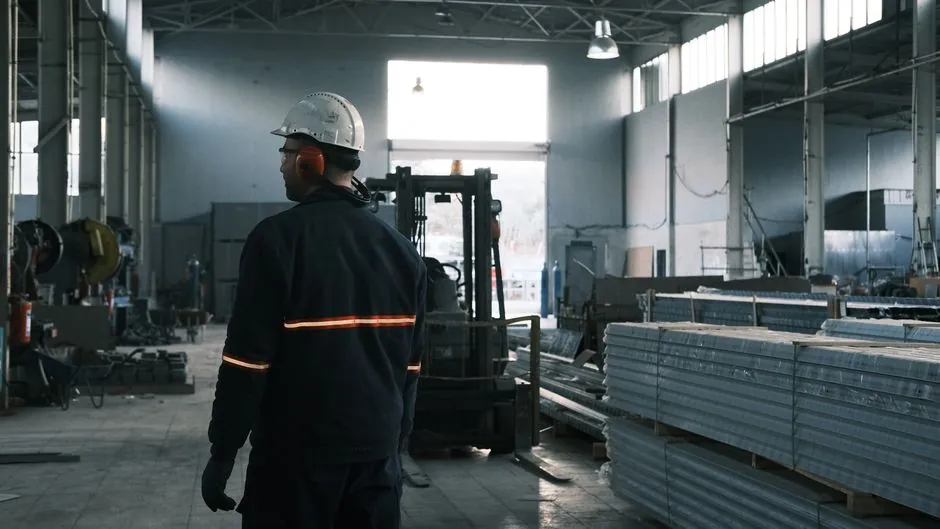
Electric forklifts can cost 20%–30% more upfront than comparable propane models, yet a distribution-center conversion cut monthly fuel costs from $3,200 to $1,100 and maintenance time from 48 to 18 hours [S1][S3].
For a 5,000-pound-capacity model, a propane forklift may cost around $24,000–$30,000, while an electric forklift of the same capacity may cost $35,000–$40,500 [S1].
Where the Purchase Price Comes From
A new electric forklift may carry a 20%–30% purchase-price premium over an equivalent propane truck because the battery and charging equipment represent a large part of the electric price [S1].
For a 5,000-pound-capacity model, the comparison gives a purchase-price range of around $24,000–$30,000 for propane and $35,000–$40,500 for electric [S1].
A charger may require a higher-voltage service, electrical installation work, ventilation, eyewash facilities, goggles, and gloves [S5]. Propane equipment instead introduces cylinder handling, fuel storage, and the need to keep replacement cylinders available [S4].
Energy Cost by Shift and Annual Duty
That creates a recurring handling task as well as a fuel bill, while a battery shifts the burden toward planned charging and standby power availability.
The operator case provides a separate site-specific result: monthly fuel expense fell by $2,100, from $3,200 with propane to $1,100 with electric, a 65% reduction [S3]. The 75% operating-cost figure cited by Conger and Total Warehouse comes from First Energy Corporation and should be treated as a reported case, not a universal fleet benchmark [S3][S5].
Maintenance and Downtime Drive the Comparison
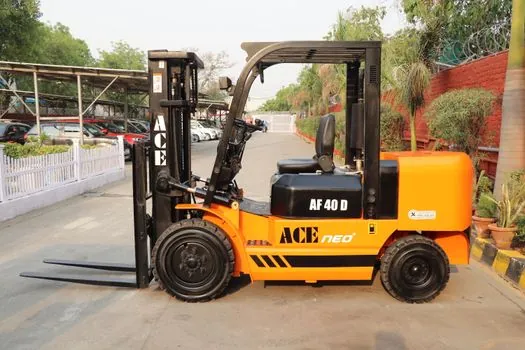
The distribution-center conversion reduced maintenance from 48 to 18 hours per month, a 62% reduction, and refueling downtime from 2.5 hours per day to 15 minutes per day, an 83% reduction [S3]. These figures capture labor exposure and interruptions, not just spare-parts pricing.
The case study reports that monthly maintenance time fell from 48 hours with propane forklifts to 18 hours with electric forklifts [S3].
Electric drivetrains remove engine oil, exhaust-system servicing, transmission-fluid service, radiators, and associated wear parts, although mast and hydraulic functions still require hydraulic oil [S1][S4][S5].
The economics therefore depend on more than energy per hour. If an electric truck needs less hands-on maintenance, creates fewer charging interruptions, and avoids cylinder changes, its higher purchase price can be recovered faster.
Decision Criteria: Electric Against Propane
Electric forklifts fit warehouses, distribution centers, food, grocery, retail, pharmaceutical, medical-equipment, manufacturing, and cold-storage operations where indoor emissions, noise, narrow aisles, and lower routine maintenance matter [S2][S5]. They generate no tailpipe emissions and are substantially quieter than propane trucks [S4].
Propane forklifts fit construction, agriculture, lumber yards, steel and scrap yards, recycling, heavy manufacturing, and other outdoor or harsh-duty applications where quick cylinder exchange and sustained operation outweigh electric operating savings [S2][S5]. Electric forklifts use rechargeable batteries, have zero emissions, and are often quieter than propane forklifts [S2].
On acquisition cost, propane leads because its listed 5,000-pound price is $24,000–$30,000 versus $35,000–$40,500 for electric [S1][S5]. On routine maintenance, electric leads because it has no engine, exhaust system, transmission fluid, radiator, oil changes, coolant checks, or spark plugs [S1][S4].
The case study reports that refueling downtime decreased from 2.5 hours per day with propane forklifts to 15 minutes per day with electric forklifts [S3]. On emissions and indoor noise, electric leads because it has no tailpipe and operates more quietly [S4].
The forklift tire selection decision remains separate from motive power, because cushion and pneumatic tires affect ground pressure, ride quality, replacement, and indoor use rather than determining whether electricity or propane costs less to operate.
Total Cost Includes Charging, Batteries and Cylinder Logistics
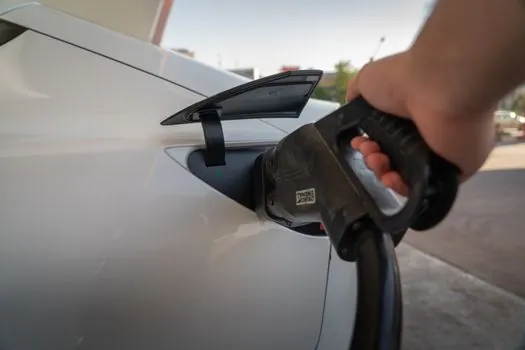
The $10,000–$14,000 battery-and-charger package is the clearest electric cost driver [S5]. Electricity prices and the number of shifts set the charging bill, while battery capacity, charging speed, infrastructure voltage, and planned charger availability determine whether that energy advantage can be realized without production delays [S1][S5].
Propane purchase cost is avoided, but cylinders must be bought or leased, exchanged, transported, and stored. The reported 2.5 hours per day of refueling downtime illustrates that fuel procurement consumes productive time even when the truck is operating [S3].
Total cost of ownership must also cover installation, maintenance labor, energy, battery and charger ownership, charging-area utilities, residual value, and operator time. The distribution-center case moved maintenance labor from 48 to 18 hours per month and fuel cost from $3,200 to $1,100 per month, creating $5,600 in monthly fuel-and-maintenance savings before capital recovery [S3].
Electric ownership is not automatically cheaper in every setting. A short-life rental fleet, a low-utilization truck, a poorly sized charger, or a site that cannot absorb charging downtime can weaken the financial case. Propane remains the lower-cost option where the lower purchase price, exchange speed, and outdoor duty dominate [S2][S4].
Constraints That Decide the Result
Electric forklifts need adequate charging areas, suitable electrical voltage, ventilation around charging equipment, and battery-safety provisions such as eyewash stations, goggles, and gloves [S4][S5]. A facility with inadequate electrical infrastructure may need an electrician, a new higher-voltage line, or a dedicated service upgrade [S5].
Propane forklifts need continuous fuel and mechanical support, including cylinder availability and an engine-service program. Oil changes occurred every 250 hours in the documented case, and parts delays contributed to week-long equipment outages [S3].
Electric trucks also create battery-safety and end-of-life capital exposure. Published guidance places electric-forklift life at 15,000–20,000 hours versus 10,000–15,000 hours for propane units in the cited comparison, but battery condition, cycles, maintenance, and application determine actual replacement timing [S3].
The cleanest test is an 8-hour, 260-shift operating model using measured fuel, maintenance, downtime, electricity, and cylinder-handling data. Apply the same duty cycle to both options, include charger and electrical costs on the electric side, and include cylinder logistics and engine service on the propane side. The decision should follow the calculated difference and payback period, not a generic fuel-cost percentage.
Trackable procurement signals are the local electricity tariff, delivered propane price, annual hours per truck, battery replacement schedule, and measured downtime for charging versus cylinder exchange; these five inputs determine whether the lower operating cost overcomes the 20%–30% electric purchase premium [S1][S3][S5].