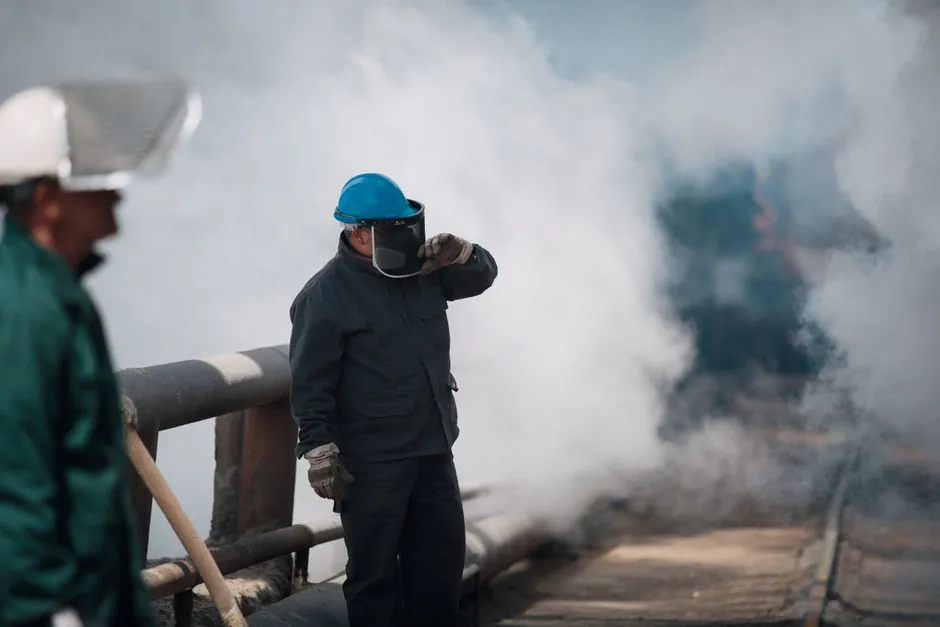
For live electrical work, the binding spec is ANSI/ISEA Z89.1-2014 (the standard OSHA accepts for head protection), and the right pick is Class E, proof-tested at 20,000 V phase-to-ground, with Class G at 2,200 V acceptable only for confirmed low-voltage exposure [S1].
Class C is explicitly excluded from any electrical task because it provides no dielectric protection, and metal-shell hard hats fall into this prohibited bucket [S6]. Selecting on colour, vent holes, or brand decals without checking the inside-shell stamp is the single most common spec failure on a switchroom or substation job.
Class E vs Class G vs Class C: the dielectric decision
ANSI/ISEA Z89.1 splits electrical performance into three classes, and the numbers are the spec, not marketing: Class G (General) is proof-tested at 2,200 V, Class E (Electrical) is proof-tested at 20,000 V, and Class C (Conductive) is not intended to provide any protection against electrical contact [S1]. For a 480 V motor control centre, a Class G helmet clears the dielectric bar with margin; for a 13.8 kV switchgear bay, only Class E belongs on the worker's head.
OSHA's head-protection standards at 29 CFR 1910.135 and 1926.100 accept Z89.1-2009, 2003, and 1997 editions as compliance routes, so any helmet marked to one of those revisions is legally defensible in the U.S. [S1]. Hong Kong's labour guidance echoes the same logic, listing electrical insulation as a required test parameter alongside penetration, shock absorption, flame resistance, and working-temperature behaviour [S3]. Outside the ANSI ecosystem, EN 397 with the optional 440 V electrical-insulation mark, or EN 50365 for live work up to 1,000 V AC / 1,500 V DC, are the European equivalents a multinational safety officer should expect to see stamped on the shell.
Type I vs Type II: which impacts actually happen on the job
Z89.1 also splits impact direction: Type I protects the top of the head from vertical blows, while Type II covers top and lateral impacts, which matters the moment a worker leans over a bus duct or pulls cable in a tight cabinet [S1]. For overhead line work, substation maintenance, and any task with lateral struck-by risk, Type II is the safer default; for general vertical-falling-object hazards in switchrooms, Type I is acceptable.
Honeywell's Fibre Metal safety helmet datasheet shows the modern execution of these requirements: PC/ABS shell, six-point ratchet suspension, three-point chinstrap, vented or non-vented options, and a -30°C to +50°C operating window, demonstrating how manufacturers build the Z89.1 categories into a wearable package rated for full-shift use [S2]. Chinstraps are explicitly called out in OSHA's SHIB 3-6-2024 as an effective way to keep the helmet on during slips, falls, or awkward overhead reaches, and they should be considered for all head protection, not just climbers [S1].
Arc-flash add-ons: when a Class E helmet is not enough
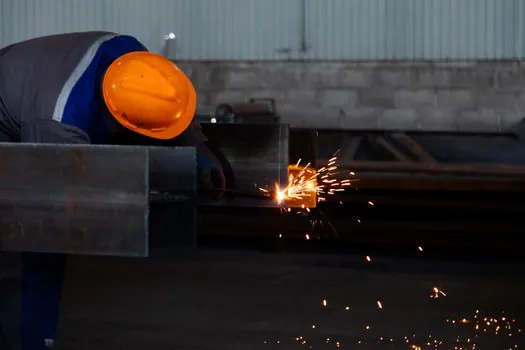
Class E and Class G ratings cover incidental dielectric contact, not the thermal energy of an arc-flash event. For work at or above the 4 cal/cm² arc-rated boundary (the threshold most U.S. plants use to decide whether arc-rated PPE is required), the helmet must be paired with an arc-rated face shield and arc-rated balaclava, and the entire assembly needs an ATPV (Arc Thermal Performance Value) matched to the calculated incident energy at the working distance. [S5]
OEM guidance from JINPOWER's JN-AQM-A datasheet is blunt on this point: the electrical safety helmet is positioned for "basic electrical insulation up to 2.2 kV for low-voltage proximity tasks" in switchrooms, substations, and LOTO activities, and is explicitly not to be positioned as an arc-flash helmet or face-shield system [S5]. Rozel's hard-hat selection guidance repeats the same boundary, and adds the operational rule: identify the class from the sticker or stamp on the inside of the shell before every shift, not from the colour of the brim [S6].
Material, weight, and the 8-hour wearing reality
Z89.1-compliant shells are typically high-density polyethylene (HDPE) or glass-reinforced nylon, with PC/ABS and polycarbonate variants appearing in premium ranges [S1][S2]. HDPE keeps weight near 350-400 g for a standard cap-style hard hat, which is the band most crews tolerate for a full shift; glass-reinylon climbs past 450 g but buys back higher temperature tolerance and impact strength.
For hot environments, OSHA's bulletin points to the optional "HT" (high temperature) marking on the label, and for molten-metal exposure the same label is the only spec that survives the audit [S1]. Cold-environment work needs the complementary "LT" marking and a chinstrap, because hands going numb is what knocks helmets off in winter. In the safety helmet reference page, the HT/LT, Class E/G/C, and Type I/II markings are treated as the only three fields a buyer needs to verify on the inside-shell stamp.
Selection walkthrough: from hazard assessment to PO line

A defensible selection process has four gates, and skipping any one of them produces a non-compliant purchase. Gate 1 is the hazard assessment: maximum expected voltage at the working point, maximum calculated incident energy in cal/cm², and the impact direction profile (vertical only, or vertical plus lateral). [S3]
Gate 2 maps the assessment to the class: above 2,200 V exposure pushes the spec to Class E; below 2,200 V permits Class G; Class C is removed from the option list the moment "electrical" appears on the job safety analysis [S1][S6]. Gate 3 picks the type: lateral impact risk forces Type II, and overhead-only vertical falling-object risk accepts Type I. Gate 4 specifies the accessories: chinstrap mandatory for any work at height, arc-rated face shield mandatory above the site's arc-PPE threshold, and a safety barrier or arc-rated hood added when incident energy crosses 12 cal/cm². The order matters: class first, then type, then accessories, because a chinstrap on a Class C helmet still leaves the worker exposed to dielectric contact.
Inspection, retirement, and the field failures that get helmets pulled
OSHA's bulletin lays out three field signals that should pull a helmet out of service immediately: visible cracking or crazing of the shell, a faded or missing date stamp (Z89.1 requires manufacturers to mould a month-and-year date code into the shell so the service life can be tracked), and any impact event, even without visible damage, because the suspension's energy-absorption budget is spent on the first qualifying blow [S1].
UV degradation is the silent killer of HDPE shells; a cap stored on a truck dashboard for one summer can lose a meaningful fraction of its impact strength. Most manufacturers set a 5-year service life from the date of first use, with the shell's mould date as the starting reference; the suspension is typically replaced at 1 year. Honeywell's datasheet emphasises the all-day-wear angle, with ratchet suspension, balanced weight distribution, and vented/non-vented options driven by environment, all of which directly affect whether workers will keep the helmet on, which is itself a safety control [S2].
Cross-reference: when the job is not pure electrical
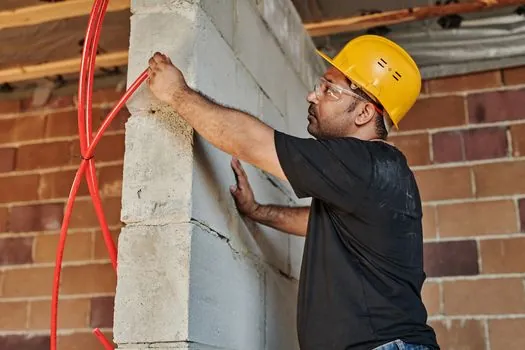
For tasks that combine electrical exposure with falling-object or swinging-load hazards, a Type II Class E helmet is the default spec, because it covers both the lateral impact and the 20 kV dielectric test. Mining Helmet Selection: Type, Class, and Hazard Match covers the same Type/Class logic for underground and surface-mining environments, where the dielectric rules are tightened and chinstraps are mandatory rather than optional. Oil and Gas Safety Helmet Spec Map: Type, Class, and Fit extends the framework to upstream and downstream oil-and-gas work, where chemical splash, FRP (fibreglass-reinforced plastic) shells, and ATEX zone compatibility enter the spec. [S1]
For live-line and substation work, the helmet is one node in a larger arc-flash and live-work PPE chain, and the spec should be cross-referenced against the site's explosion-proof electrical equipment classification when the task enters a hazardous area. The two failure modes to plan against are dielectric over-class (a Class G helmet on a 4,160 V panel, which technically passes the dielectric test but offers zero margin) and dielectric under-class (a Class C metal hard hat still in service because it was the only one with a face shield).
Track these signals on the next spec refresh: (1) whether the site's electrical safety procedure now defaults to Class E even for sub-2,200 V tasks to remove the Class C vs Class G decision from the field; (2) whether the electrical fire monitor and arc-flash relay settings drive a re-spec of the arc-rated face shield ATPV above 40 cal/cm², which would force a hood-plus-helmet assembly rather than a face-shield clip; (3) whether the fleet's HDPE shells are reaching the 5-year replacement wall in 2026 and need a phased cap-style to full-helmet upgrade.