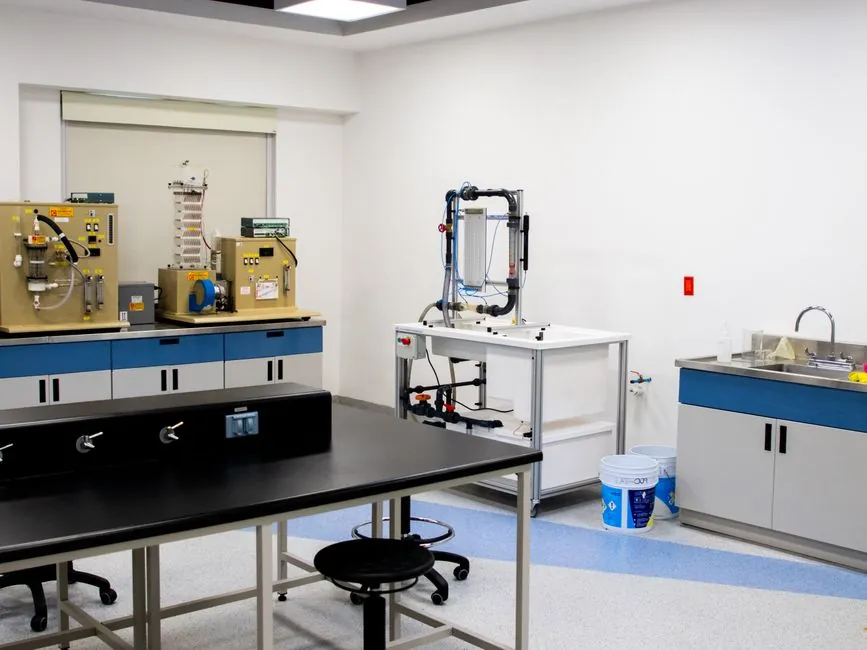
Electrolyte production lines in 2026 fall into three distinct design tracks, each with its own capacity envelope, atmosphere requirement, and temperature window: oxide solid-state (up to 10 t/day, 150–800°C dual-zone heating) [S2], sulfide solid-state (inert atmosphere with controlled O2/H2O) [S3], and liquid lithium-ion preparation (LiPF6 salt dissolved in carbonate solvents under dry-room dew-point control).
For process engineers scoping a new battery cell plant, the first design decision is the electrolyte chemistry, because that single choice dictates upstream material handling, atmosphere, dry-room class, and downstream cell-format compatibility, as laid out in recent equipment lists for prismatic cell lines [S8] and EV battery lines [S9].
Oxide Solid-State Lines: Capacity, Footprint, and Energy Envelope
Boyee's oxide solid-state electrolyte line is rated for 10 t/day with a dual-zone furnace spanning 150–800°C and 98% process yield, targeted at lithium and sodium oxide composites [S2]. A separate oxide-line configuration cites 1000 kg/week output, 500–1000°C operating temperature, and inert atmosphere with adjustable O2/H2O setpoints for solid-electrolyte stability [S3]. A third specification profile quotes 500 kg per shift at 200 kg/h, a 20 m² footprint, and 5,000 kg mass, with AI-driven closed-loop process control [S1]. The spread between profiles indicates modular capacity scaling rather than a single canonical tonnage: cells from 1000 kg/week to 10 t/day map to pilot, mid-scale, and GWh-class plants respectively.
Energy recovery is a concrete lever: integrated heat-recovery blocks on the 500–1000°C oxide line are documented at up to 30% energy reduction [S3], and on the 150–800°C platform the design statement is simply "less energy than traditional electrolyte manufacturing" without a quantified number [S2]. On the upstream side, electrode slurry for the same prismatic line architecture uses vacuum planetary mixers and double-sided slot-die coaters with closed-loop thickness control [S8], and a complete electrode-to-cell manufacturing line shares the same modular scaling logic.
Sulfide and Halide Lines: Why the Atmosphere Class Matters
Sulfide solid-state electrolytes are hygroscopic and react with trace moisture to release H2S, so a sulfide line is fundamentally a dry-room plus inert-atmosphere problem, not just a furnace problem. Published sulfide-line product descriptions for 2026 emphasize inert-gas enclosure, oxygen and moisture control, and a fully automated robotic handling chain to limit human exposure [S7]. The oxide-line inert-atmosphere spec (customizable O2 and H2O levels, AI-driven closed-loop atmosphere control) [S3] overlaps with the sulfide requirement on the gas-handling side, but the sulfide envelope typically demands a stricter dew-point, often quoted at –40°C or lower in sulfide-pilot practice, even where vendor pages do not pin the exact figure.
For laboratories running R&D rather than pilot, the MTI MSK-HTML-SLA16 platform handles 6 liquid + 5 powder inputs and up to 48 electrolyte recipes, paired with a 16-channel coin-cell assembly line, sized for material-research throughput rather than cell tonnage [S5]. The public catalogue of solid-state battery production equipment is dominated by oxide and sulfide electrolyte production lines offered by suppliers including Boyee, alongside related prismatic battery production lines from Xiaowei Lithium Battery. For broader plant-side process context, see the parallel notes on electrolyte Industry 4.0 specifications and on electrolyte manufacturing cost drivers.
Liquid Lithium-Ion Electrolyte: Salt, Solvent, Dry-Room Class
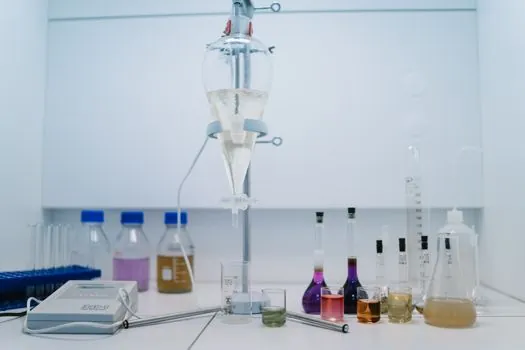
Liquid lithium-ion electrolyte is typically LiPF6 (1.0–1.2 M) dissolved in a mixture of ethylene carbonate (EC), ethyl methyl carbonate (EMC), dimethyl carbonate (DMC), and additive packages such as vinylene carbonate (VC) and fluoroethylene carbonate (FEC). The process line therefore has three distinct sub-stations: salt dissolution under vacuum and low temperature, solvent metering and mixing, and additive dosing with on-line Karl Fischer moisture analysis. The Sanmenxia Hongda electrolysis/electrolyte preparation cell specifies 25–120°C operating temperature, 0–0.5 MPa pressure control, and ±0.5% current stability for the electrolysis step that supports electrolyte-grade salt production [S10].
Dry-room class is the binding constraint once the chemistry is fixed: LiPF6 hydrolyses above roughly 20 ppm moisture, so production halls typically run at –40°C to –60°C dew point, with the exact class set by cell-format leak-current tolerance. The 48-recipe R&D platform from MTI handles 6 liquids and 5 powders in a single benchtop chassis, with recipe-driven dosing rather than manual preparation, and pairs with a 16-channel coin-cell assembly downstream [S5]. For EV-scale prismatic cell lines, electrolyte filling is one station in a longer chain that includes automatic batching, vacuum planetary slurry mixing, slot-die coating, multi-zone convection drying, calendaring, and stacking [S8].
Flow-Battery and Redox Electrolyte: A Different Capacity Curve
Vanadium redox flow battery (VRFB) electrolyte is a different engineering object from lithium-ion or solid-state material: it is an aqueous sulfuric acid solution of V2+/V3+ (negative) and VO2+/VO2+ (positive) ions, produced by electrolysis of vanadium sulfate. ZH Energy's published 2026 spec for its vanadium electrolyte electrolysis line quotes a modular annual capacity of 3,000 to 30,000 m³, full-process digital control with unattended operation, and electrolysis stacks "specially designed for electrolyte production" with low energy consumption and low sediment risk [S4]. The same vendor also offers a flow-battery stack assembly line covering material pretreatment, stacking, pressure stacking, flipping, and detection, with both mechanized and fully automated configurations [S4].
The flow-battery line is capacity-matched to long-duration energy storage projects (LDES) rather than EV cells, and the 10× scaling window (3,000–30,000 m³/year) lets one platform serve both containerised microgrid and utility-scale installations. The upstream synthesis reaction control and downstream mixing stages are similar in principle to the molding-line process family, where modular capacity, recipe control, and inline inspection determine the build-vs-buy decision. For process engineers mapping the wider battery-plant equipment list, the same architecture appears across the EV battery equipment catalogue, where electrolyte filling sits between cathode/anode preparation and final assembly [S9].
Selection Criteria: Chemistry, Capacity, Atmosphere, Footprint
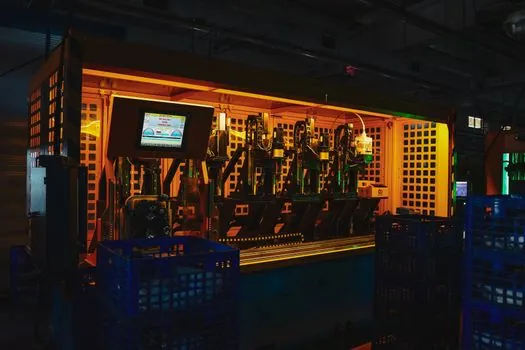
The dominant decision criteria for an electrolyte production line in 2026, in rank order, are: (1) electrolyte chemistry (oxide / sulfide / liquid Li-ion / vanadium redox), (2) target capacity (R&D 48 recipes vs 1000 kg/week vs 10 t/day vs 3,000–30,000 m³/year), (3) atmosphere class (ambient vs inert vs dry-room –40°C to –60°C dew point), (4) temperature window (25–120°C for liquid vs 150–800°C or 500–1000°C for oxide), and (5) footprint and energy budget (20 m² / 5,000 kg / 30% heat-recovery class). [S3]
On a side-by-side comparison, oxide lines win on throughput and yield (10 t/day, 98% yield) but require high-temperature furnaces and AI atmosphere control [S2][S3]; sulfide lines win on ionic conductivity but demand stricter dry-room and inert-gas handling [S7]; liquid Li-ion lines win on established supply chain and lower capex but introduce LiPF6 hydrolysis risk and solvent flammability [S10]; vanadium redox lines win on raw-material abundance and 10× modular capacity scaling for long-duration storage [S4]. R&D-scale platforms such as the MTI 6-liquid + 5-powder chassis are the right tool when recipe count exceeds line throughput, and they pair naturally with a 16-channel coin-cell assembly station for closed-loop cell validation [S5]. For process engineers who also need to map upstream electrode preparation into the same factory, the complete prismatic battery line guide provides the wider equipment list context [S8].
Limitations, Failure Modes, and What Is Still Vendor-Specific
Public 2026 vendor pages quote headline capacity numbers (10 t/day, 1000 kg/week, 500 kg/shift, 3,000–30,000 m³/year) but rarely publish verified uptime, MTBF, or year-2 yield drift [S1][S2][S3][S4]. Energy-recovery claims sit at "up to 30%" on one platform [S3] and "less than traditional" on another [S2], with no common test boundary. Dry-room dew-point for sulfide lines is widely cited as the binding constraint but the exact class is not pinned on the public product page. Solvent-handling ATEX zoning for the liquid Li-ion track is implied by the equipment list (vacuum mixers, sealed cells) [S8] but not explicitly mapped to an ATEX category in the cited sources.
The most concrete verifiable next step is a vendor RFQ that pins: electrolyte chemistry, target kg/day or m³/year, dew-point class, temperature window, footprint ceiling, and AI/automation scope. Trackable signals through the rest of 2026 include published tonnage data for the 10 t/day oxide line, sulfide-line dew-point certification, and any move to standardise energy consumption per kg of electrolyte produced across the four tracks. For engineers scoping the wider battery-plant equipment list, the EV battery production equipment catalogue provides a useful cross-check on where electrolyte preparation sits between electrode coating and cell assembly [S9].
The underlying component specifications are covered under conveyor sorting line.