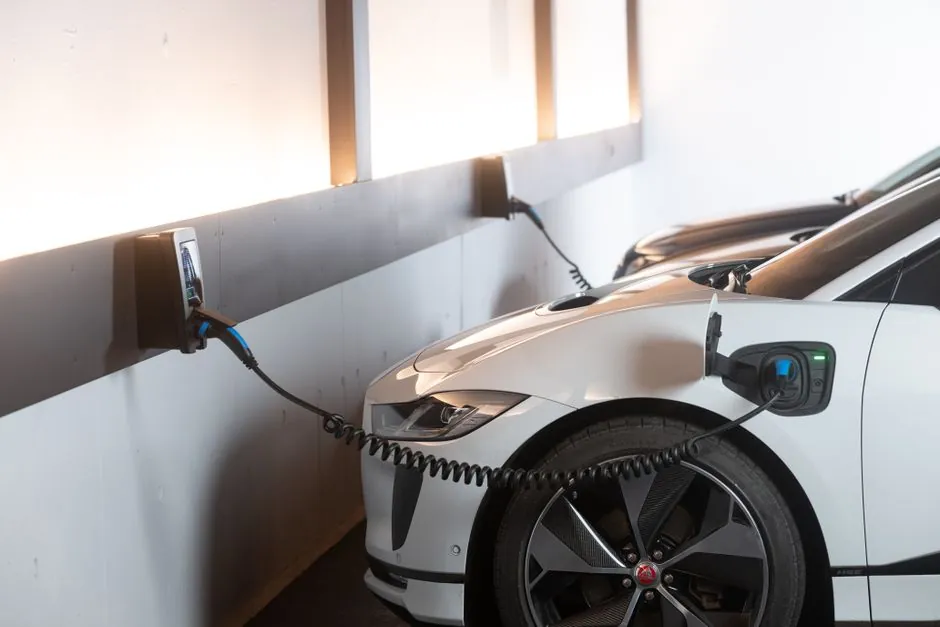
ProLogium's fourth-generation superfluidized all-inorganic solid-state electrolyte reports 57 mS/cm ionic conductivity at 25 °C, roughly five times the level of conventional liquid and sulfide electrolytes, with 12.8 mS/cm retained at −20 °C and 860 Wh/L cell volumetric energy density [S1][S2].
The shift matters because the dominant LiPF6-based liquid electrolyte now faces hard industrial ceilings: water must stay below 10 ppm, free acid (as HF) below 50 ppm, and salt purity at or above 99.95% to avoid cathode-metal dissolution and SEI collapse within 100 cycles [S5]. For procurement, those numbers are not marketing claims, they are the qualification gate.
Why the electrolyte is the "blood", and why the process is the bottleneck
Electrolyte quality is defined by six measurable parameters that a qualified supplier must certify on every lot: water under 10 ppm, free acid (HF) under 50 ppm, LiPF6 purity at or above 99.95%, density 1.20–1.30 g/cm³ at 25 °C, APHA color at or below 15, and chloride at or below 1 ppm [S5]. Out-of-spec water hydrolyzes LiPF6 into HF, which attacks NMC cathode surfaces and dissolves transition metals; out-of-spec chloride corrodes aluminum current collectors at high voltage. Industrial pretreatment uses distillation and thermal drying to drive moisture into the ppm (10⁻⁶) range, while high-end products require moisture contents below 10 ppm [S3].
Formulation and mixing are the core process step, and they must run under argon-blanketed, closed-loop filling. Electrolyte exposed to ambient air during packaging absorbs moisture within seconds, which is why suppliers without dry-room integration fail the spec gate on sampling alone [S3][S5]. This is the de facto Industry 4.0 floor for electrolyte plants: a continuously monitored dry-room envelope, inline Karl Fischer moisture sensing, and batch-traceable lithium-salt lots rather than paper-only certificates of analysis.
Sub-zero operation: three criteria, three solvent families
At −20 °C, conventional LiPF6 in ethylene carbonate (EC)/ethyl methyl carbonate (EMC) mixtures can lose more than half the usable capacity of a lithium-ion pack, and lithium plating accelerates, which is the safety and degradation hazard for cold-climate EVs [S4]. The Zhejiang University review identifies three interdependent criteria a sub-zero electrolyte must satisfy: high ionic conductivity across sub-zero ranges, a low-impedance mechanically robust SEI/CEI, and rapid lithium-ion desolvation at the electrode interface [S4].
Three solvent families now meet those criteria in different ways. Fluorinated carboxylate esters (EA-f, EDFA) weaken the Li–solvent coordination bond and have demonstrated NCM622/graphite pouch cells retaining over 80% of room-temperature capacity at −40 °C; one 1.2 Ah NCM811/graphite cell using an EDFA-FEC blend delivered 790 mAh at −40 °C under 0.2C discharge [S4]. Weakly solvating solvents (CPME, isobutyronitrile) cut desolvation activation energy from about 26 kJ/mol in conventional DME systems to as low as 22.5 kJ/mol, allowing graphite anodes to operate at −60 °C in half-cell tests [S4]. Solid-state inorganic electrolytes, by removing the liquid phase entirely, sidestep both viscosity and desolvation limits, but they trade in different process constraints.
Lithium salt trade-offs: LiPF6, LiBOB, LiTFSI side by side
The salt choice, not just the solvent, sets voltage window, temperature range, safety behavior, and cost. LiPF6 remains the baseline at 10–12 mS/cm conductivity, good up to 4.3 V, but it decomposes above 60 °C in the presence of moisture and is the cheapest salt at 1.0× cost index. LiBOB pushes voltage stability to 4.5 V and thermal stability to 70 °C with a robust SEI, but conductivity drops to 6–8 mS/cm and cost rises to 1.8–2.2× LiPF6. LiTFSI opens the widest window (above 5 V), tolerates 80 °C, eliminates HF generation, and reaches 9–11 mS/cm, but at 3.0–4.5× the cost of LiPF6, which is why it is favored in solid-state and ionic-liquid systems [S5].
For procurement, the matrix maps cleanly onto cell format. Standard NMC, LFP, and LCO cells at the lowest cost use LiPF6. High-voltage NMC above 4.4 V and high-temperature applications move to LiBOB for calendar life. Solid-state and ionic-liquid systems, including ProLogium's inorganic platform, justify LiTFSI or LiFSI premiums on safety and voltage headroom [S1][S5]. The cell's operating envelope, not its chemistry brand, picks the salt.
Solid-state scale-up: what the Gen 4 numbers actually mean for the line
ProLogium's Gen 4 platform reports approximately 100% lithium-ion transference number, which eliminates the concentration-gradient losses that limit fast-charge current in liquid cells [S1][S2]. The headline 60–80% charge in 4–6 minutes, paired with 90% capacity retention at −20 °C, is enabled by that transference number and by the 12.8 mS/cm low-temperature conductivity, not by a chemistry trick [S1]. On the manufacturing side, the company claims 30–40% fewer process steps, 60–70% reduction in dry-room requirements, no rare materials, and a bill of materials approaching that of liquid electrolytes [S1]. If those process claims hold at gigawatt-hour scale, they re-anchor the Industry 4.0 conversation around ceramic separator handling and sintering rather than dry-room HVAC and argon blanketing.
The dual-function Active Safety Mechanism (ASM), embedded in the inorganic electrolyte and capable of releasing in situ to passivate electrodes on thermal runaway initiation, is the safety argument that liquid LiPF6 cannot match without additives [S1]. The trade-off is interfacial contact: 2024–2025 work on superfluidization addresses that, with pressure-free cell stacking now claimed, which removes a major mechanical-assembly constraint for prismatic and pouch formats [S1][S2].
Where this leaves a 2026 procurement spec
For a cell maker evaluating 2026 electrolyte sourcing, four numbers must be on the data sheet before a sample is opened: water under 10 ppm by Karl Fischer, free acid under 50 ppm, LiPF6 (or substitute salt) purity at or above 99.95%, and APHA color at or below 15 [S5]. The salt decision then flows from cell voltage and temperature, with LiPF6, LiBOB, and LiTFSI the three-way trade-off [S5]. Cold-climate EV packs need either a fluorinated-ester blend (EDFA-FEC class) or a weakly solvating system (CPME class) to keep capacity and plating risk in spec at −40 °C and below [S4]. For plants targeting 2027–2028 model years, the solid-state option is now credible enough to run a parallel qualification track, with the 57 mS/cm and 860 Wh/L numbers as the engineering baseline [S1][S2].
Two signals are worth tracking through the next two quarters: independent third-party verification of ProLogium's 60–70% dry-room reduction claim at gigawatt-hour pilot scale, and any OEM release of cycle data on EDFA-FEC or CPME-based cells beyond 500 cycles at −40 °C. Either would shift the cost-per-kWh curve for cold-climate EV packs; both are still on vendor or university test stands as of August 2026. For comparison context on dry-room envelope control and inline moisture instrumentation, see the sourcing gate for advanced packaging, which uses a similar five-file spec discipline for sealed-environment manufacturing.
Spec-level background on the components involved: pressure transmitter, flow meter, and industrial valve.