The 2026 electrolyzer stack market runs on four technology families: low-temperature alkaline (AEL), proton exchange membrane (PEMEL), anion exchange membrane (AEMEL), and high-temperature solid oxide (SOEC), each differentiated on cost, current density, ramp rate, and operating envelope [S1][S2].
Future Market Insights sizes the global hydrogen electrolyzer equipment market at USD 1.01 billion in 2026, expanding to USD 8.81 billion by 2036 at a 24.2% CAGR, with on-site installations accounting for 58.0% of deployments and alkaline units holding 47.0% of 2026 product-type share [S3]. China is the fastest-growing national market at 24.8% CAGR over the same window, while IDTechEx's broader green-hydrogen market view (including offtake and project value) is projected at US$166 billion by 2037 on a 48% CAGR [S1][S3].
Alkaline (AEL) holds the cost-and-maturity lead at 47.0% of 2026 unit demand
Alkaline electrolyzers are projected to retain their leadership position, accounting for approximately 47.0% of global demand in 2026, with their lower installation cost, established operating history, and simpler maintenance profile cited as the structural advantages over competing stacks [S3]. The technology's commercial maturity is reinforced by the patent record: Thyssenkrupp Nucera and Green Hydrogen Systems have filed equivalent multi-jurisdictional inventions (AU, IN among others) covering paired-stack alkaline architectures with shared gas-separation vessels, common electrolyte supply piping, and zero-potential bussing at interconnection endplates, all aimed at managing shunt currents as capacity scales toward gigawatt-class trains [S2].
Alkaline's weakness is dynamic operation: the chemistry does not respond to fluctuating renewable input as quickly as PEM, and its lower current density forces larger stack footprints for equivalent hydrogen output, a trade-off the PatSnap dataset highlights as the central engineering tension in alkaline scale-up filings [S2]. For ammonia and refinery buyers pairing alkaline units with steady baseload power, the cost-per-kg-of-H2 advantage remains decisive, which is why FMI's 2026 product mix still skews alkaline despite a decade of PEM capacity build-out [S3].
PEM (PEMEL) wins the dynamic-load and ramp-rate niche, with 150–3,000 mA/cm² current density envelope
Polymer electrolyte membrane (PEM) stacks continue to gain momentum in renewable-coupled projects because they respond rapidly to changing power conditions, a capability that maps directly onto solar and wind intermittency profiles [S3]. The operating envelope is wide: the PatSnap 2026 dataset records current density spanning roughly 150–3,000 mA/cm² across PEM systems, with Verdagy-named architectures cited as pushing the upper bound of that range [S2].
Stack-level innovation is concentrated on eliminating redundant sealing elements and integrating porous transport layers (PTLs) directly with electrode and bipolar plate structures. LightBridge Co., Ltd. (KR, 2025) is cited for a unified electrolysis-space design that combines oxygen/hydrogen electrode, separator, bipolar plate, and distribution board into a single integrated assembly, reducing inter-component interfaces and the leak paths that come with them [S2]. For project developers pairing PEM with solar or wind, the relevant upstream spec question is no longer just stack cost, but the full balance-of-plant including the pressure transmitter signal chain that protects against differential-pressure excursions during fast ramp events.
SOEC operates at 700–900°C for high-efficiency, high-temperature waste-heat integration
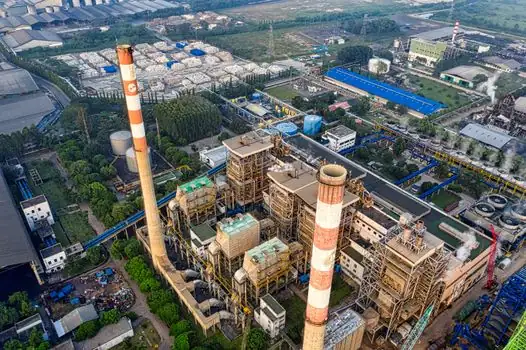
Solid oxide electrolysis cells (SOEC) operate at 700–900°C, a temperature window that delivers higher thermodynamic efficiency but demands specialised interconnect geometry, thermal management, and sealing solutions that are not interchangeable with low-temperature stack hardware [S2]. The high operating temperature is the SOEC value proposition: industrial sites with waste heat (steel off-gas, chlor-alkali exotherm, or chemical-process flue streams) can use that energy to offset the electrical input, which improves overall system efficiency even when the stack itself is more expensive per kW than alkaline or PEM [S1].
SOEC's commercial drawback is stack durability at temperature, with thermal-cycling fatigue and chromium poisoning from metallic interconnects remaining the dominant degradation mechanisms cited in the IP record [S2]. The economics only close when a host site can deliver continuous high-grade heat at low marginal cost, which is why SOEC remains a niche play relative to alkaline's 47.0% share and is more often discussed as a co-located industrial asset than as a standalone renewable-powered unit [S3].
Patent activity 2002–2026 shows four innovation clusters, with reversible systems as the emerging fifth
PatSnap's 2002–2026 dataset identifies four principal innovation clusters: alkaline multi-stack interconnection, PEM stack architecture and flow-path integration, SOEC high-temperature stack design, and dynamic power control for variable renewable input, with reversible (electrolyzer-plus-fuel-cell) systems emerging as a distinct fifth family [S2]. Filing volume is concentrated in five jurisdictions: the European Patent Office, USPTO, JPO, KIPO, and CNIPA, with the CNIPA share reflecting China's position as the fastest-growing national electrolyzer market at 24.8% CAGR [S2][S3].
The competitive signal from the IP record is that the battleground has shifted from cell chemistry to system integration: shunt-current management, sub-stack modularity, power conversion, and durability under variable renewable energy inputs are now the dominant claim themes, all of which sit downstream of the underlying electrochemistry [S2]. For a related read on how the fuel-cell side of this reversible trend is shaping stack demand, the fuel cell stack competitive landscape 2026 breakdown covers the PEM and SOFC counterpart markets, and the SOFC and hydrogen-truck demand outlook traces the demand pull from heavy-duty transport.
Technology comparison: alkaline vs PEM vs SOEC on cost, TRL, dynamic load, and operating temperature
The three commercialised families line up as follows on the four decision criteria that most often drive an RFQ: alkaline leads on installed cost and TRL (47.0% of 2026 unit demand, mature supply chain), PEM leads on dynamic load response and current density (150–3,000 mA/cm² range), SOEC leads on thermodynamic efficiency via its 700–900°C operating window, and AEM remains the lower-TRL entry targeting the cost gap between alkaline and PEM [S1][S2][S3].
For a buyer, the choice reduces to power-source profile: steady baseload or co-located industrial heat favors alkaline or SOEC, intermittent renewable input favors PEM, and capex-sensitive pilots that need better dynamic response than alkaline but cannot fund PEM stacks often trial AEM despite its lower maturity [S1][S3]. High-capacity systems (defined by FMI as 44.0% of 2026 capacity share) skew toward alkaline for the same cost reason, while the upstream flow meter and industrial valve specifications on the hydrogen offtake line are largely stack-agnostic and set by the downstream use case, ammonia synthesis loop, refinery hydrotreater, or mobility refueling station [S3].
Project economics: green hydrogen still 5–10x grey hydrogen cost; overcapacity now a market headwind
Green hydrogen production cost remains 5 to 10 times higher than conventional grey hydrogen depending on region, with renewable electricity cost as the largest contributor and electrolyzer capex as the second-largest line item [S1]. The supply side has already built ahead of demand: electrolyzer manufacturers expanded capacity aggressively in prior years, leaving substantial manufacturing overcapacity across major regions, while on the demand side several flagship projects have been delayed, scaled back, or cancelled, including Air Products' Massena project in New York and BP's HyGreen Teesside in the UK [S1].
US policy uncertainty has compounded the demand problem, with shifting priorities in the One Big Beautiful Bill Act (OBBBA) increasing uncertainty for project developers, even as Chinese deployment continues to grow at 24.8% CAGR [S1][S3]. Green hydrogen's share of the roughly 100 million tonnes of annual global hydrogen demand is still under 1%, so the 24.2% equipment CAGR through 2036 and the broader 48% market CAGR through 2037 both require renewable-power buildout, offtake contracts, and policy continuity to materialise [S1][S3].
Sourcing and standards: buyers should anchor specs to operating profile, not stack chemistry alone
Specification discipline matters more than brand selection at this stage of the market: an alkaline RFQ should lock electrolyte purity, shunt-current management approach, and zero-potential bussing architecture; a PEM RFQ should lock PTL integration method, current density at rated load, and ramp rate (% of nameplate per minute); an SOEC RFQ should lock interconnect material grade, thermal-cycling tolerance, and heat-source interface conditions [S2].
The PatSnap dataset confirms that component-level claims (bipolar plates, PTLs, membrane-electrode assemblies, gas manifolding) are now where the IP differentiation sits, which is also where warranty exposure concentrates when a stack degrades faster than its rated hours [S2]. For buyers cross-referencing electrolyzer capex against the pressure sensor and control-loop hardware on the BoP side, the practical next step is to demand per-stack kWh/kg-H2 guarantees tied to a defined dynamic-load profile, then audit at least one reference site running the same duty cycle, rather than relying on lab-rated nameplate figures.