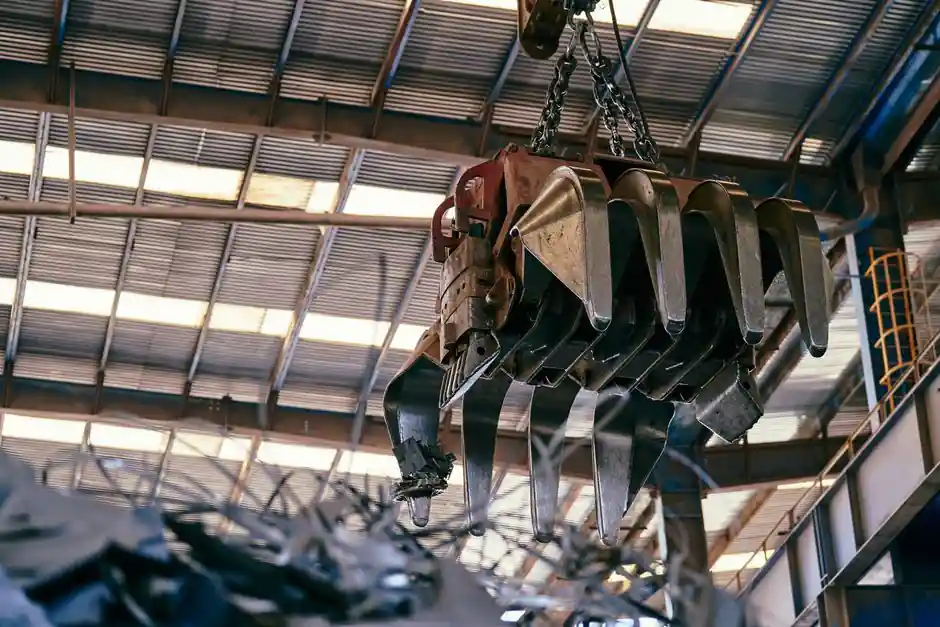
An electromagnet is the practical choice for variable-strength lifting because coil current can raise or lower the holding force, while permanent-magnet lifters provide a largely fixed force without continuous power [S1][S4].
The decision depends on required load range, release method, power-loss behavior, ferrous material, duty cycle, and operating environment, not simply which magnet produces the greater field.
Selection Basis: Force, Control, and Power Loss
For genuinely variable strength, select an electromagnet or an electro-permanent lifting assembly. Electromagnet output is adjusted by varying current through the coil, and current reversal can reverse the field [S1]. Permanent-magnet lifting devices instead use mechanical switching, with a typical lever-operated design rotating internal magnetic material into or out of alignment with the steel load [S3].
Do not classify an electro-permanent device as a conventional permanent magnet. It combines a permanent magnetic circuit with an electromagnet, and its state is controlled electrically rather than through a simple mechanical lever [S1].
The decisive functional distinction is controllability: an electromagnet provides adjustable magnetic output, whereas a permanent magnet provides a stable field without electrical excitation [S1][S8]. For a lifting task whose required force changes by load, plate thickness, or handling step, that distinction usually dominates acquisition cost or nominal pull force.
Decision Matrix for Variable Lifting
Compare the three options on control range, power dependence, release behavior, and suitable duty. A conventional permanent magnet gives fixed holding force, needs no electrical supply, and retains its force during a power interruption, but it provides little continuous adjustment. An electromagnet gives the broadest continuous control range, permits remote operation, and releases when power is removed, which creates a drop hazard if release occurs unintentionally. [S2]
It adds mechanical and magnetic-circuit complexity, so its switching system and failure mode must be reviewed rather than treating it as a simple permanent magnet with a remote switch.
On power-free retention, permanent magnet is strongest. On remote release and continuous adjustment, electromagnet is strongest. On energy use during a static hold, permanent magnet requires none; an electromagnet consumes current while energized; an electro-permanent unit requires power for controlled state changes rather than continuous holding [S1][S2].
Application Fit by Handling Cycle
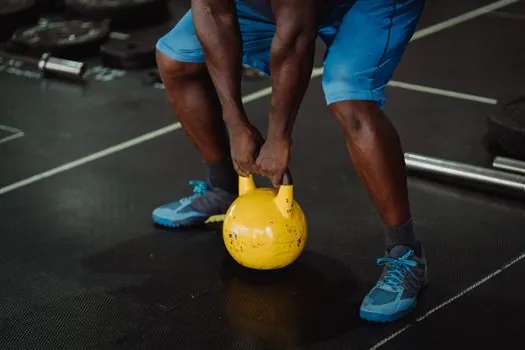
Use a permanent lifting magnet for repetitive picking of individual steel plates where speed, portability, and immunity to a power interruption are more important than fine adjustment.
This is the strongest fit for the stated variable-strength requirement.
It is a specialized architecture rather than a default compromise, and it must be assessed as a complete lifting device with its own switching, mechanical-lock, and power-loss behavior.
Neither magnetic type is suitable for aluminum, brass, or austenitic stainless steel because these materials are not adequately attracted for this purpose. Both require ferrous steel or iron, and steel becomes part of the magnetic flux circuit [S3].
Load Capacity and Surface Reality
Rated capacity is not the working capacity under all field conditions. Rust, scale, plate thickness, air gaps, contact area, material permeability, and load geometry can reduce actual holding force, so the procurement rating must be checked against the worst credible load [S3]. ASME B30.20 classifies magnetic lifting devices as below-the-hook lifting devices, but classification does not replace a project-specific capacity calculation [S3].
Capacity must still be demonstrated for the actual material, thickness, surface condition, and number of contact points.
Specify a derating or safety factor through the responsible engineering and lifting-apparatus evaluation process, and verify the manufacturer’s test basis. A magnet that can hold a clean, flat plate in a laboratory may perform differently on a rusted or scaled surface. In variable-strength work, set the minimum holding command from the weakest permitted load condition, then verify that the maximum command cannot create an overload or unsafe attraction of adjacent steel.
Power, Heat, and Environmental Constraints
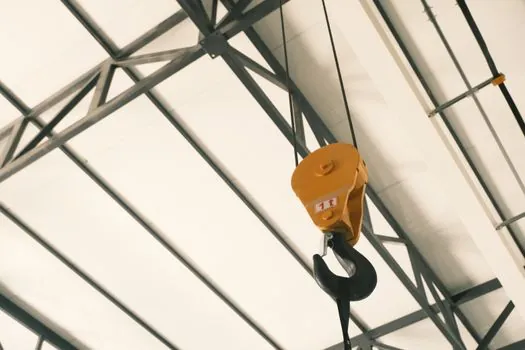
An electromagnet requires a controlled electrical supply during energization and normally during holding. Coil current creates I²R heating, and power loss removes the field and releases the load [S3][S4]. Permanent magnets avoid that continuous supply requirement, but their magnetic material can weaken under heat and must be checked for the intended temperature, corrosion, and mechanical conditions [S4].
Common permanent-magnet material families include NdFeB, SmCo, AlNiCo, and ferrite, while a typical lifting unit uses rare-earth material such as NdFeB [S1][S3][S4]. NdFeB provides high strength but requires careful corrosion and temperature management; SmCo is used where elevated-temperature capability matters. The research material does not provide a universal operating-temperature range, so no blanket limit should be assigned without the magnet grade and manufacturer data.
Electromagnets also face coil, rectifier, switch, and control-component failure modes. Evaluate voltage tolerance, duty cycle, coil temperature, enclosure protection, conductor routing, and emergency-release behavior. Permanent-magnet systems remove supply failure from the release sequence but still require mechanical state confirmation, and electro-permanent systems require analysis of their commanded state during a supply interruption.
Cost, Safety, and Lifecycle Trade-Off
Electromagnets can cost less than permanent magnets for equal size, while permanent-magnet lifting avoids continuous electricity and retains holding force during a mains failure [S1][S3]. These are different cost structures: compare the electromagnet’s power supply, controls, thermal margin, and outage protection against the permanent magnet’s mechanical switching, loss-of-magnetism risk, and restricted adjustment range.
For safety, permanent attraction is attractive where an unexpected release is unacceptable. An electromagnet is easier to operate remotely and can intentionally reduce force during placement, but an interrupted supply can cause immediate release unless the lifting system includes a designed retention or backup arrangement [S3].
For variable-strength lifting, the defensible recommendation is an electromagnet when continuous force control is required, an electro-permanent assembly when controlled switching with low holding energy is required, and a conventional permanent magnet only when the force can remain fixed. None should be selected by rated pull force alone; confirm capacity on the least favorable steel, check the power-loss sequence, and document the operator’s release method before ordering.