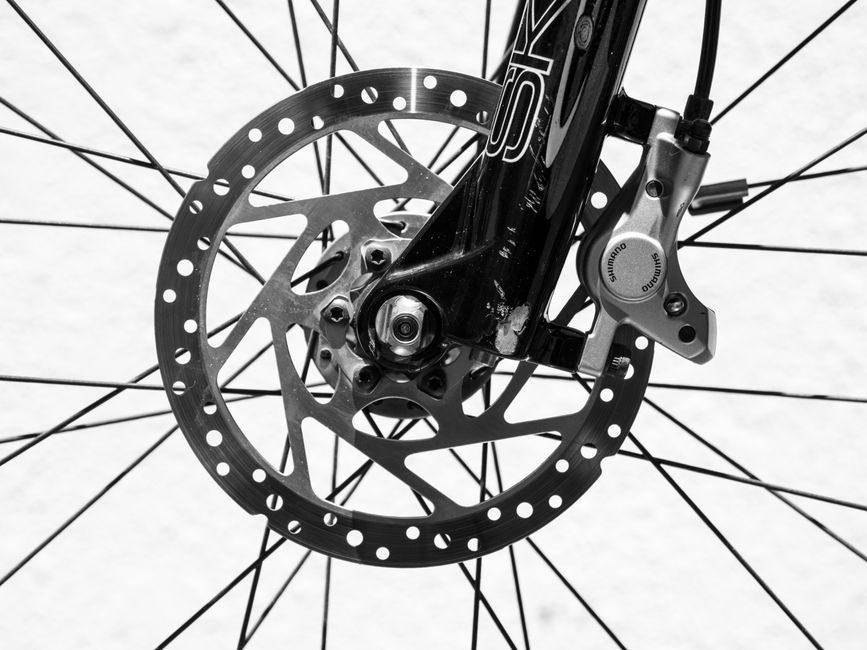
Specifying an electromagnetic brake in 2026 is a six-gate decision — torque class, failsafe logic, duty cycle, duty environment, interface/coil voltage, and supplier footprint — and the current DirectIndustry index lists 278 models from at least 24 manufacturers, with torque ranges commonly landing between 5 Nm and 1500 Nm for industrial units [S2].
Spring-applied / electrically-released designs dominate the safety-rated fraction because loss of power auto-engages the brake, while power-on engagement is reserved for cycle-fast machine tools, packaging lines and textile feeds where a fail-safe is undesirable; Warner Electric's ERDHBF 20–150 Nm bi-functional model typifies the spring/hydraulic/electromagnetic hybrid used on reach trucks and counterbalance forklifts [S1]. Reference pages for related hardware are catalogued under electromagnetic brake and the clutch-brake family.
Operating Principle and the Two Engagement Logics
Every industrial electromagnetic brake in the 2026 index uses a coil-driven armature to press a friction face (disc, single-plate, multi-plate or shoe) against a mating surface, with torque scaled by clamp force, friction coefficient (typically 0.35–0.45 for organic/asbestos-free linings) and mean radius. A spring-set / electromagnetic-release brake is held open only while the coil is energised, so any power loss, cable break or coil burn-out snaps the brake into the locked state — the EN 954-1 / ISO 13849-1 logic basis for "failsafe" stops on vertical axes [S1][S2]. Power-on / spring-release units do the opposite: the armature pulls in to clamp, the brake releases when the coil is de-energised, and reaction time is typically 10–40 ms versus 20–80 ms for the spring-set type, which is why high-cycle packaging machinery and servo-driven textile feeds prefer them [S2].
Warner Electric's ERDHBF combines both: a hydraulic service brake for foot-pedal deceleration, a spring-applied parking brake for failsafe hold, and an electromagnetic release coil; the published torque window is 20–150 Nm, mounting is dry, and the unit is rated for both vertical and horizontal shafts, with no residual torque on release [S1]. The choice between the two logics drives every downstream gate because it sets the required UPS or capacitor-backed coil supply, the safety-relay architecture, and the cabinet heat budget.
Six-Gate Selection Map (the criteria a buyer must walk)
Gate 1 — Static torque: select a brake whose nominal torque is 1.5–2.0× the calculated load torque on the shaft, accounting for service factor (K_A) and the worst-case inertia ratio; the ERDHBF's 20–150 Nm band sits in the small-to-medium material-handling window, while larger elevator-duty units from Dellner Bubenzer, Mayr and Carlisle push into the 1000–1500 Nm band seen across the manufacturer list [S1][S2]. Gate 2 — Failsafe logic: spring-set for any vertical-load (elevator, hoist, stage lift, crane) or unattended-rotor case; power-on only when the axis is mechanically clamped by gravity-safe hardware elsewhere [S1].
Gate 3 — Duty cycle and thermal class: continuous-slip applications (tensioning, web control) need a continuous-rated coil and often a separate brake resistor or thermal cut-out; intermittent stop-start duty only requires an F or H class insulation coil. Gate 4 — Environment: IP54 is the typical indoor-floor baseline, IP65 for washdown, and ATEX/IECEx-marked enclosures are mandatory in Zones 1/2 (gas) and 21/22 (dust) for paint lines, grain elevators and refinery conveyors [S2]. Gate 5 — Interface: standard coil voltages are 24 VDC, 96 VDC, 190 VDC and 205 VDC (rectified from 110/220/380 VAC via a dedicated half-wave or switch-mode rectifier); rectifier choice changes release time by a measurable margin and must be specified to match the coil [S3]. Gate 6 — Mechanical envelope: shaft fit (H7 tolerance), hub length, brake-disc OD and the requirement for a manual-release lever must all clear the host gearbox or motor face; the ERDHBF adds a cable-or-hydraulic actuator port that the buyer must plumb [S1].
Construction Variants in the 2026 Catalogue

Four physical formats dominate the 278-model index: (a) single-disc face mount, the workhorse for servo and stepper-motor retrofits, torque typically 0.5–80 Nm; (b) multi-disc stack, used where axial space is tight and torque density must be high — Cantoni Motor, Mayr and Warner stack 2–6 discs to reach 200–1500 Nm in the same envelope [S2]; (c) shoe / drum type, common on conveyor head pulleys and winches, with larger swept area for high-energy single stops; and (d) fail-safe motor-mounted units integrated with the motor B5/B14 face, where the brake sits behind the fan cover and shares the motor's IP rating.
A decision matrix is useful here. On four common axes — torque density (Nm per kg), release time (ms), service life (M cycles to reline) and typical price band — the single-disc face-mount scores high on speed and cost but loses on density; the multi-disc stack wins on density and service life but is heavier and pricier; shoe/drum types win on single-stop energy absorption and lose on release speed; integrated motor brakes win on footprint and lose on serviceability because the motor must come out to reline. Lixin Electromagnetic Clutch (Guangdong) ships a 1401150-series steel-friction single-disc unit at MOQ 2 pieces and US$50–55, while a 5–8 kW industrial face-mount from Mayr or Warner typically lands 4–10× higher once the rectifier and release lever are added [S3].
Standards, Sourcing and the 2026 Supply Map
The governing safety reference for brake circuits on machinery is ISO 13849-1, which sets the performance level (PL a–e) for the stop function; elevator-specific duty is covered by EN 81-20 / EN 81-50 and the A17.1 / B44 family in North America, while ATEX 2014/34/EU governs Ex-rated enclosures. Material-handling trucks — the ERDHBF's home market — fall under ISO 3691-1, which mandates spring-applied / electrically-released parking brakes on every ride-on truck regardless of drive type [S1]. On the supply side, the DirectIndustry 2026-05 index names 24+ brands with double-digit model counts: Chr. Mayr GmbH + Co. KG (15), Cantoni Motor (18) and CHAIN TAIL CO., LTD. (18) lead the European and East Asian supply, with Carlisle Industrial Brake and Friction (7), DELLNER BUBENZER Germany (4) and Kählig Antriebstechnik (7) covering heavy-industrial and elevator grades [S2].
Chinese suppliers are heavily represented in the small-to-medium torque window: Lixin Electromagnetic Clutch Co. (Dongguan) lists 20+ years' experience with factory size 10,000–30,000 m² and 101–200 staff, exporting single-disc units at US$20–100 ex-works [S3]; Anhui Jia'anjie Electromechanical rides on its parent (Anhui Innovation Electromagnetic Clutch) for nearly 30 years of elevator-grade brake production [S4]; Okorder-listed industrial electric brakes ship at MOQ 5 sets, monthly capacity 8000 sets, with one-year warranty from the mainland-China base [S5]. Cross-check sourcing on a wider map in the linear guide and crossed-roller guide reference pages, since the same precision-machining supply chain supplies adjacent motion-control hardware.
Common Failure Modes and Field Service Lessons
The three modes that consume the most service hours on industrial electromagnetic brakes are coil burn-out, friction-lining wear, and air-gap creep. Coil burn-out is almost always a supply-side fault — a half-wave rectifier that has lost one diode drives DC ripple into the coil and the coil runs hot until the Class F (155 °C) or Class H (180 °C) insulation gives up; specifying a matched rectifier and a thermal switch in the coil winding is cheaper than the next replacement [S3]. Friction-lining wear is a function of energy per stop (½·J·ω²) and the lining's specific heat capacity; the ERDHBF's no-residual-torque release extends lining life by preventing drag wear when the brake is open, which is the single biggest gain in stop-and-hold material-handling duty [S1].
Air-gap creep is the silent killer: every actuation wears the armature face, the working air gap grows, the magnetic pull force at a fixed coil current drops, and the brake eventually begins to slip at full load — usually at 1.5–2× the original rated air gap. The fix is either an auto-adjustment module (available on most Mayr, Warner and Dellner units) or a manual re-shim at scheduled service intervals. For a deeper selection walk-through that maps these six gates against real industry applications, see the companion Electromagnetic Brake Selection: Six-Gate Spec Map for Engineers reference, and for adjacent failsafe hardware the Emergency Stop Button Buying Guide 2026 lays out the contact-topology and ATEX-tier decisions that pair with any spring-set brake circuit.
Price Bands, MOQ and Lead Time (2026-07 Snapshot)
Small-format single-disc units (0.5–20 Nm) from Chinese suppliers sit at US$10–70 per piece at MOQ 2–10 pieces, with ex-works lead times commonly 7–15 days and rectifier accessories at US$5–10 [S3]. Mid-range industrial face-mount brakes (20–150 Nm, the ERDHBF class) carry a 4–10× multiplier and are typically sold through authorised distributors (Motion Industries, General Tool & Supply in the Warner Electric network) with prices quoted on RFQ rather than published [S1]. Heavy-industrial elevator and winch brakes from Mayr, Dellner Bubenzer and Carlisle are engineered-to-order with multi-week lead times and 12–24 month warranties; a typical quote pack includes the brake, the matched rectifier, the release-lever or hydraulic booster, and a declaration of conformity to ISO 13849-1 PL d or PL e as required by the host machine's safety logic [S2].
For a buyer building a vendor shortlist in 2026-07, the practical sourcing matrix is: Lixin or Okorder for prototype / small-batch low-voltage units at low MOQ [S3][S5]; Anhui Jia'anjie for elevator-grade volume with 30-year lineage [S4]; Warner, Mayr, Carlisle or Dellner Bubenzer when a safety certificate, an auto-adjust module and a global service network are non-negotiable [S1][S2]. Cross-reference the electromagnetic brake encyclopedia page for a deeper look at the physics, and use the related electromagnetic flowmeter page only to confirm the same eddy-current / coil-driver supply chain when both products are specified in a skid.
A trackable signal is the Lixin factory's stated annual capacity (10,000–30,000 m² footprint) [S3] — a published expansion or capacity figure later in 2026 will move the small-format price band visibly.