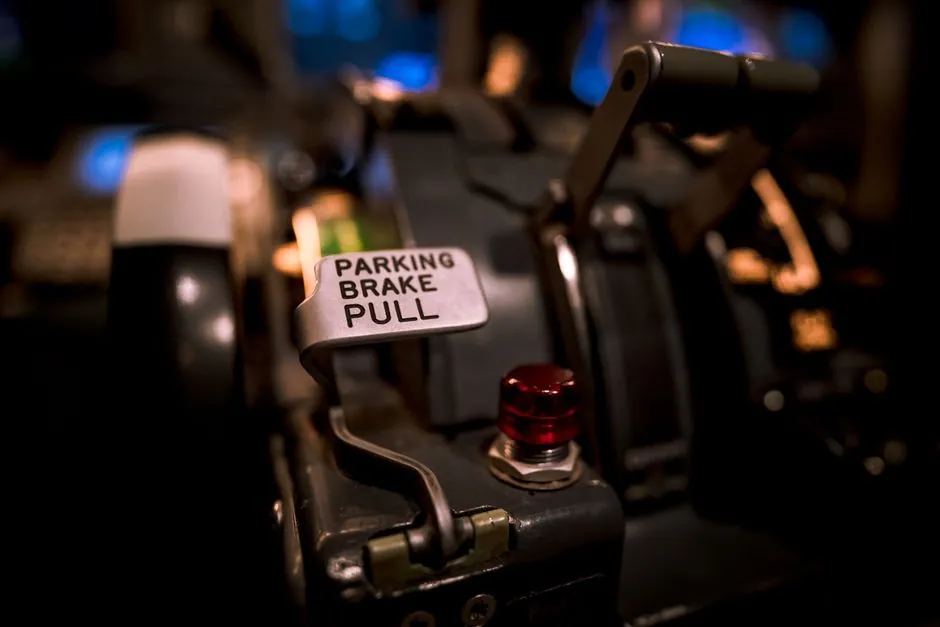
Single-face electromagnetic brakes are the most widely used version of electromagnetic brake [S7].
The principal classifications are power-on and power-off engagement, with single-face, multiple-disc, tooth, hysteresis, magnetic-particle, and permanent-magnet constructions serving different torque, speed, and power-loss requirements [S1][S2].
Power-On and Power-Off Operating Logic
The two fundamental electromagnetic brake arrangements are “Power On,” also called magnetically applied, and “Power Off,” also called spring-applied [S4]. In a power-on brake, current through the coil creates a magnetic field that pulls the armature into contact with the friction surface and generates braking torque.
A power-off brake behaves differently: with no coil voltage, mechanical springs clamp the friction disc or engage the teeth. When energized, magnetic force overcomes the spring and releases the brake [S2][S4]. This architecture is suited to holding a motor shaft, ball screw, servo, robot axis, or vertical load after control power is removed [S2].
The selection boundary is functional: power-on brakes favor controlled, quick stopping, while power-off brakes favor retention and loss-of-power safety. A brake intended for holding must be checked separately from one selected for stopping because stopping torque, holding torque, response time, and thermal duty impose different requirements [S3][S6].
Single-Face, Multiple-Disc, and Tooth Brakes
A single-face electromagnetic brake uses one primary friction surface between the input and output members [S2]. It is compact, economical, and widely used for robotic axes, servo motors, conveyors, packaging equipment, and material-handling drives [S1][S3].
Multiple-disc brakes place several friction-disc pairs in parallel. This arrangement can increase brake torque without increasing the outside diameter of the assembly, making it useful where radial space is constrained but torque demand is high [S2]. The trade-off is added moving parts, greater stack length, and more complex thermal management than a single-face unit.
Tooth brakes transmit torque through mating tooth faces rather than a conventional friction lining. In a power-on tooth brake, magnetic clamping force must be sufficient to maintain engagement of the tooth faces; in a power-off design, springs force the teeth into engagement when current is removed [S4]. A tooth brake can also operate dry or in oil, and its operating condition must be matched to the selected construction [S4].
Hysteresis and Magnetic-Particle Brakes

Hysteresis brakes and magnetic-particle brakes belong to the non-friction brake family, unlike disc brakes that transfer torque through clamped friction surfaces [S1]. A hysteresis brake uses a magnetic field acting on a rotating hysteresis element to produce a resisting torque, while a magnetic-particle brake uses a magnetic field to arrange a particulate medium between opposing surfaces [S1][S7].
These designs are selected when smooth, controlled deceleration and repeatable torque control are more important than the high holding capability of a spring-applied friction brake. They also distinguish electromagnetic brakes from eddy-current brakes, which apply magnetic resistance directly rather than depending on friction [S2].
The comparison is straightforward: a single-face disc brake provides positive stopping and holding at a compact cost; a multiple-disc unit raises torque in the same envelope; a tooth brake suits dry or oil-filled mechanisms; a hysteresis brake provides controlled magnetic resistance; and a particle brake uses a modulated particulate coupling. The correct choice follows from the required torque profile, thermal load, speed, and whether the brake must hold without electrical power [S1][S4][S6].
Permanent-Magnet and Spring-Applied Holding Brakes
Spring-applied brakes use compression springs to hold the armature against the friction disc when the coil is de-energized, while energized magnetic force releases the clamp [S2][S3]. Permanent-magnet brakes instead attract a single-face armature through permanent magnetic flux and use an energized coil to create an opposing field that cancels that flux and disengages the brake [S2].
Spring-applied models are cited for stable holding, standard and emergency braking, and battery-powered systems because their holding state does not depend on coil power [S3]. These are product-specific figures, not universal limits for every electromagnetic brake.
For a servo or robot axis, a power-off electromagnetic brake is the normal starting point when loss of control power must not release the load. Permanent-magnet construction should still be checked against required holding torque, power consumption, response, and the possibility that the coil field does not fully neutralize the permanent magnetic field under the specified temperature and electrical conditions.
Selection Criteria: Torque, Speed, Duty, and Environment
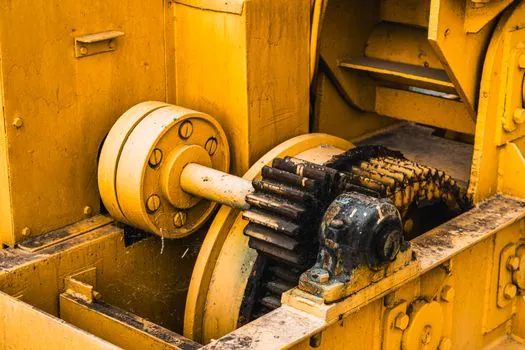
At minimum, the specification must define whether the brake is for halting, holding, or both, then identify power-on or power-off engagement, torque, RPM, input and output arrangement, physical size, mounting style, and disc or armature configuration [S3]. Torque alone is not enough: stopping energy becomes heat, and sustained holding can create a different thermal load from repeated deceleration.
Temperature, dust, debris, and moisture can change brake performance, so each product's rated operating temperature and environmental limits must be checked rather than assumed [S3]. Power-on brakes are presented for quick-stop duties in printing, paper processing, packaging, and textiles, while power-off brakes address holding and emergency-retention duties [S3][S4].
Installation details also constrain the choice. Shaft-mounted and flange-mounted brakes suit different motor frames, while zero-backlash and standard-backlash hubs address different positioning tolerances [S2][S3]. A brake with the correct nominal torque can still perform poorly if its heat capacity is below the duty cycle, its release time is too long for the machine cycle, or contaminants reduce friction [S1][S3].
Application Fit and Failure-Mode Limits
Electromagnetic brakes are used on robotic Z-axes, automated guided vehicles, servo and stepper motors, factory automation, packaging and food-processing equipment, material handling, and printing machinery [S3]. Common industrial use therefore requires repeatable electrical release, controlled stopping torque, secure holding, and predictable behavior after a power interruption.
The technology has identifiable limits. Friction brakes convert kinetic energy into thermal energy, and achievable deceleration is constrained by brake capacity and the heat available at the friction surface [S1]. Dust, debris, and moisture affect friction performance, while temperature extremes alter the torque produced by the magnetic circuit [S1][S3].
Electromagnetic brakes are not the correct choice for every duty. A non-fail-safe application may gain little from spring-applied hardware, while a holding application with no independent mechanical restraint requires a power-off brake. A high-cycle line may need a multiple-disc arrangement and thermal capacity that a compact single-face unit cannot support. The relevant reference for a motor-mounted brake is also covered in the motor protector, because protection coordination and brake release sequencing must be designed as one control system.
Sourcing and Datasheet Verification
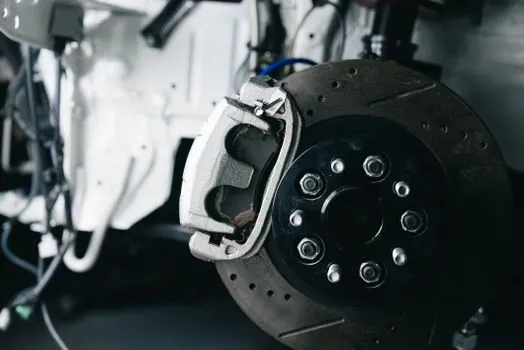
Compare brake models using at least 6 measurable fields: rated holding or operating torque, maximum RPM, coil voltage and current, response time, allowable ambient temperature, and mounting arrangement [S3]. Add mechanical interface details such as shaft diameter, hub length, backlash option, disc or armature style, and whether oil is present in the mechanism [S2][S4].
Product catalogues distinguish families by construction rather than by one universal performance number. One catalogue lists 4 general electromagnetic-brake models, 6 spring-applied models, a permanent-magnet category, and 2 hysteresis-brake models [S8]. Another separates armature disc brakes, spring-applied brakes, and powder or particle brakes [S6]. These counts describe supplier catalogues, not the number of designs available across the market.
Before purchase, request the manufacturer’s dimensional drawing, torque-versus-speed or duty-cycle data, wear allowance, release timing, coil tolerance, and declared operating-temperature limits. For brake resistors used with regenerative drives, size the resistor separately from the brake because the resistor handles electrical energy while the electromagnetic brake supplies mechanical holding or friction braking.
The defensible procurement decision is to start from the duty: use power-on single-face or multiple-disc construction for controlled stopping, select power-off spring or permanent-magnet construction when loss of power must preserve holding, and reserve hysteresis or particle designs for modulated braking. Confirm the final model against torque, RPM, thermal duty, environment, mounting, and fail-safe response rather than classifying from the “electromagnetic brake” label alone [S1][S2][S3][S6].