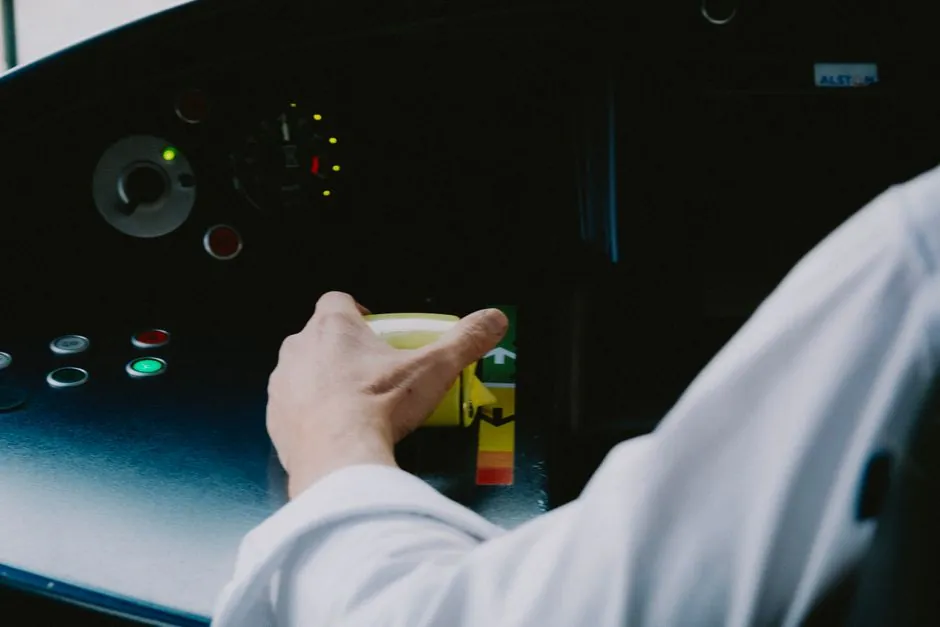
Emergency stop buttons are grouped by actuation and reset, with seven practical forms identified: push-pull, twist-release, key-release, pull-cord, push-bar, foot-operated, and rod-operated devices [S1][S3][S4].
They are manual safety controls that initiate an emergency stop function by one human action, remain continuously operable, and normally require deliberate reset before machinery can restart [S3][S5].
Push-Button Actuator Types
The mushroom-head push button is the most common emergency stop actuator because its enlarged red head is conspicuous and can be operated rapidly under stress [S1][S6].
A push-pull design combines two movements: pressing the head inward activates the stop, while pulling it outward releases or resets the mechanism [S1][S4]. This arrangement makes accidental release less likely than a simple push-release control, but the installed assembly must maintain clear travel and prevent accidental actuation.
The twist-release or push-lock, turn-reset design latches when pressed. Resetting requires a deliberate twist, commonly counterclockwise, with directional arrows fitted to the actuator [S2]. IDEC's X-series range combines push-pull and push-lock, turn-reset operation in one device, while the XN4E model is excluded from that combined arrangement [S7].
Key-release devices use a key for resetting after the mushroom head has been pushed and latched [S4]. They suit controlled environments where unauthorized restart is the principal concern, but they introduce a key-management requirement: the reset key must be available to authorized personnel without creating an uncontrolled bypass of the safety circuit.
Beyond the Button: Alternate Emergency Actuators
Pull-cord emergency stops cover long conveyor or robot-cell zones, with one example system using a cord that can exceed 100 feet and be triggered from multiple points along its length [S2]. This distributed reach makes the cord practical for remote trip points, but the line must remain taut enough to operate the switch correctly.
For a pull-cord unit, the cause must be identified before reset. The reset control is pressed inward until it clicks, and a small inspection window allows the installer to check cable tension [S2]. Incorrect tension can prevent reset or compromise reliable operation, so pull-cord systems require routine inspection rather than treating the cord as an unattended trip device.
NFPA 79 permits additional mechanical actuator forms, including unguarded foot-operated switches, push-bar-operated switches, and rod-operated switches [S3]. Their selection depends on reach, guarding, process layout, and the intended operator action. Flat switches and graphical representations on a digital display are not acceptable substitutes for the emergency stop device [S3].
How Emergency Stop and Emergency Off Differ
An emergency stop function is intended to avert or reduce hazards to people, machinery, and work in progress, and is initiated by a single human action when the normal stopping function is inadequate [S5]. The actuator is the manually operated element, such as a mushroom head, rope, or wire [S5].
Emergency off emphasizes the rapid and safe isolation of power, while emergency stop emphasizes the controlled shutdown of machine movement [S3]. These are related but distinct specifications. Selecting an emergency off device does not by itself establish that the machine performs an acceptable emergency stop sequence.
NFPA 79 stopping categories distinguish Category 0, immediate disconnection, from Category 1, controlled shutdown [S3]. The required category must be derived from the machine risk assessment and applicable local code, rather than selected from the button's color or actuator shape. Emergency stop equipment is intended to supplement, not replace, ordinary operational stopping controls.
Comparison by Reach, Reset, and Access Control
Push-pull buttons offer clear two-position operation and controlled release, twist-release buttons provide deliberate latched reset, and key-release buttons add controlled reset access [S1][S4][S7].
Pull-cord systems can cover a long conveyor line, while push-bar, rod, and foot-operated devices provide other activation methods, with risk and operator-access considerations still requiring assessment [S2][S3].
Color, Marking, and Machine Integration
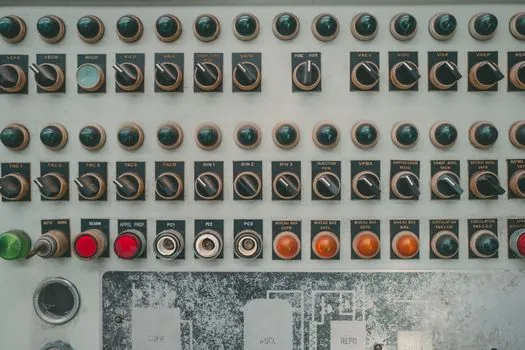
The switch must be continually operable, readily accessible, and activated by one human action through mechanical latching [S3]. Once operated, the stop must override other machine functions, and re-energization must remain blocked until the stop commands are reset at their initiation locations [S3]. Resetting the device should restore permission to restart, not start the machine directly.
Emergency stop status may be integrated with machine indication and control architecture. The emergency light can indicate an active stop, while an emergency-stop device provides the physical actuator. An HMI can identify the active station before a controlled reset sequence begins [S2].
Installation, Reset, and Inspection Constraints
Location is the first installation decision because the emergency stop button must be readily accessible from the operator's work area and immediately recognizable in an emergency [S1][S3]. It should be mounted on a stable surface with accurately sized fixing holes and adequate operating clearance, not positioned where guarding, stored material, or normal workflow blocks access.
The reset sequence is a process, not a single button action. The activation cause must be found and corrected, the local device must be reset at its source, and any supervisory control must then confirm that no emergency stop remains active before the system is enabled [S2]. In one robot-cell procedure, the HMI reports the active location, the operator clears the cause, resets the local device, selects RESET SAFETY, and then uses ENABLE SYSTEM after a final inspection [S2].
Periodic testing is part of the operating requirement because latching, contactors, reset logic, and cord tension can change over time [S3]. Testing should confirm that the actuator operates with one deliberate action, the required machine stopping category is achieved, the stop remains latched, and reset does not bypass another active stop or restart the equipment directly.
Choosing the Correct Device by Application
A mushroom push button fits most local industrial, mechanical, production-line, and robotic applications where personnel must reach the control directly [S1][S2]. A twist-release version adds a visible deliberate reset, while a key-release version adds administrative control over reactivation.
Pull cords fit conveyors and extended robot cells where personnel cannot reach a single local button. Push-bar, rod, and foot-operated devices should be selected only where the machine layout supports the corresponding action and the risk assessment accepts the guarding and ergonomics [S3].
The final selection depends on hazard severity, stopping category, access reach, reset philosophy, environment, and local code. Use the emergency-stop button classification as the starting point, then verify actuator color, mechanical latching, contact arrangement, mounting, and reset behavior against the machine's documented safety function.