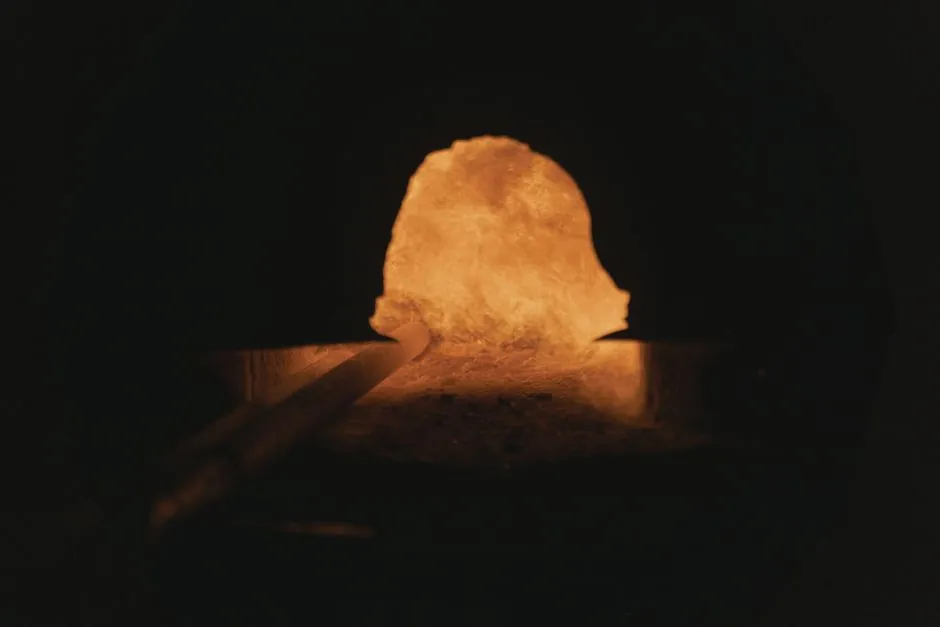
Electromagnetic pumps move molten aluminum without mechanical moving parts, while mechanical pumps tolerate rough service and offer a broader repair ecosystem [S1][S2].
The decision depends on furnace compatibility, installed circulation method, transfer geometry, production rate, and the required balance between automation and maintenance, not simply flow capacity.
Sidewell Compatibility Starts with Furnace Geometry
A sidewell holding furnace must provide the submerged pump body, electrical clearances, metal depth, and flow path required by the selected pump. Electromagnetic pumps are installed inside the furnace and move metal by electromagnetic force rather than a rotating impeller [S3].
Do not assume that a pump will work in every sidewell. For the CMI Novacast PG 300 and PG 450, induction furnaces are identified as incompatible because the larger induction-furnace circuit can override the pump and cause malfunction [S3].
For a new sidewell installation, conduct a electromagnetic compatibility review of the furnace power system, pump controls, vessel geometry, and metal level. This review should be completed before purchasing, because nominal flow alone does not establish compatibility.
Compare the Two Pump Types Against Procurement Criteria
Electromagnetic systems have no mechanical parts in the molten-metal circuit, reduce routine maintenance, and support controlled transfer with reduced exposure of personnel to molten metal [S1][S6]. Their principal constraints are furnace compatibility, electrical requirements, installation geometry, and the need to maintain suitable metal depth around the pump [S3].
Mechanical pumps include rotating and wear components, but they stand up well to rough conditions and are easier to support with replacement parts [S1]. Their benefit is simpler mechanical integration and access to a broader parts network, offset by shaft, bearing, rotor, or wear-part maintenance depending on the configuration.
Use Mechanical Pumps Where Service and Flexibility Dominate
Mechanical circulation improves heat transfer, alloy homogeneity, and melt-rate performance in foundries processing ingots, sows, or scrap [S5]. A mechanical pump is the stronger candidate when the sidewell handles variable charge mixtures, dirty returns, or conditions where exposure of a rotor and shaft to molten aluminum would make maintenance downtime easier to justify.
Mechanical transfer also provides a practical path when the pump must remove metal from the furnace rather than merely circulate it. Variable-speed motor control adjusts metal velocity according to lift height, but conventional piping restricts flow and can create turbulence as metal accelerates into the line [S5].
These are application-specific figures, not guaranteed specifications for every pump, and they should be confirmed in a foundry acceptance test using the actual alloy and transfer route.
Use Electromagnetic Pumps for Controlled Automated Pouring
Electromagnetic pumping is appropriate when the objective is repeatable furnace-to-casting transfer with fewer mechanical wear points and reduced operator proximity to molten metal [S3]. The pump also suits applications that need low-pressure bottom fill, low-pressure side fill, or gravity pour, subject to furnace compatibility [S3].
Published CMI Novacast examples provide a useful scale reference. The PG 300 is intended primarily for gravity-pour service with a typical molding rate up to 180 castings per hour, while the PG 450 is intended for low-pressure bottom fill with a typical rate of 200 castings per hour [S3]. These models demonstrate that electromagnetic capacity is application-specific rather than a generic substitute for a mechanical circulation pump.
For automated dosing, define acceptance limits for shot weight, cycle repeatability, minimum metal level, pump inlet submergence, and recovery after a power interruption. If these conditions cannot be maintained at minimum working metal level, the theoretical pump curve will not describe plant performance.
Large Crucibles and Holding Furnaces Are Conditional Applications
Crucible furnaces below 2,000 lb are generally unsuitable for the CMI Novacast PG 300 and PG 450 because the vessel is usually too small to fit the pump and maintain enough metal for a reasonable casting run [S3]. A small vessel draws down quickly, so the pump may consume a large fraction of the charge for a limited number of castings, forcing continual make-up metal additions.
Certain crucibles above 2,000 lb may work when they can both accept the pump and maintain adequate metal level [S3]. In that arrangement, the crucible generally functions as a holding furnace charged by another melting furnace. A crucible furnace can therefore be compatible in principle, but only after a dimensional and level study confirms it.
For dedicated aluminum service, compare the proposed equipment with the process characteristics of a holding furnace. Metal depth, bath temperature, alloy, circulation pattern, and transfer duty all affect the available head and usable flow.
Select by Service Requirement, Not by Pump Category
Choose a mechanical pump when rough conditions, readily available replacement parts, simple integration, or direct metal removal from the sidewell outweigh the benefit of removing rotating wear parts [S1]. Choose an electromagnetic pump when automated dosing, controlled pouring, low maintenance, and reduced operator exposure are the primary requirements [S3][S6].
Do not select an electromagnetic pump for a sidewell furnace until the vendor confirms compatibility with the furnace's electrical architecture and physical arrangement [S3]. Do not select a mechanical system without defining refractory and sealing arrangements, wear-part access, lifting conditions, variable-speed control, and the required transfer pressure.
For a sidewell system that already circulates metal mechanically, retain the mechanical arrangement unless the application needs precise automated dosing or removal of exposed moving parts. For a furnace intended for automated low-pressure or gravity casting, evaluate an electromagnetic system against the target cycle rate, such as 180 castings per hour for a PG 300 or 200 castings per hour for a PG 450 [S3].
Commission Against Measurable Acceptance Criteria
Factory flow, pressure, and power data are only the starting point because furnace level, alloy, and piping or launder geometry change operating head. The cited DC electromagnetic concept achieved 34 kPa and 56 g/s under its specified test conditions [S4], while mechanical dosing accuracy has been reported within 1% to 3% of shot weight [S5].
Specify acceptance testing at minimum and maximum intended metal levels, with measurements for delivery rate, shot-weight deviation, pump or motor temperature, electrical demand, low-level protection, restart behavior, and dross generation. Keep the furnace power review, mechanical inspection plan, and measured production rate in the procurement record.
The most trackable procurement signals are the approved furnace-compatibility calculation and the demonstrated output at minimum working metal level; if either is missing, the decision remains a comparison of concepts rather than a qualified pump selection.