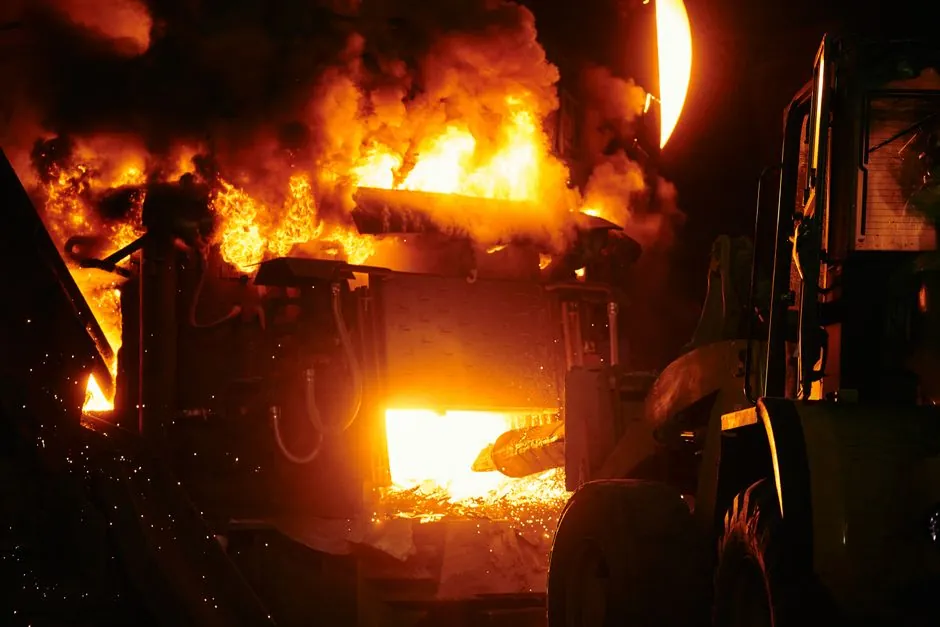
A dry hearth melts solid aluminium on a refractory charging surface before the liquid enters the bath, avoiding the reduced heat transfer that occurs when solid aluminium sinks beneath the molten bath [S1].
The comparison applies to reverberatory aluminium furnaces: a wet bath charges solid metal directly into molten aluminium, while a dry hearth separates the solid charging zone from the holding bath, making furnace layout, scrap condition, and desired melt rate the primary decision variables [S1][S3][S5].
Heat Transfer Determines the Better UBC Furnace
Dry hearth wins on furnace-area melting performance because solid aluminium remains exposed to direct heating rather than sinking beneath the molten bath [S1]. This distinction matters because solid aluminium is about 15% denser than liquid aluminium, so an uncharged UBC piece will submerge and receive heat only indirectly through the bath surface [S1].
Aluminium also transfers heat less effectively after it melts because liquid aluminium has a thermal conductivity about 50% lower than solid aluminium [S1].
The wet-hearth process remains simple because the charge goes directly into the molten pool [S1]. For UBC scrap, this means an economically significant pretreatment burden. Wet baths are therefore more credible for relatively dry, clean, homogeneous charge than for oily, coated, or moisture-bearing recyclables.
Selection Criteria for UBC Scrap
Specify the furnace against the actual UBC inventory, not a generic aluminium duty cycle. At minimum, document kg/h of usable liquid metal, maximum hourly charge, average charge size, moisture range, coating and polymer content, contamination limit, recovery target, and acceptable dross rate [S5].
A useful capacity rule is to size the installed furnace above the nominal production demand because cleaning, maintenance, and holding periods reduce the realistic melt rate [S5]. Several smaller furnaces improve operational flexibility, while one or two larger furnaces can improve thermal efficiency and simplify molten-metal handling [S5]. For mixed UBC, flexibility may outweigh a lower specific efficiency, but the receiving furnace still needs a dry charging area capable of handling the largest practical piece and moisture condition.
Evaluate the project against seven areas: furnace efficiency, energy cost, molten quality, melt loss, molten-metal handling, safety, and environmental requirements [S5]. Capital evaluation must also include fabrication, purchase, installation, startup, and depreciation, while operating evaluation includes energy, maintenance, consumables, labour, operating space, and opportunity cost [S5].
Dry Hearth and Wet Hearth Compared
Dry hearth is the stronger choice when UBC is dry and the operation values predictable melt rate, lower heat loss, reduced dross formation, and clean metal delivered at temperature [S1][S2][S4]. Its sloping refractory hearth limits prolonged contact between molten aluminium and the lining, reducing dross generation and metal loss associated with refractory contact [S2].
On energy retention and dross control, dry hearth has the advantage because the dry design reduces heat loss through the furnace walls and floor [S2]. On feedstock tolerance, wet hearth has the advantage only if the incoming scrap is dry and free of liquid contaminants; dry hearth provides the better route for separating solid charge from the molten-metal bath [S1][S3].
Dry Hearth Configurations and Operating Limits
Dry hearth does not necessarily mean a furnace without a bath. That arrangement separates the high-throughput melting function from controlled metal delivery, which can reduce the amount of cold charge entering the holding bath.
These figures describe one offered design, not universal limits for all dry-hearth furnaces. The more general operating principle remains applicable: solids are preheated and melted before entering the bath, while the holding section can deliver metal at temperature with less scrap exposure [S3][S4]. For an operating UBC line, confirm furnace capacity, burner arrangement, gas pressure, electrical supply, refractory limits, tapping arrangement, and total installed footprint against the site [S2][S3].
Wet Hearth Operating Behavior
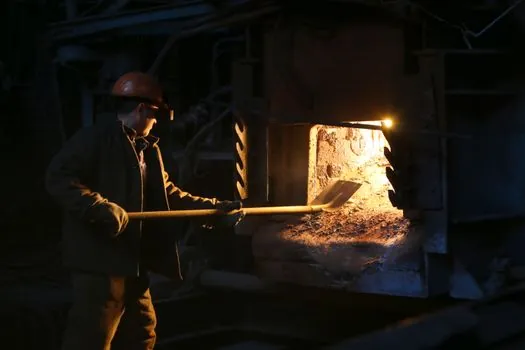
A documented wet-bath example charged 4,000 kg of ingots or minimally preheated scrap into more than 10,000 kg of molten aluminium, illustrating the large thermal buffer needed when cold solids enter a bath [S1]. During the first 0–20 minutes, the bath temperature dropped rapidly as the charge cooled the melt, while released latent heat helped prevent the bath from falling below 650 °C [S1].
From 20–35 minutes, flue and roof temperatures rose toward set point while the bath was maintained at approximately 650 °C during the phase change [S1]. This operating pattern shows why wet-hearth control cannot be judged from nominal burner rating alone. The furnace must absorb the transient cooling of the UBC charge, recover temperature, and then complete fusion without an excessive dross layer blocking heat transfer [S1].
Wet hearth remains appropriate when production is small or variable, capital simplicity dominates, and the scrap stream is already dry and clean. It is a poor shortcut for wet UBC because moisture and liquid contaminants are prohibited from direct bath charging [S1]. Adding a separate dryer or clean-charge requirement shifts the comparison toward a dry-hearth system with a dedicated charging chamber [S3].
Failure Modes and Process Controls
The dominant dry-hearth risks are charging congestion, uneven melt flow down the sloping hearth, refractory wear, and bridging caused by unsuitable scrap geometry. UBC must also be sorted before charging because coatings, oil, ferrous fragments, and non-aluminium items can contaminate the melt or damage charging and tapping equipment. The design objective is to avoid direct immersion of cold feed while keeping the charging and holding functions independently controllable [S3].
The dominant wet-hearth risks are bath cooling, excessive dross, contamination from wet charge, and heat-transfer loss caused by oxide covering the melt surface [S1]. Control measures must address both the transient and steady state. The transient starts with rapid bath cooling during the first 20 minutes, followed by recovery and phase-change behaviour from 20–35 minutes [S1].
For either design, monitor bath temperature, flue and roof temperature, burner output, bath cleanliness, dross removal, charge moisture, melt loss, and metal chemistry. For a UBC recovery line, also compare usable metal output with charge weight, since theoretical furnace capacity does not establish recovery performance [S5].
Recommendation by Operating Case
Choose a dry hearth for a continuous or high-throughput UBC operation with clean, dry, size-controlled scrap, strict dross control, and sufficient capital for a dedicated charging chamber and holding system [S1][S2][S3]. Choose a wet hearth for low-volume or variable production where simple direct charging, low complexity, and a modest, clean scrap inventory outweigh higher melting-area heat-transfer losses [S1].
Do not choose a wet hearth for oily or moisture-bearing UBC without a separate drying and decontamination stage, because direct charge contamination is outside the stated operating requirement [S1]. Do not choose a dry hearth solely because it has a higher nominal melt rate; the selected furnace must match the hourly UBC load, maximum charge dimensions, available gas and electrical capacity, refractory arrangement, tapping route, and downstream holding demand [S2][S3][S5].
For implementation, request an acceptance test based on the proposed UBC mix and record charge rate, bath-temperature recovery, liquid-metal temperature at tapping, gas consumption, dross quantity, and metal recovery. This turns the architectural choice into a measurable plant decision rather than a comparison based only on furnace drawings or promotional claims.