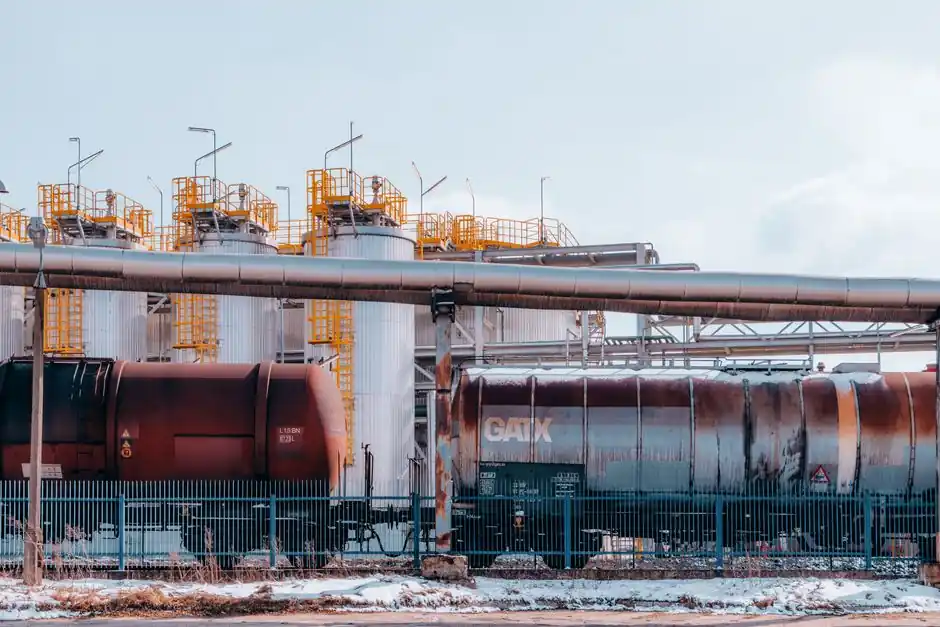
A food-grade cargo tank with an electropolished interior at Ra ≤ 0.4 µm combines a smooth product-contact surface with improved cleanability, while also requiring controlled welds, fittings, drainage, and corrosion-resistant materials.
Ra 0.4 µm is stricter than the common food-processing benchmark of Ra ≤ 0.8 µm, making the specification most relevant to hygiene-sensitive bulk cargo handling where residue retention and cleaning validation are critical [S1][S2][S4].
What Ra 0.4 µm Means for a Food Cargo Tank
Arithmetic average roughness, or Ra, quantifies the smoothness of the tank’s product-contact surface in micrometres, with a lower value indicating a smoother finish. Ra ≤ 0.8 µm has become a guideline and industry standard in the food-processing sector [S1].
The practical distinction is cleanability. Surfaces at Ra ≤ 0.5 µm are easier to clean and described as hygienically optimal, whereas surfaces above 1.0 µm are harder to clean and more susceptible to deposits and residues [S1]. Electropolishing chemically smooths and levels the interior, removing a fine surface layer and supporting both cleanability and corrosion resistance [S1][S4].
Ra specifies surface texture, not complete sanitary performance. A tank that measures Ra 0.4 µm can still be difficult to sanitize if it contains crevices, dead legs, rough weld zones, undrained outlets, or incompatible gasket materials [S5].
Electropolished Versus Mechanically Polished Interiors
Electropolishing is the stronger choice when uniform product-contact cleanliness is the priority, while mechanically polished or passivated stainless steel can satisfy less demanding food applications at lower cost. The deciding criteria are achievable Ra, weld control, corrosion resistance, and validation burden rather than appearance alone [S3][S4].
The comparison below uses typical finish values and applications stated in hygienic-tank guidance [S4].
Mechanical polish carries medium relative cost, electropolishing carries higher relative cost, and the mill finish carries the lowest cost [S4].
For food cargo, Ra ≤ 0.8 µm is often adequate, while Ra 0.4 µm is a defensible specification where the cargo is sticky, particulate-prone, difficult to drain, or subject to stringent incoming-residue controls. Pharmaceutical applications more often require Ra 0.4 µm or better, so specifying that threshold for food equipment should be justified by process risk rather than copied automatically [S2].
Material Selection Starts with Cargo and Cleaners
A 304 or 304L tank is suitable for many neutral food products, including milk, cream, water, and beer, but 316 or 316L is the more defensible choice for salty, acidic, or aggressive products and cleaning regimes. Grade selection must cover both product chemistry and the detergents, acids, and sanitizers used during CIP [S4][S5].
Material compatibility does not compensate for poor geometry. A tank contacting warm brine, soy sauce, stock, or salted dressing requires more chloride resistance than one holding neutral milk; acidic fruit juice, wine, vinegar, and sauces likewise favor 316 or 316L. Duplex and higher alloys are reserved for conditions beyond reliable 316L performance and carry a higher material cost [S4][S5].
Hygienic Design Extends Beyond Surface Roughness
A sanitary food cargo tank needs five coordinated features: compatible stainless steel, an appropriate internal finish, smooth fully penetrated welds, complete drainage, and no dead legs or crevices where product can collect. These design requirements apply alongside the Ra 0.4 µm finish, not as substitutes for it [S5].
Welds and fabrication details are critical because local roughness can remain above the specified tank-surface value even when the sheet receives an electropolished finish.
Cleaning coverage must include the tank shell, heads, nozzles, manways, level instruments, and product outlet. Every product-contact seal should be positioned and shaped to drain, and the outlet should be arranged to remove product without a stagnant pocket. Tank guidance also identifies jacket condition, fittings, cleaning systems, quality records, and documentation as part of procurement review [S5].
Where the Finish Performs and Where It Can Fail
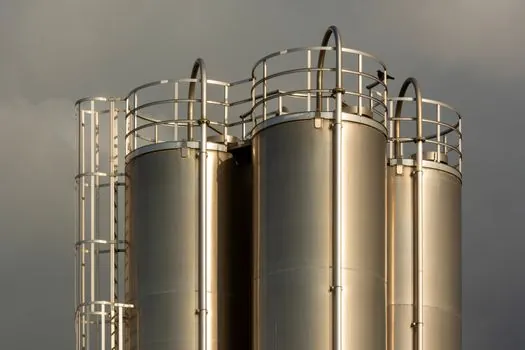
Electropolishing can improve equipment cleaning and reduce cleaning time, but the finish does not remove the need for a valid cleaning process. Its benefits are strongest when the vessel geometry, weld finish, drainage, and cleaning circulation already support full product removal [S3].
Four failure modes remain decisive. First, rough weld blending can exceed the specified Ra locally. Second, inaccessible fittings can retain residue even when the main shell is smooth. Third, a tank assembled from components with different finishes may create mixed cleanliness performance. Fourth, corrosion or contamination from incompatible grades, seals, or cleaning chemicals can undermine the sanitary surface [S4][S5].
Roughness should be verified on the finished vessel rather than inferred from the sheet or process route. A portable roughness meter can determine the Ra value with manageable effort, including inspection of critical product-contact areas [S1]. For procurement, acceptance should identify the measurement method, sampling points, surface orientation, and pass criterion, typically Ra ≤ 0.4 µm, because an unqualified roughness reading is not a complete vessel-level cleanliness specification [S1].
Procurement Criteria and Verification Record
A robust purchase specification defines the cargo, cleaning chemistry, material grade, internal finish, weld geometry, fittings, seals, drainage, and inspection method before fabrication begins. Ra 0.4 µm should be written as a maximum, not an average, because localized readings above the limit can create uncleanable areas. [S4]
The technical record should include at least three concrete controls: material grade such as 304L or 316L, a maximum internal Ra of 0.4 µm, and a maximum weld or formed-join finish consistent with the product-contact requirement. The record should also state whether CIP, SIP, and vacuum service are required, whether the outlet must be sanitary and fully draining, and which product-contact seals and instruments are approved [S4][S5].
Acceptance inspection should cover representative shell and head locations, welded seams, the product outlet, manway or hatch interfaces, and any recessed or difficult-to-clean geometry. It should also verify that the specified grade and surface treatment are compatible with the cleaning regime, because electropolishing improves the stainless surface but does not resolve an unsuitable material or poorly drained vessel [S1][S5].
For a bulk food-grade cargo tank, specify Ra ≤ 0.4 µm, 304L or 316L as chemistry dictates, full-radius hygienic welds, controlled drainage, sanitary fittings and seals, and documented post-fabrication roughness verification. The two trackable procurement signals are the approved surface-finish drawing and the vessel’s signed roughness inspection record.