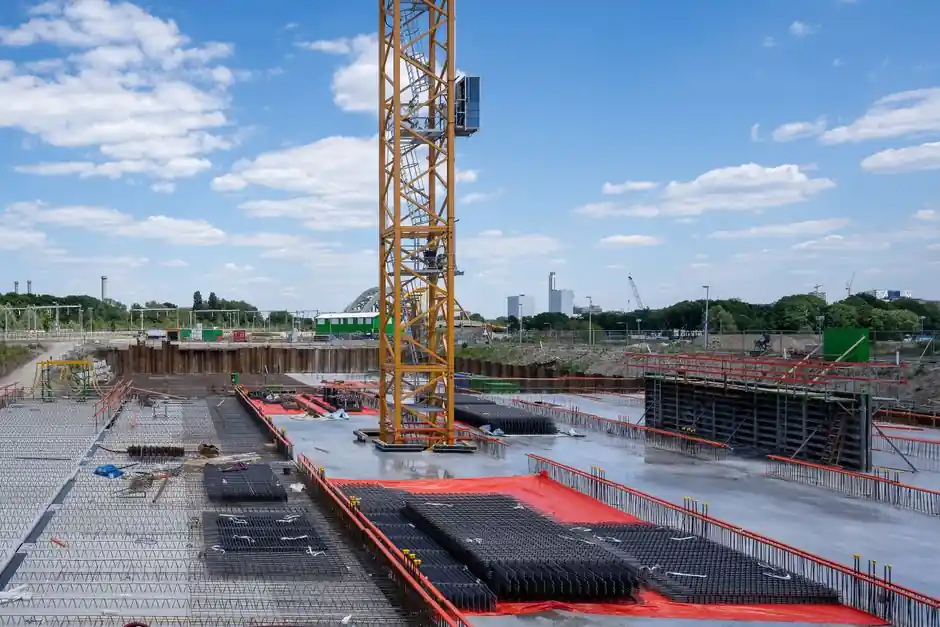
Electric concrete pumping equipment is available with output ratings of 30–90 m³/h [S1].
The equipment is intended for construction sites with reliable electrical supply, including buildings, roads, bridges, tunnels, dams, and noise-sensitive urban projects [S3][S5].
Electric boom pumping scope and operating envelope
Electric boom pumps replace the diesel engine of a conventional concrete placing machine with site electrical power while retaining a valve, hydraulic pumping system, and articulated placing boom [S3][S5]. Published electric concrete-pump ranges reach 30–90 m³/h, with an overall pumping-distance range of 180–1,200 m [S1]. Those values describe machine capabilities, not guaranteed placement performance on every mix and site.
The boom must be selected against the actual placement geometry rather than by rated output alone.
Published duty includes stationary electric models in the HBTS30–HBTS40 range with 30–40 m³/h output and 120–140 m vertical conveying distance, and models in the HBTS50–HBTS90 range with 50–90 m³/h output [S1]. Electric mixer pumps are a different production system because they combine mixing and pumping rather than merely providing a powered boom.
Site power determines whether the electric configuration works
That range makes electrical capacity a screening criterion, not a secondary installation detail. The site must provide a compatible supply, grounding arrangement, protection, and a route for the power connection before the pump is dispatched.
Electric operation removes the need to refuel a diesel engine and enables low-noise, zero-on-site-emission work, including indoor placement and operation near hospitals, schools, and residential areas [S3]. Those benefits depend on dependable site electricity. A diesel-hydraulic boom can operate where the electric machine cannot, while an electric unit can avoid diesel transport, storage, and exhaust exposure at the placement zone.
Published electric stationary models use 10–18 MPa maximum concrete pumping pressure, and the listed HBTS30–HBTS40 models are rated at 30–40 m³/h with 120–140 m vertical reach [S1]. An engineer should compare those pressure and reach figures with the pump line, elevation, boom geometry, mix slump, aggregate size, and placement cycle before accepting the advertised output.
Boom reach and pump output are separate selection criteria
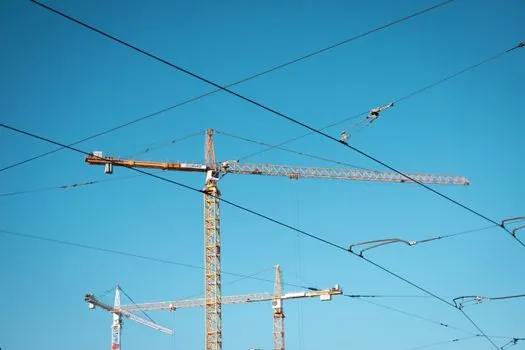
A direct comparison separates the main site-powered configurations by output, reach, mobility, and operating role. Published stationary electric pumps include HBTS30–HBTS40 models with 30–40 m³/h output and 120–140 m vertical conveying distance, and HBTS50–HBTS90 models with 50–90 m³/h output [S1].
For repetitive pours, the boom reduces the labor and time associated with manually distributing concrete, while the articulated arm can reach elevated and obstructed areas without positioning the entire machine at every pour [S5]. For a long pipeline run with a stable endpoint, an electric trailer or stationary pump can be more appropriate than a boom [S1][S3].
Electric boom pumps suit constrained urban and indoor sites
Electric operation is suited to sites where diesel noise, exhaust, and fuel handling are unacceptable, including buildings, hospitals, schools, and residential districts [S3]. Concrete boom pumps are used for high-rise buildings, warehouses, shopping centers, stadiums, bridges, underpasses, tunnels, dams, pools, slabs, and patios [S5].
The boom configuration is not the preferred choice for every placement task. A fixed line pump may suit repetitive pours reached through a stable pipeline, while a mixer pump may suit sites that need on-site batching and delivery [S1][S3]. A separate comparison of concrete pump truck and trailer pump positioning for repetitive work can clarify whether articulated placement or pipeline mobility matches the work pattern better.
Electric equipment also does not eliminate placement constraints. Concrete must still flow through the boom, valve system, and pipeline without blockage, and dense, abrasive, or irregular aggregate can increase wear and risk [S5]. Published operating claims should therefore be treated as configuration-specific rather than universal performance guarantees.
Overhead power lines impose a separate safety exclusion zone
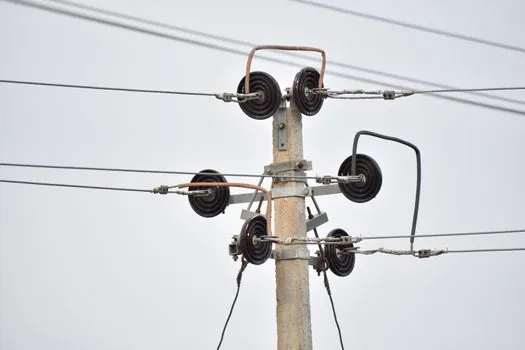
Contact with energized overhead lines is identified as a common cause of fatal and serious accidents involving concrete placing booms [S2]. The American Concrete Pumping Association position cited in the safety material requires operators to maintain 20 feet from energized overhead lines, increasing the separation to 50 feet when voltage exceeds 350 kV [S2].
Responsibility extends beyond the pump operator. The pumping company must train personnel to identify overhead hazards, and the operator must be empowered to refuse operation inside the danger zone. A dedicated spotter is required when the boom will approach that zone [S2].
The contractor or customer must establish the setup location so that no energized overhead line lies within the applicable 20-foot or 50-foot separation from the unfolding boom, notify the pumping company before mobilization, and maintain adequate lighting for setup, operation, and cleanout [S2]. Electric site power does not reduce this hazard because the boom remains a conductive structure near external lines.
Commissioning must connect power, pumping, and placement controls
Commissioning should verify the incoming supply against the selected pump's electrical demand, with one published family requiring 45–110 kW [S3]. The check must also confirm that the grounding and protection arrangement suits the installation, rather than relying on a general claim that the machine is electric [S1][S3].
Pump-side checks should confirm output, maximum pumping pressure, delivery distance, valve arrangement, and concrete line condition against the model data. Published stationary examples use S-valve distribution, while electric mixer models include twin-shaft and rotating-drum arrangements with 40 m³/h maximum output [S1][S3].
Controls and placement checks should cover remote boom operation, movement through the planned envelope, emergency stop, and communication with the spotter. Concrete placing booms use a remote-controlled arm, hydraulics, and a valve system to distribute material [S5]. A site acceptance test should also confirm that lighting, setup access, and the pipe or hose route match the work planned for night operations [S2].
Procurement criteria for an electric boom pump
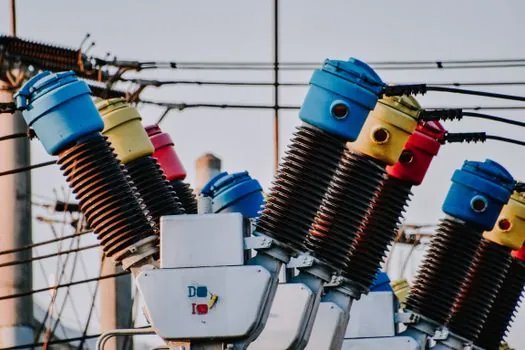
The primary procurement threshold is whether reliable site power and electrical infrastructure justify the electric configuration. A machine with a 45–110 kW published power range requires substantially more electrical planning than a small portable pump, and the output rating must be matched to the concrete delivery system [S3].
Four measurable checks should precede purchase: confirm 30–90 m³/h class requirements against the concrete delivery plan; match boom length from the 33–63 m published range to the placement radius; verify horizontal and vertical reach against the pour geometry; and confirm the full electrical load at the worksite [S1][S3][S5].
Selection then shifts to operating constraints. Electric operation is a strong fit where zero on-site emissions and low noise support the work plan, but it is weak where grid supply is absent, unstable, or too limited [S3]. The equipment should not be selected by rated output alone, and the overhead-line exclusion zone must be excluded from the setup plan before dispatch [S2].
Track three signals before ordering: the available electrical capacity in kW, the required placement envelope in metres, and the location of every energized overhead line relative to the setup and boom-swing area [S1][S2][S3]. If any one remains undefined, the pump configuration is not ready for a firm selection.