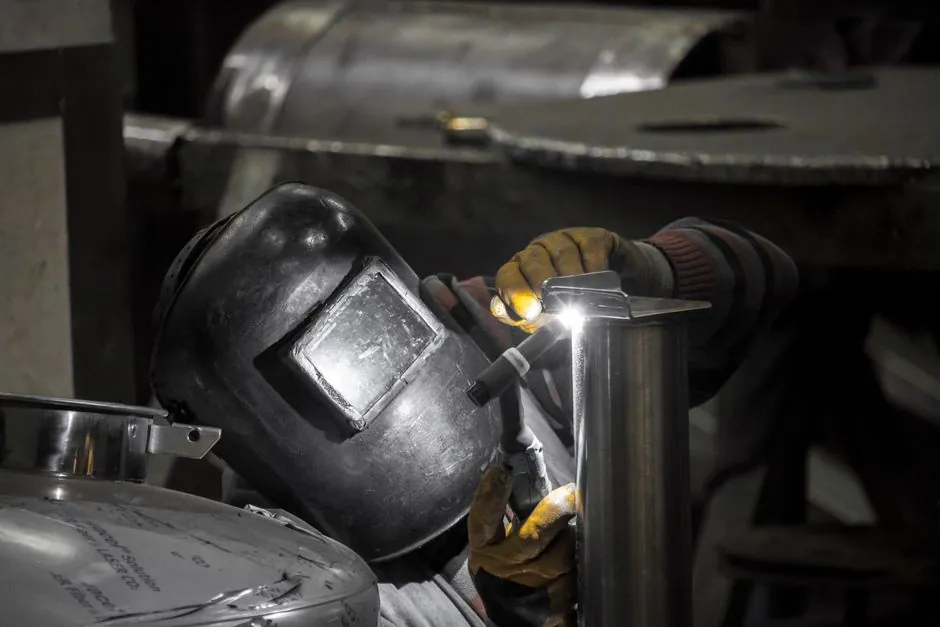
Electroslag pressure welder pricing is driven by transformer size, required current capacity, tooling, controls, safety equipment, and the degree of automation integrated into the welding cell.
ESW-NG uses a narrow gap of about ¾ inch and has been used for automatic field welding of thick steel joints in high-rise buildings and long-span bridges.
Transformer Size as the Primary Capital-Cost Driver
The transformer and welding power supply form the electrical core of an electroslag pressure welder because the process transfers current through a conductive molten slag bath. ESW-NG systems use constant-potential DC or square-wave AC power supplies, and the initial arc is followed by resistance heating as the slag becomes electrically conductive [S2].
Transformer sizing should follow the intended joint thickness, electrode configuration, deposition rate, allowable heat input, and duty cycle. A larger power source increases the price because it requires more copper, magnetic components, cooling capacity, electrical protection, and a suitable input supply. The research does not provide a universal kW-to-price formula, so a quotation should be tied to a defined weld envelope rather than a generic transformer rating [S2][S5].
That rate provides a more useful basis for sizing transformer and cooling requirements than the nominal machine horsepower alone [S2].
What Controls the ESW Price Beyond the Transformer?
The next cost layer consists of the wire feeder, flux dispenser, water circulator, welding shoes, containment plates, run-off tabs, sealant, and the associated control package. These are not optional accessories because the process requires a stable slag pool, controlled filler delivery, and effective containment of molten metal [S2].
ESW-NG uses a narrow gap of about ¾ inch, and an ESW-NG weld consists of coalesced alloy-cored wire, base metal, and a consumable wire guide.
Shop versus field installation is another commercial dividing line. A shop system can be optimized around repeatable joint geometry, while field equipment must also address transport, access, operator positioning, environmental exposure, and setup time. ESW-NG has progressed from manual shop use to automatic field welding of thick joints in high-rise buildings and long-span bridges [S2].
Manual, Mechanized, or Automated ESW
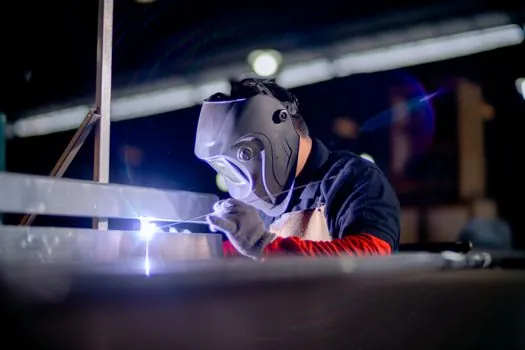
Mechanized systems add controlled motion and repeatable travel speed.
Welding automation keeps travel speed and torch angle consistent, which reduces rework, grinding, and rejected parts.
For small and medium fabrication shops, a seam welder or carriage may recover its cost faster than a full robotic cell. That guidance applies to welding automation generally, but it is a reasonable economic screen for ESW only after joint geometry, thickness range, and repetition have been confirmed [S4].
Transformer Capacity Versus Automation Level
Transformer size determines the machine's physical power envelope, while automation determines how consistently that capacity is used. Those functions require mechanical and control integration [S2][S5].
Four configurations can be compared directly. A manual unit minimizes capital cost but has the greatest labor dependency and variability. A mechanized ESW system adds controlled movement and moderate integration complexity. A robotic cell adds positioners, robotic handling, integrated controls, safety systems, and inspection capabilities. A field-oriented turnkey system adds portability, setup support, and environmental protection.
The electroslag pressure welder should therefore be specified as a production system, not as a power supply with a welding head. A buyer comparing quotations should separate the transformer package, process equipment, tooling, cell integration, safety equipment, commissioning, and consumable-support requirements.
Total Cost of Ownership Beyond Purchase Price
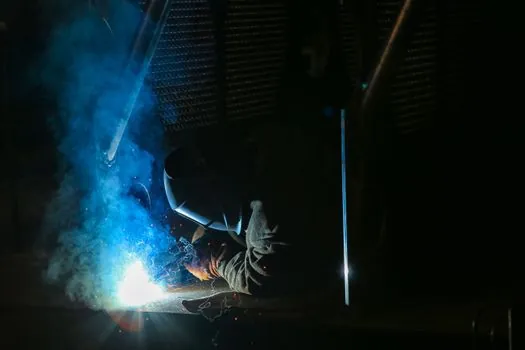
Purchase price is only one part of the ESW investment. ESW-NG requires a water circulator and containment of the molten weld and slag pools by a sump, run-off tabs, water-cooled copper welding shoes or metal containment plates, and sealant. Electroslag welding has progressed from manually fusing vessel joints filled with scrap metal to automatic field welding of thick steel joints in high-rise buildings and long-span bridges.
Maintenance cost follows the process architecture. Wire guides, flux paths, welding shoes, copper cooling surfaces, seals, and slag-contact parts require inspection because wear or contamination can disturb the slag pool, heat transfer, or joint containment. Water-circulation equipment also adds pump, heat-exchanger, and water-quality requirements, while automatic positioning increases the number of drives, sensors, cables, and calibration points that must be maintained [S2].
Energy consumption is driven by transformer loading and cooling demand, but the larger economic effect is often yield. Consistent travel speed and process parameters reduce rework, grinding, and rejected parts, and a thick-walled weld rejection can require days of reinspection involving inspectors, metallurgists, engineers, and project managers [S4].
Applications, Qualifications, and Project Constraints
ESW-NG is intended for common bridge steels and was accepted by AASHTO under AWS D1.5:2010 with interim revisions, while it also met AISC-defined Demand Critical Welds criteria. These approvals do not remove the need for project-specific welding procedure qualification, inspection, and acceptance testing [S2].
ESW is well matched to vertical, single-pass joints in thick steel bridges, buildings, shipbuilding, and large industrial components. It is less suitable for thin sheet, frequent short-seam production, or joints requiring extensive repositioning unless a tailored cell can justify the integration expense. The reported material range of 25 mm to several hundred millimetres is broad, but a machine should not be purchased on that headline range alone [S2][S3].
Field execution also requires access around the joint and a controlled method for wire feeding, flux addition, cooling, and molten-metal containment. The process can operate without preheat in ESW-NG applications, but slag inclusions and porosity are described as atypical rather than impossible, so inspection remains part of the quality plan [S2].
How to Compare Supplier Quotations
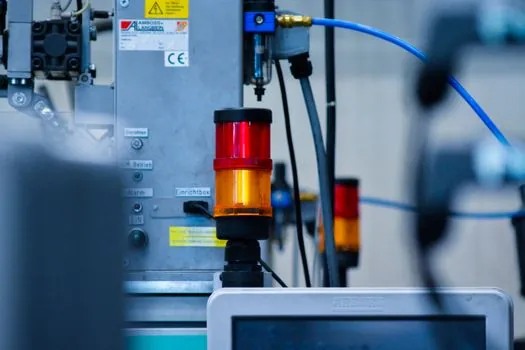
Request a quotation against a representative production joint, including the steel thickness range, narrow-gap or conventional gap configuration, expected pass length, cycle time, deposition target, electrode diameter, duty pattern, and required safety scope. Ask for the transformer rated output, input supply, cooling requirement, wire-feed range, positioner payload, and automation boundary as written in the commercial offer [S2][S5].
The commercial cost of an automated press-welding system similarly depends on press force, tooling, controls, cell configuration, safety equipment, and integration requirements. That cost structure applies directly to the surrounding ESW cell, where fixture pressure, restraint, electrode positioning, and safety controls may determine the installed price [S5].
Use three financial cases in the comparison: manual operation, a mechanized seam or carriage package, and an automated cell. Compare purchase price against labor hours per joint, consumables, cycle time, rework, inspection exposure, maintenance, and training. The selected configuration should fit the dominant joint and production volume, not simply carry the largest transformer.
A trackable purchasing signal is the supplier's willingness to guarantee a defined thickness envelope, deposition rate, cycle time, transformer duty, and safety scope in the quotation. If those values remain undefined, transformer size alone is not enough to compare machines.