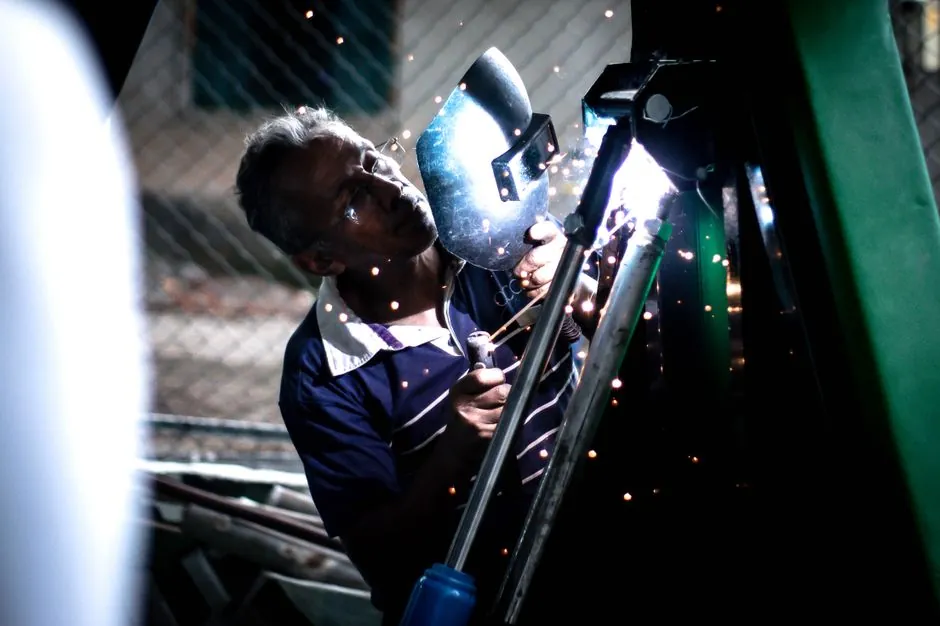
ESW-NG has a narrow gap of about 3/4 inch and produces a sound weld with about one inch of molten slag floating atop the molten weld pool [S2].
For structural steel columns, electroslag suits thick W-shape flanges and long vertical joints, while gas pressure welding fits smaller bars, short connections, and site work where an electroslag pressure welder is excessive [S2][S4].
Process Selection by Joint Size and Position
Electroslag welding is a single-pass process for thick materials in a vertical or near-vertical position, with heat supplied after ignition by electrical resistance through conductive molten slag [S4].
Gas pressure welding forms a fusion joint by heating surfaces with a gas flame, usually under pressure. It is therefore a separate process rather than another name for electroslag welding. For a vertical column splice, the decisive screening criteria are member thickness, joint length, access around the flange, allowable heat input, and whether the member is a flange-to-flange or bar-to-bar connection.
The process definitions are explicit: electroslag uses conductive molten slag to generate resistance heat, whereas electrogas uses an electric arc to generate heat [S4]. Column work must also distinguish full electroslag welding from electroslag pressure welding of reinforcing bars; the latter is a related mechanical joining method, not a direct synonym for column-flange electroslag welding.
Comparison Against Four Decision Criteria
ESW-NG is a single-pass welding process used for joining thick materials in a vertical or near-vertical position [S4].
The comparison below frames the practical trade-off. Specific values for gas pressure welding were not supplied in the research, so the decision must not be presented as a numerical equivalence.
Electroslag is not economical for thin members because its advantages depend on thick-section penetration, while its vertical-only geometry limits horizontal or overhead work [S4]. Gas pressure welding has the stronger case when the column section is small, the joint is short, or flame-based access is easier than installing electroslag containment equipment.
Heavy Column Splice Productivity
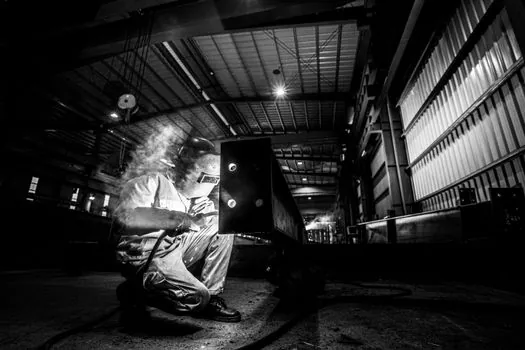
ESW-NG is used for automatic field-welding of thick steel joints, and producing a sound weld requires about one inch of molten slag floating atop a molten weld pool [S2].
The equipment burden explains the productivity gap. ESW-NG requires a consumable wire guide, a motorized flux dispenser, a wire feeder, a water circulator, and a welding power supply, while run-off tabs, water-cooled copper shoes or metal containment plates, and sealant confine the molten weld and slag [S2].
Neither constant-potential DC nor square-wave AC is inherently excluded by the process description: both were identified as suitable power supplies for ESW-NG [S2]. For procurement, compare the complete automatic cycle, including flange preparation, wire-guide positioning, slag control, cooling, and containment installation, rather than comparing power-source specifications alone.
Joint Preparation, Containment, and Weld Quality
ESW-NG requires about 1 inch of molten slag above the weld pool, and its narrow-gap version uses a gap of about 3/4 inch [S2].
This is a hard equipment constraint, not a minor setup detail. It also explains why joint alignment, guide configuration, and the choice between water-cooled copper shoes and metal containment plates must be planned before column erection.
That process advantage does not remove the need for inspection. Electroslag's coarse grain structure can reduce toughness, and its high temperatures may require additional cooling to maintain weld quality [S4]. Column engineers should therefore verify the specified grade, thickness, preheat, cooling procedure, filler metal, and required non-destructive examination.
Material Suitability and Structural Acceptance

ESW-NG had been accepted by AASHTO for common bridge steels and included in AWS D1.5: 2010 with interim revisions, while it also satisfied AISC-defined Demand Critical Welds [S2].
Those cited references establish acceptance in bridge and structural applications, but they do not create a blanket approval for every column project. The Engineer of Record must confirm that the governing building, bridge, seismic, or erection specification permits electroslag for the exact member grade, joint configuration, and loading condition.
Electroslag is intended for thick materials and vertical-up welding, where its penetration and deposition rate offset the complex equipment setup [S1]. Gas pressure welding is more appropriate where the section is outside that efficient range or where a compact gas-flame process is preferable. Electroslag is a poor fit for thin steel, horizontal joints, and overhead work [S4].
Failure Modes and Procurement Checks
Three other controls separate a sound ESW-NG column splice from a rejected weld. First, maintain the specified molten slag depth and regulate flux delivery. Second, control heat transfer through the containment shoe or plate and provide cooling where required [S2][S4]. Third, test the completed joint against the contract's inspection regime rather than relying on the general observation that porosity and slag inclusion are atypical [S2].
Gas pressure welding has different risks: incomplete fusion, surface or root oxidation, and heat-distortion control must be managed through preparation, flame control, and pressure application. The supplied research gives no gas pressure welding temperature range, pressure value, or defect-rate benchmark, so those values must come from the applicable welding procedure specification and qualified production weld test.
Code, Qualification, and Supply-Chain Requirements
AWS D1.5: 2010 with interim revisions is the cited bridge-welding reference for ESW-NG, and AWS D1.8 is identified as the structural welding code for seismic applications in the source material [S2].
At the date of that source, a task group was working toward inclusion of ESW-NG in AWS D1.8, so the project specification must establish the accepted code edition rather than relying on the historical statement [S2]. For building columns, the Engineer of Record should also check the governing AISC requirements, the project erection specification, and any owner-directed welding procedure qualification requirements.
Equipment evaluation should cover wire and consumable-guide capacity, joint-gap range, slag-volume control, power-source duty cycle, cooling-water requirements, shoe dimensions, run-off-tab configuration, and field power availability. Matching the product category in a supplier comparison is useful, but a capacity claim is only meaningful when it covers the column thickness, flange width, weld length, material grade, and positional requirement.
Use electroslag for thick vertical column flanges where production volume justifies the automation; use gas pressure welding for smaller or localized joints. The next procurement check is a written WPS for each option, including material grade, thickness, gap, filler, heat input, cooling, inspection, and code acceptance.