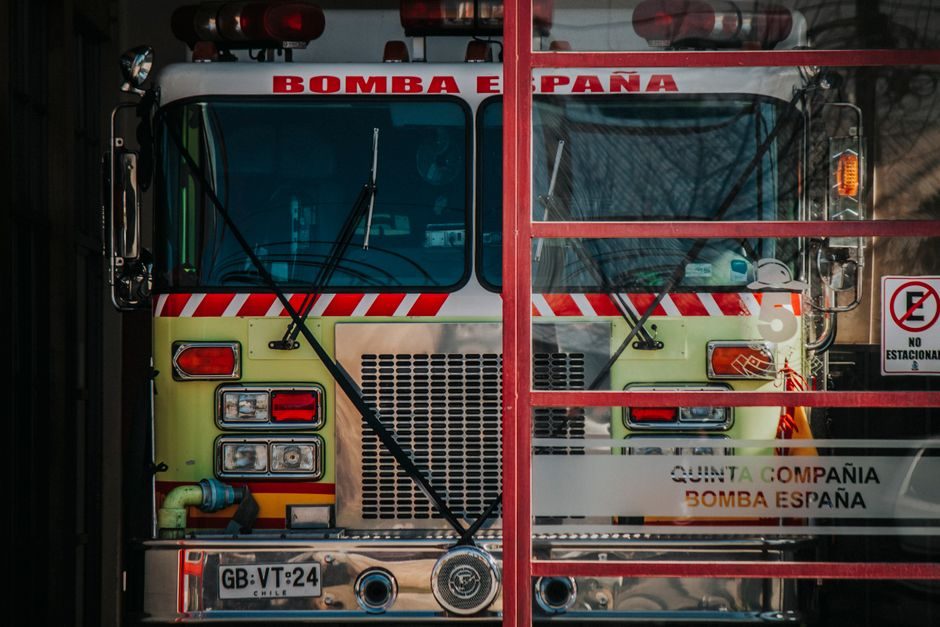
An emergency light is a battery-backed luminaire that keeps egress paths, exit signs and life-safety equipment visible after AC mains loss; an eye wash station is a plumbed flushing fixture that delivers tepid potable water to the face and eyes within 10 seconds of a chemical exposure [S1][S3]. The two devices sit on completely separate compliance tracks — emergency lighting follows UL 924 in the US and the equivalent IEC 60598-2-22 luminaire family internationally, while emergency eyewash and shower equipment is governed by ANSI Z358.1-2024 (and EN 15154-1/-2 in the EU).
Specifying one does not satisfy the other. A plant can pass its fire-egress lighting audit with a 90-minute nickel-cadmium recessed unit and still fail a chemical-handling audit because the nearest eye wash is 80 ft away from the acid transfer point. Conversely, an OSHA 29 CFR 1910.151(c) compliant flushing unit placed in a dark utility corridor does nothing for a worker evacuating a power-failed battery room.
Hazard Profile and Triggering Event
Emergency lights are triggered by loss of normal power, with a transfer time to battery operation commonly specified at ≤1 second for code-required life-safety circuits and a 90-minute minimum runtime at the rated lumen output for the US [S2]. Recessed ceiling units in the 1 W to 5 W LED class dominate the commercial build-out, while weatherproof IP65 wall-mount units handle stairwells, parking structures and outdoor egress [S2]. The hazard being mitigated is trip-fall, panic, blocked egress and inability to locate an emergency light call point or exit sign during a fire-alarm event.
Eye wash stations are triggered by chemical splash to the eyes, face or body. The performance envelope is the 10-second travel distance rule — the worker must reach the flushing fluid within 10 seconds of exposure, which engineering practice translates into roughly 55 ft (16.8 m) unobstructed path from the hazard [S1][S3]. Tepid water is defined by ANSI Z358.1-2024 as 60–100 °F (15.6–38 °C); the unit must run for a minimum of 15 continuous minutes to flush both eyes simultaneously at 0.4 gpm minimum, with a hands-free stay-open valve.
Compliance Standards and Decision Gates
For lighting, UL 924 (US) and CSA C22.2 No. 141 (Canada) lock down the test sequence — photometric output, charge time, transfer time and the 90-minute discharge. Factory-typical self-test/self-diagnostic circuitry cycles monthly and annually, and NiCd or LiFePO4 battery packs sit behind a 1-year to 5-year service interval depending on chemistry [S2][S4]. European OEMs such as L&L Luce&Light ship recessed walkover units in the LINE family at 700 mA / 24 Vdc constant-current drive, sized for architectural integration rather than the raw 90-minute UL envelope [S4].
For flushing equipment, ANSI Z358.1-2024 is the binding US standard, and EN 15154-1 (eyewash), EN 15154-2 (body shower) cover the EU. The 2024 revision tightened tepid-water definition, added explicit requirements for combination units and clarified that a drench hose alone cannot serve as a primary eye wash. Plumbed floor-standing combination shower + eye/face-wash units like EPITECNICA EUROPA model 6112 deliver a 20 gpm drench shower at the head plus 0.4 gpm simultaneous eye/face wash from a stainless bowl [S1]. For freezeproof builds, electrically heated and insulated units from Shanghai DaAo and similar manufacturers keep the supply line above 40 °F in unheated warehouses [S3].
Layout Geometry and Placement Rules
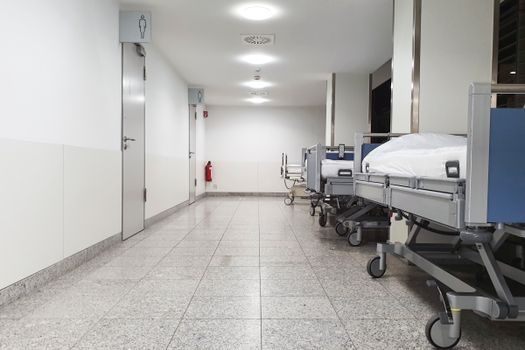
Emergency lighting placement follows a foot-candle / lux path-of-egress calculation: 1 fc (10.7 lx) minimum at the floor along the egress route, with no point more than 100 ft from the nearest emergency luminaire in an unsprinklered building per NFPA 101. Recessed ceiling units at 8 ft to 10 ft mounting height with 90° to 120° distribution are the workhorse for corridors, while wall-pack and remote-head units cover stair shafts and high-bay paths [S2].
Eye wash and shower placement follows the 10-second / 55 ft rule plus an unobstructed path on the same level as the hazard. The drench shower must deliver a 20 in. (508 mm) minimum spray pattern at 60 in. (1524 mm) above the floor; the eye/face wash heads sit 33 in. to 45 in. (838–1143 mm) above the floor and must stay within 6 in. (152 mm) of the spray centerline from the operator's eyes [S1][S3]. Wall-mounted bottle units (16 oz / 473 mL sterile saline per bottle) are an interim measure only — they do not meet the 15-minute continuous-flush requirement of a plumbed unit and are sold as a supplement, not a replacement [S6].
Product Class Comparison by Decision Criteria
Across the four main product classes — recessed emergency luminaire, weatherproof emergency light, plumbed combination eye/face wash with drench shower, and wall-mount bottle unit — the engineering decision rests on hazard, certification and service envelope: [S1]
• Recessed emergency luminaire — UL 924, 90 min battery, 1–5 W LED, indoor egress, low IP rating, 1-yr to 5-yr battery service. Best for office, hotel and hospital corridors [S2][S4].<br/>• Weatherproof emergency light — IP65 typical, 1.5 W to 10 W LED, often twin-head, wall or ceiling mount. Best for parking decks, cold storage, exterior canopies and stair shafts [S2].<br/>• Plumbed combination unit (shower + eye/face wash) — ANSI Z358.1-2024, 0.4 gpm eye wash, 20 gpm drench, 15-min continuous, tepid-water mixing required. Best for chemical, battery, semiconductor and laboratory operations [S1][S3].<br/>• Wall-mount bottle unit (16 oz × 2) — 15–30 min portable use, 0.9% sterile saline, no plumbing. Supplemental only; cannot satisfy primary 15-min plumbed requirement [S6].
Failure Modes and Common Spec Traps
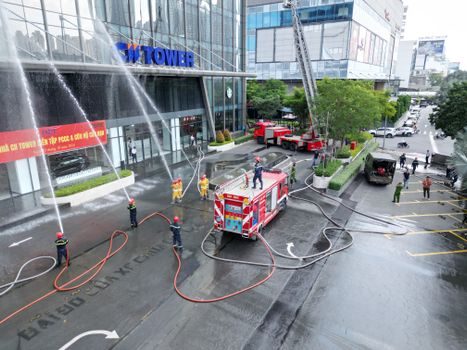
The two most common spec failures on the eye-wash side are: (1) placing the unit behind a door that latches, breaking the unobstructed 10-second path, and (2) failing to verify tepid-water delivery at the most remote flushing fixture, which ANSI Z358.1-2024 explicitly requires through annual commissioning records. A third recurring trap is treating a 16 oz bottle cabinet as a code-compliant eye wash [S3][S6].
The two most common spec failures on the lighting side are: (1) undersizing battery capacity so the unit falls below 1 fc (10.7 lx) before the 90-minute mark under elevated ambient, and (2) using a non-UL 924 / non-IEC 60598-2-22 "emergency" decorative fixture that carries a 30-minute rather than 90-minute rating, or that has a transfer time over 5 seconds [S2][S4]. A third recurring trap is specifying a fixture whose photometric distribution leaves a dark pocket at the egress transition between two luminaires.
Cross-Reference, Inspection and Sourcing Levers
A practical plant audit walks both tracks on the same route: from each chemical hazard, measure the 10-second path to the nearest flushing fixture, then from the same fixture follow the egress corridor to the nearest exit and verify 1 fc (10.7 lx) on the floor at every step. On the supplier side, Shanghai-area makers (Shanghai DaAo, Hebei-lab-fittings cluster) dominate the ANSI Z358.1 plumbed-unit volume, with combination shower + eye wash units typically quoted in the US$400–US$1,800 OEM band for floor-standing stainless construction [S3][S5]. European OEMs like EPITECNICA EUROPA ship similar combination units with CE marking under EN 15154-1/-2 at a higher per-unit price [S1].
The first-aid kit and class-hazard selection framework from the first-aid kit selection guide lines up with the same hazard-zone logic used to place combination flushing units, and the broader safety-equipment catalogue pulls the eye wash / emergency shower / emergency-light triad together under a single sourcing file.
For component-level specifications, see emergency stop.