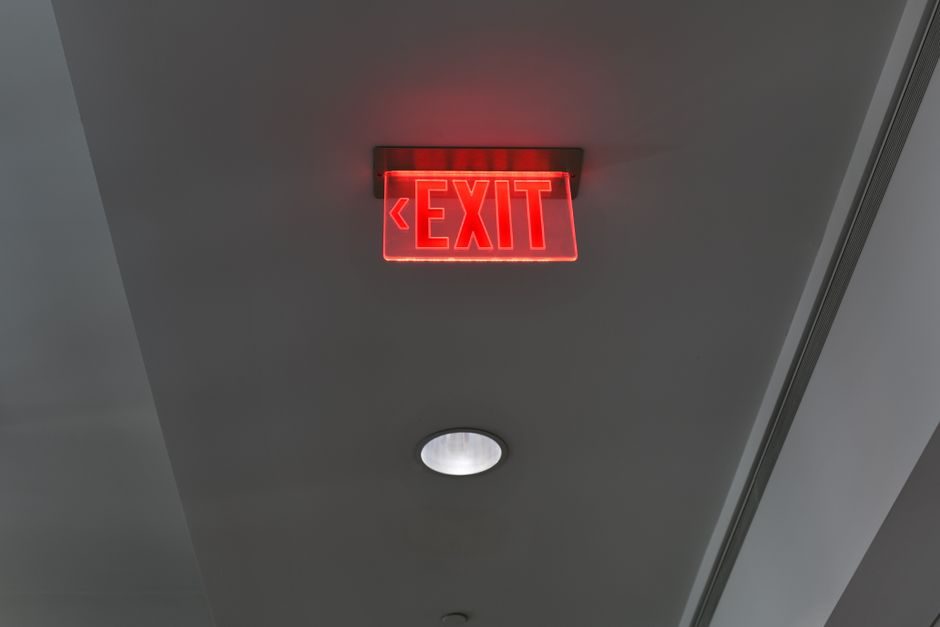
Selecting an emergency light for an industrial or commercial space is a four-gate engineering exercise — battery chemistry determines 90-minute endurance, the IP rating gates the mounting environment, the photometric distribution (lux on the escape route) determines how many fittings you actually buy, and the certification envelope decides which jurisdictions the luminaire can legally ship into [S2][S3].
Specifiers consistently treat runtime, ingress protection, and self-test capability as the three decision points that override brand preference, because the luminaire is a life-safety load and the failure cost is asymmetric: an under-rated battery on a stairwell fitting is a documented life-safety defect, not a warranty claim [S3].
Battery chemistry: Ni-Cd, lead-acid, and LiFePO4 trade-offs
Sealed lead-acid (SLA) cells remain the lowest-cost option for fixed emergency fittings, with 2,000-piece MOQ tiers visible on China B2B channels at unit pricing in the US$0.15 band for warning-light-grade product, confirming that lead-acid is still the price floor for high-volume, non-critical installations [S2]. SLA is tolerant of float-charge abuse and ambient swings of 0–40 °C, but the energy density runs roughly 30–50 Wh/kg — about a quarter of a LiFePO4 pack — which translates into larger, heavier housings for the same 90-minute rating.
Nickel-cadmium (Ni-Cd) D-cells or Cs cells are still specified for fittings that must operate across –20 °C to +55 °C ambient, particularly in unheated warehouses, cold stores, and outdoor canopy luminaires, because Ni-Cd sustains usable capacity below freezing where SLA collapses. The trade-off is the European Union battery directive pressure on cadmium — many EU OEM datasheets now default to Ni-MH or LiFePO4 for new SKUs even where Ni-Cd is electrically superior.
LiFePO4 has become the default for premium maintained emergency panels and twin-spot fittings because the cycle life exceeds 2,000 cycles at 80 % depth-of-discharge, the calendar life reaches 5–8 years, and the cell chemistry is far more thermally stable than NMC. A typical 6.4 V / 3.2 Ah LiFePO4 pack stores roughly 20 Wh in about 150 g — small enough to integrate inside an IP65 twin-spot head without an external battery box [S3]. The cost premium versus SLA is roughly 2–3× at the cell level, but the total installed cost narrows once the smaller housing, longer replacement interval, and reduced maintenance truck-rolls are counted.
IP rating, IK impact, and mounting environment matching
Ingress protection is a hard binary for life-safety fittings: indoor recessed downlights in office plenums can be specified at IP20, but stairwells, plant rooms, food-processing lines, car parks, and any outdoor canopy application must move to at least IP65, with IP67 documented for jet-wash and food-zone wash-down areas [S3]. Kejie-style IP67 twin-spot emergency heads are purpose-built for outdoor and wet-location mounting, with a gasketed die-cast aluminium body and a tempered glass diffuser that survives IK07 impact at minimum [S3].
The IP choice cascades into housing material: IP20 recessed units can use polycarbonate bodies, but IP65+ fittings move to die-cast aluminium or glass-filled PA66 to hold the seal under thermal cycling. For food and beverage wash-down zones, the relevant selection logic overlaps with the hygienic spec band logic used in molding line selection for food and beverage — both demand smooth, crevice-free surfaces that survive daily chemical cleaning, and the same NSF-style sanitation rationale applies when an emergency light is mounted inside a production envelope.
IK impact code is the second environmental gate and is routinely missed on emergency-light datasheets. Warehouse and industrial mounting typically demands IK07 (2 J) as a floor, with IK08 (5 J) required where forklift or pallet-stacker traffic is plausible — the same impact class that gates pendant luminaires in pallet-stacker cleanroom service informs the mechanical spec here. A IP65 fitting with no declared IK rating should be treated as IK00 by default and rejected for industrial service.
Photometric coverage: lux on the escape route
Escape-route lighting must deliver a minimum of 1 lux on the floor along the centreline of the escape path, with anti-panic (open-area) lighting specified at 0.5 lux minimum across the unobstructed floor area — these are the working photometric floors used by most regional codes derived from the IEC 60598-2-22 family. A single 3 W LED twin-spot head typically throws 3–5 metres of usable coverage on a 2-metre-wide corridor, which means a 30-metre corridor needs roughly 6–8 twin-spot fittings at staggered spacing rather than a single high-bay floodlight. [S1]
High-bay and warehouse applications are a separate photometric problem: at 8–12 m mounting height, an emergency luminaire must deliver 1 lux on the floor at a 6–8 metre radius, which forces a wide-beam optic and roughly 1,500–3,000 lm source flux during the emergency mode. The mistake to avoid is over-specifying a fitting by wattage: a 50 W LED emergency high-bay looks impressive on paper but typically wastes battery capacity on a beam that over-lights the floor directly under the fitting and under-lights the escape path between fittings.
Mode, self-test, and monitoring architecture
Three operating modes govern the wiring and control architecture. Maintained luminaires are continuously powered and illuminate under normal conditions, switching to battery on mains loss — required for cinemas, theatres, and venues where the same fitting serves both functions. Non-maintained luminaires are dark under normal conditions and energise only on mains failure — the standard office, stairwell, and corridor choice. Sustained (combined) luminaires use one set of LEDs for normal AC operation and a second set for emergency, which is rare in industrial practice but appears in some decorative commercial SKUs. [S2]
Self-test and automatic test systems split into three tiers. Manual test is the legal floor: a monthly function test and an annual full-duration test logged on a paper register. Self-test (DALI or proprietary) runs the monthly and annual tests automatically and reports pass/fail via an indicator LED. Central-test or addressable monitoring (DALI-2, Wireless DALI-2, or cloud-linked IoT) reports the status of every fitting on a BMS or dashboard, which is the only viable option for sites with hundreds of emergency fittings where manual testing is a labour-burner. For a multi-hazard plant, the same addressable logic that drives pneumatic-actuator monitoring applies — visibility beats paperwork.
Certification envelope: IEC, EN, UL, and regional marks
International specifiers must match the certification envelope to the installation country. IEC 60598-2-22 is the baseline product standard for emergency luminaires worldwide; EN 60598-2-22 plus the relevant EN 1838 application standard covers the EU; UL 924 is the binding standard for the US; CSA C22.2 No. 141 covers Canada. The B2B sourcing channels in scope still mix CE-only product (acceptable in the EU but not UL-listed for North America) with UL 924-listed product, and the buyer must check the exact mark on the datasheet rather than assume global acceptance [S2].
For hazardous-area sites, the standard logic for an explosion-proof light extends to the emergency variant: Zone 1 and Zone 2 emergency luminaires need IECEx or ATEX certification matched to the gas group, and the emergency function must be tested as part of the Ex certification, not added later. Battery packs inside Ex-certified emergency fittings are themselves a potential ignition source, so the cell chemistry, venting, and short-circuit protection are all part of the certification scope, and SLA cells are still common in Ex emergency fittings because the cell failure modes are well-characterised in the standards. The reference on the emergency light catalog page covers the general photometric and battery envelope; the emergency stop and emergency stop button pages cover the adjacent life-safety control side of the same control panel.
Selection matrix: which fitting goes where
Translating the gates into a decision matrix: an office corridor wants a recessed IP20 non-maintained Ni-Cd or LiFePO4 unit, 3 W LED, with self-test indicator, IEC 60598-2-22 and CE/UKCA marks, typically 150–300 lm. A plant-room or car-park stairwell wants a wall-mounted IP65 maintained/non-maintained LiFePO4 unit, 5–8 W LED, with DALI self-test, IK07, and at minimum CE plus EN 1838 compliance. A food-processing wash-down zone wants an IP67 IK08 twin-spot, LiFePO4, with smooth-surfaced housing that survives chemical cleaning, EN 60598-2-22 plus NSF-style sanitation evidence [S3].
Outdoor canopy or petrochemical-area emergency lighting wants an Ex-certified (IECEx/ATEX) IP66 floodlight-style head, often SLA-backed for Ex simplicity, with photometric coverage matched to the 1 lux escape-route floor at the design tilt. A battery-only escape luminaire for a remote substation or a wind turbine nacelle — where the fitting is rarely tested by humans — needs an addressable monitoring system because manual test access is impractical and a failed cell is invisible until the next power outage.
Failure modes and rejection checklist
The most common engineering failure on emergency light projects is battery underspec — a fitting rated 90 minutes at 25 °C ambient that drops to 55–65 minutes at 0 °C because the battery is SLA and cold derating was not checked. The second most common is photometric over-spacing — a corridor with 12-metre fitting centres where the head throw is only 5 metres, producing black zones between fittings that fail the 1 lux floor. The third is certification mismatch — a CE-only fitting installed on a North American project, or a non-Ex fitting installed in a Zone 1 process area, both of which are inspector-fail events on the first audit. [S3]
For life-safety procurement the same logic that drives first-aid kit selection applies: classify the hazard, match the spec band, and document the certification evidence before signing the PO. Emergency light selection is not a commodity buy — a 10–15 % price saving on a sub-spec fitting is not recovered if the local fire inspector red-tags the install.