
Emergency lighting and first aid kits are both mandated under OSHA 1910 Subpart E (Means of Egress) and Subpart K (Medical Services and First Aid), but they answer different failure modes [S1]. Lighting restores navigability when normal power drops; first aid kits treat injuries during the gap between incident and EMS arrival. Specifying one without the other leaves a coverage gap that an auditor will flag.
Industrial and commercial buyers typically procure both as line items in the same site-safety roll-out, yet they are sourced from different vendors, sized by different standards, and inspected on different cadences [S1][S6]. Treating them as interchangeable "safety equipment" is the most common procurement mistake — they share shelf space, nothing else.
What Each Item Actually Delivers
Emergency lights are battery-backed luminaires that activate within 1–10 seconds of power loss and sustain illumination along egress routes for a minimum of 90 minutes per OSHA 1910.36 and NFPA 101 Life Safety Code requirements [S1][S5]. Mainstream 2024–2026 product lines from US and Asia-Pacific suppliers include LED two-head units, edge-lit exit signs, wet-location fixtures, and Class I Division 1 / Division 2 explosion-proof variants for hazardous areas [S1][S3][S6]. A typical twin-head LED unit runs 90–265 V mains input, IP30 to IP65 ingress, and ships with Li-ion or Ni-Cd battery packs sized for the 90-minute runtime [S3][S4].
A first aid kit is a container of supplies — bandages, antiseptics, dressings, gloves, eye-wash, trauma shears — sized to ANSI/ISEA Z308.1 Class A (general workplace) or Class B (high-risk / industrial) content lists. Kit availability means the cabinet is stocked, sealed, and reachable; it does not provide illumination, communication, or egress marking. Selecting the wrong class — for example, a Class A kit in a metal-fabrication shop with cut and burn hazards — is a documented compliance failure.
Selection Criteria Side by Side
Comparing the two on the four criteria that drive a procurement decision: [S1]
Basis of sizing: Emergency lights are sized by square footage, corridor length, and number of exits per NFPA 101; first aid kits are sized by employee headcount and hazard type per ANSI Z308.1. A 10,000 ft² warehouse with 40 staff needs roughly 4–6 emergency light units and 1–2 Class A kits — but the same floor area in a chemical plant may need explosion-proof fixtures (Class I Div 1) AND a Class B kit, roughly doubling both line items [S1][S6].
Inspection cadence: Emergency lights require a 30-second functional test monthly and a 90-minute runtime test annually per NFPA 101 7.9.3. First aid kits under ANSI Z308.1 require visual inspection per pay period or per shift in high-turnover environments; expired items (antiseptics, sterile dressings) are the typical failure mode. Maintenance labor is comparable, but the failure signatures are different — batteries age on lights, consumables expire on kits.
Failure mode: A failed emergency light is invisible until the next outage — by then the egress path is dark. A failed first aid kit is also invisible until the next injury, at which point a missing 4×4 gauze becomes a recordable incident. Both are latent failures; both depend on a documented inspection log, not on the equipment itself.
Vendor ecosystem: Emergency lights are dominated by US specialty distributors (TLS, Emergency Lighting.net, Al Rouf) and Asian OEM/ODM factories (Dreamy Lighting, Prolite) supplying 110 V/220 V CE- and UL-listed units [S1][S3][S6]. First aid kits are dominated by medical-supply distributors (not in the lighting channel) and are rarely co-procured, which is the structural reason both lines get under-spec'd when safety budgets are tight.
Who Each Item Is For — And Who It Is Not
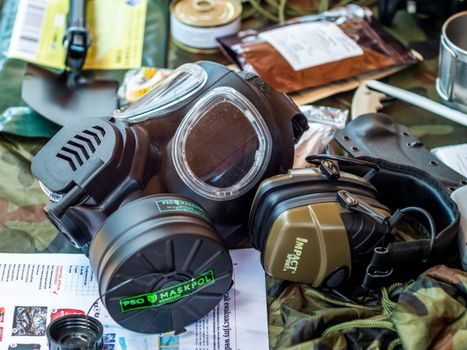
Emergency lighting is for any occupied workplace where a power loss would block egress: warehouses, manufacturing floors, stairwells, parking structures, control rooms, and any corridor serving 50+ occupants per OSHA 1910.36 [S1][S5]. It is not a substitute for task lighting during normal operations, and it is not required in single-tenant spaces with luminous egress markings and windows that meet NFPA 101 alternative-compliance paths.
First aid kits are for any workplace where the response time of professional medical services exceeds the realistic severity window of a likely injury — which in practical OSHA terms is almost every general-industry site per 1910.151 [S1]. Kits are not a substitute for trained first aid responders, AED coverage, or eye-wash stations in chemical-handling areas, and they are not a substitute for trauma kits in remote or high-hazard locations where ANSI Class B content is the floor, not the ceiling.
Integration With the Wider Safety Stack
Both items sit downstream of the same hazard identification and risk assessment process, which is the scope of the EU Machinery Directive 2006/42/EC risk assessment pre-2027 transition checklist for European sites and OSHA 1910 Subpart E/K for US sites. Procurement teams that anchor emergency-light and first-aid-kit specifications to that upstream assessment — rather than to last year's purchase order — avoid the common drift where kit class falls behind hazard class as the operation changes. [S2]
For hazardous-area plants, emergency lights must be paired with the explosion-proof light family specified for the zone, and egress routes must terminate at points where first aid, eye-wash, and emergency-stop cut-offs are reachable; the emergency stop button and emergency stop hardware typically sit at the same muster point as the kit cabinet. Treating the muster point as an integrated node — not three separate procurement lines — is what separates a passing audit from a finding.
Limitations and Common Mis-Specifications
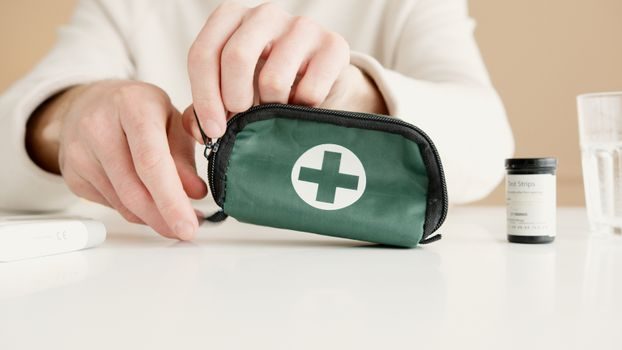
Three failure patterns recur in field audits. First, emergency lights installed to meet the 90-minute runtime at install time but never re-tested, so by year three the battery pack holds 35–50 minutes — a documented liability. Second, first aid kits stocked from a master list that has not been updated against the current ANSI Z308.1 revision, so a required item (often a tourniquet or a 4×4 gauze minimum count) is missing. Third, both items placed near the same wall as the electrical panel — which is the first spot an explosion, fire, or seismic event will take out, defeating the availability argument. [S3]
A common and dangerous confusion is treating an emergency light as a first-aid device or vice versa. They share shelf space and a procurement code, but their availability windows, test regimes, and failure modes are independent. A facility can pass lighting inspection and fail medical inspection on the same day.
Sourcing, Standards, and Trackable Signals
For US sites, the governing stack is OSHA 29 CFR 1910.36 / 1910.151, NFPA 101 (egress and emergency lighting), and ANSI/ISEA Z308.1 (kit contents). For EU sites, the parallel stack is EN 1838 (emergency lighting), EN ISO 7010 (egress signage), and the workplace first-aid requirements under national transpositions of the Framework Directive 89/391/EEC. Product-level compliance appears as UL 924 listing on US emergency lights and CE/ENEC marking on EU units [S3][S6].
Trackable signals worth monitoring in the second half of 2026: (1) the next revision cycle of ANSI/ISEA Z308.1, which historically has added or upgraded consumables roughly every five years; (2) the ongoing migration of US distributors toward Li-iron-phosphate battery packs on emergency lights, replacing Ni-Cd; (3) the convergence of exit-sign and emergency-light SKUs into combo units, which reduces install count but raises single-point-of-failure risk and changes the inspection cadence [S1][S5][S6].
A useful next step is to audit the muster-point bundle — first aid kit, lighting, and cut-offs — as a single node against the current hazard assessment, rather than letting each line item age on its own inspection cycle. Sites that run that audit annually close the gap between paper compliance and incident-time availability.