Tier 1 automotive moulders work to a polymer-first selection rule: PA66, POM, PBT, PPA and PPS cover the bulk of under-hood, interior and chassis-adjacent applications, with glass-fibre loadings from 15% to 50% setting the mechanical envelope [S1].
North American Tier 1 suppliers now run presses from 25 to 4,400 tons in ISO/TS 16949-certified facilities, a tonnage band that has effectively become the procurement reference window for instrument-panel assemblies, centre consoles, door panels and Class-A trim [S3].
Polymer family decision: PA66, POM, PBT, PPA, PPS
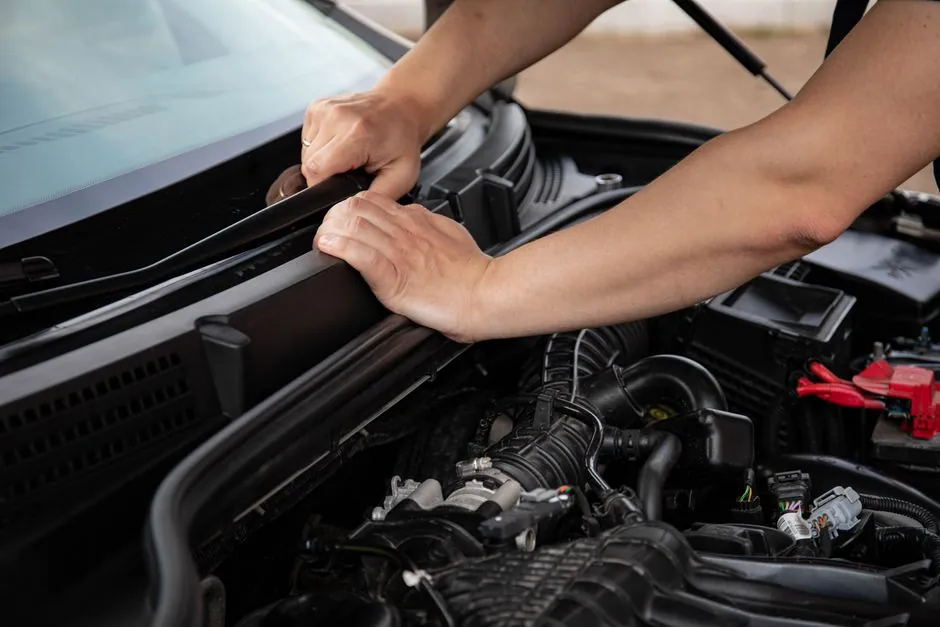
PA66 (with 30-35% glass fibre) remains the default for engine covers, air-intake manifolds and radiator end tanks where continuous service temperatures sit in the 150-180°C range, and the material's moisture pick-up is controlled by the moulder's drying stage. POM (acetal homopolymer and copolymer) is the standard for low-friction gears, bushings and seat-belt hardware, with Himould cast nylon specified for low-volume, high-wear bushings where moulded pellets are uneconomic [S1]. PBT and PET handle connectors, sensor housings and lighting reflectors thanks to dimensional stability and low warpage; PPA bridges the 170-200°C continuous-use window where PA66 softens but PPS is over-specified on cost. PPS (40% GF) sits at the top of the regular-use list for thermal management modules, pump housings and parts exposed to long-term glycol contact. For a deeper dive into high-end polymer chemistry, aerospace engineering plastic selection covers PEEK, PEI, PAI, PI and PPS under similar filler logic but tighter outgassing and NACE-style fluid resistance gates. The comparison below is the working reference for new automotive programme RFQs: criteria are continuous service temperature, moisture sensitivity, specific stiffness, and indicative cost index versus PA66-GF30.
Material selection logic: PA66-GF30 is the workhorse, POM is the wear-grade default, PBT is the electrical-grade default, PPA is the under-hood thermal upgrade, PPS is the fluid-resistance upgrade. Out-of-scope for this list are PEEK, PEI and PAI, which are reserved for aerospace and semiconductor fluid-handling where programme cost can absorb 5-10x resin cost.
Filler system and mechanical envelope
Glass-fibre content is the primary mechanical lever: 15% GF raises tensile strength roughly 50% versus neat PA66; 30% GF roughly doubles it; 50% GF pushes towards 200 MPa tensile with a stiffness near 16 GPa, at the cost of mould-flow length and weld-line integrity. Carbon-fibre (typically 10-30%) cuts density by 12-15% versus glass-filled grades and is used for bracket and housing applications where mass saving offsets cost. Glass-bead-filled (GB) grades trade strength for isotropic shrinkage control, preferred for thick-walled housings and laser-weldable battery module components. Impact-modified PA66 (typically with elastomer toughener) is the spec for crash-energy brackets and bumper mounts, where -30°C ductility matters more than modulus. Automotive wear parts (bumpers, wheels, gears, bushes, wear liners) in low-volume or aftermarket service are frequently made from cast polyurethane or cast nylon (Himould), which can be machined or cast to net shape without injection tooling [S1].
Process fit and press tonnage gates
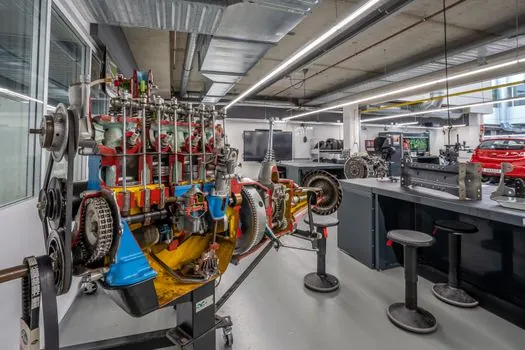
Press selection is driven by projected part area, wall thickness and shot weight; the working bands in 2026 are small parts 25-100 tons, medium 100-1,000 tons, large 1,000-4,400 tons [S3]. A 30-ton instrument-panel retainer with 2.5 mm wall fits a 300-700 ton press; a full Class-A instrument-panel beam with integrated airbag door runs 2,000-3,500 tons. Two-shot moulding, insert moulding and overmolding are the three advanced processes Tier 1s call out for soft-touch armrests, threaded brass inserts and TPE-over-PA66 gear knobs respectively [S3]. Hot-runner systems with hydraulic, pneumatic or electric valve-gate sequencers are now standard for multi-cavity automotive tools, and Moldflow "Expert" certification has become a differentiator when gates and weld lines are contested at PPAP [S2]. On the upstream side of the tool, induction furnace selection for aerospace components discusses melt homogeneity and shot-to-shot consistency, which transfer directly to filled-PA66 quality windows. For process-control reference, a modern SSMC-class hot-runner temperature controller samples at 64 measurements per millisecond and trims every three seconds, giving ±1°C melt-temperature stability under the typical 280-300°C PA66 setpoint [S2].
Quality, surface and compliance gates
ISO/TS 16949 (the automotive QMS standard referenced by EPC's North American operations) is the floor, not the ceiling, for Tier 1 status [S3]. Class-A surface finish on instrument panels and exterior trim requires pressed steel or P20 tool steel with textured or SPI-A2 finishes, plus mould-flow analysis at the gate-and-weld-line stage. FDA and ISO 13485 enter the picture only for shared cleanroom capacity (medical device housings) that some automotive moulders co-locate to balance tonnage utilisation [S3]. Recycled-content and bio-based PA56/PA610 are now commonly offered as drop-in options, but moulders typically run them at 25-50% blend with virgin PA66 to hold property-minimum certificates. UV-stabilised ASA and PMMA-based compounds cover exterior trim, signal lenses and pillar appliques, while PC/ABS and PC/PBT remain the default for instrument clusters and centre-stack bezels where impact and heat distortion temperature (HDT at 1.82 MPa near 105-125°C) both matter. Background on the broader category and its material families is captured in the engineering plastic reference page, which maps the resin families above onto a single taxonomy.
Limitations, failure modes and supply-chain constraints
Three failure modes dominate field returns: moisture-related hydrolysis of PA66 (drive a 0.02% max moisture at moulding), weld-line fatigue in long-glass-fibre PPA parts (need a minimum 1.2 mm weld-line length-to-thickness ratio), and galvanic/chemical attack of POM in contact with strong acids (substitute PPA or PPS in any coolant-adjacent POM part). Supply is concentrated: PA66 chain is dominated by two suppliers globally, and PPA/PPS qualified-resin lists run short during major EV programme ramps. For a logistics-adjacent spec comparison on handling and stack-loads in moulded-pallet applications, plastic pallet selection in the related article covers impact-modifier and UV-additive decisions that mirror exterior-trim compounding. Lead-time for new automotive tools is 24-36 weeks for Class-A surface tooling, plus 8-12 weeks for sampling and PPAP, which is the practical window a 2026 programme RFQ should plan against. [S3]
Closing the loop, the working checklist for an automotive engineering-plastic RFQ in 2026 is: lock polymer family first (PA66, POM, PBT, PPA or PPS), fix filler and impact-modifier package, confirm press tonnage against the small/medium/large bands (25-100, 100-1,000, 1,000-4,400 tons), and gate the supplier on ISO/TS 16949 plus Moldflow-class process simulation. Track the next two signals: OEM release of revised PPAP sampling tables for glass-fibre PPA coolant parts, and any new flame-retardant listings on the Qualified Plastic List for 800-V battery enclosures.
For the relevant spec sheets and selection criteria, see additive manufacturing material.