
The nickel alloys market is projected to reach $5,639.4 million by 2030 at a 2.60% CAGR over 2024-2030, with aerospace and defense named alongside oil and gas, chemical processing, energy and power, and electronics as a structural demand driver [S1].
Wrought nickel, nickel-iron, nickel-copper (Monel), nickel-chromium (Inconel/Ni-Cr), nickel-molybdenum (Hastelloy B-type), and nickel-titanium shape-memory grades are the six industrial families the IndustryARC taxonomy lists for these end uses, and each maps to a different defense service environment [S1].
Why defense specifiers pick nickel-chromium and nickel-copper first
Nickel-chromium grades supply the high-temperature strength and oxidation resistance that jet-engine hot-section parts, exhaust manifolds and afterburner liners require, which is why the report tags aerospace and defense (commercial and military) as a primary end-use bucket [S1]. For marine and naval applications, nickel-copper (Monel) is the historical pick because of its corrosion resistance in seawater and brine, and IndustryARC places oil and gas service (pipelines, splash-zone sheathing, FPSO vessels) in the same alloy family pull-through [S1]. Where the threat picture includes acidic exhaust condensate, sour fuel, or chloride spray, nickel-molybdenum and nickel-chromium-molybdenum grades step in; their corrosion-resistant and heat-resistant application codes are the two largest by volume in the report's segmentation [S1]. The same report separates low-expansion, electrical-resistance, and soft-magnetic functions into their own application buckets, and iron-nickel alloys fit those last two slots, with measured magnetic/conductivity/corrosion behavior that has been demonstrated in sintered microcomponents [S2].
Measured property anchors, not vendor slogans
Iron-nickel microcomponents made by centrifuge-assisted micromolding have reached 97.3% relative density after hydrogen sintering at 1,070 degrees C, with corresponding microhardness of 167.8 HV and Young's modulus of 175.4 GPa, and a maximum linear shrinkage near 12.5% [S2]. Those numbers are for a research-grade powder route, not a wrought billet, but they put a concrete floor under the magnetic/conductivity/corrosion story that makes the iron-nickel sub-family useful in defense electronics and sensor housings [S2]. For high-temperature service, the published industry guidance is that nickel-chromium and nickel-iron-chromium grades retain useful strength and oxidation resistance at the temperatures reached in turbine hot sections and exhaust ducts, which is the explicit reason aerospace and defense are forecast to drive nickel-alloy demand over 2024-2030 [S1]. Iron-nickel and pure nickel entries also appear in the chemistry reference set (atomic number 28, hard silver-white metal, used in alloys, occurs in pentlandite, smaltite, garnierite, millerite), which is the source-language reference for the element's role as an alloy base [S3].
Defense-side alloy map: which family goes where

The decision matrix below lines the main wrought families up against the four criteria a defense buyer cares about, and the alloy assignments are grounded in the IndustryARC taxonomy and application codes [S1].
Nickel-chromium (Inconel/Ni-Cr family): high-temperature strength, oxidation resistance, weldability; typical fit is jet-engine hot section, exhaust, afterburner, rocket thrust chambers; corrosion resistance in hot gas is good, in reducing acids it is weaker than Ni-Mo [S1].
Nickel-copper (Monel family): strength plus seawater/brine corrosion resistance; typical fit is naval pump and valve trim, splash-zone sheathing, FPSO topside hardware; not a high-temperature alloy and not for oxidizing acids [S1].
Nickel-molybdenum / Ni-Cr-Mo (Hastelloy B/C family): corrosion resistance in reducing HCl, H2SO4, and chloride pitting; typical fit is chemical, naval exhaust, and missile-propellant handling; cost is higher and thermal conductivity lower than the Ni-Cu family [S1].
Nickel-iron (Fe-Ni, including soft-magnetic and low-expansion grades): controlled thermal expansion or magnetic permeability; typical fit is precision instrument housings, sensor bodies, magnetic shielding; not a high-temperature structural alloy [S1][S2].
Nickel-titanium (Nitinol): shape-memory and superelastic behavior; typical fit is actuators, couplings, and conformal structures; not a high-temperature alloy and not chosen for corrosion service in the same way Ni-Cr-Mo is [S1].
Where nickel is NOT the right pick
For very low temperatures or non-corrosive structural duty, plain carbon steel, low-alloy steel, or aluminum alloys are usually specified; for static cryogenic tanks austenitic stainless (e.g. 304/316) is the historical default. The right comparison to make is not "is nickel better than steel" but "is the service environment oxidizing, hot, and chloride- or acid-bearing enough to justify a nickel-base alloy", which is the selection logic in the report's application split between corrosion-resistant, heat-resistant, low-expansion, electrical-resistance, and soft-magnetic codes [S1]. A defense buyer who needs only wear resistance on a non-corrosive part usually goes to a tool steel or a hard-facing alloy, not a nickel-base one. An overview of where nickel alloy sits against the broader metallurgical option set is in the encyclopedia entry; for the steel-side alternative, see alloy steel.
Form factors a defense buyer actually orders
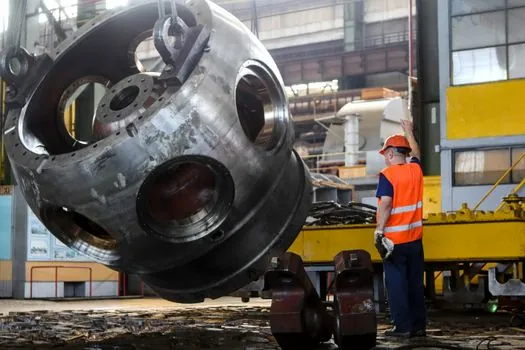
Industry cuts nickel-base product into pipe fittings, flanges, fasteners, round bar, wire, and sheet/plate, and Inconel fittings, fasteners, round bar and sheet are the named stock items in one Indian mill's catalog, with Inconel 600/625/825 and Monel 400/K500 as the call-out grades [S4]. For structural defense parts (engine mounts, fasteners, shear pins), bar and billet are the dominant forms; for exhaust and ducting, sheet and plate dominate; for fluid and gas systems, pipe, fittings, and flanges dominate [S4]. Fastener and wire forms are the workhorse for hot-section hardware and spring elements, and the same source lists wire and sheet as standard stocking items [S4].
Standards and sourcing posture for 2026 buys
Nickel alloy products move to defense buyers under AMS, ASTM, ASME, and (for naval and marine) MIL-spec lines, and the IndustryARC end-use list names aerospace and defense, oil and gas, chemical, energy and power, and electronics as the structural pull [S1]. Specifying parties should pin a heat-lot traceable MTC (EN 10204 3.1 or 3.2) to the order and require a PMI (positive material identification) check on receipt, since Inconel, Monel, and Hastelloy look similar to stainless on the shop floor. For a comparison-grade read on the titanium alloy alternative that is sometimes bid against nickel-chromium in exhaust and airframe work, and on the aluminum alloy alternative that often wins low-temperature structural bids, see the encyclopedia pages.
Trackable next signals: the 2024-2030 forecast CAGR of 2.60% to $5,639.4M is the headline baseline from IndustryARC [S1]; aerospace and defense are explicitly named as a growth driver in that same forecast [S1]; the iron-nickel property envelope (97.3% RD, 167.8 HV, 175.4 GPa, ~12.5% linear shrinkage at 1,070 degrees C hydrogen sinter) is a hard process data point for additive and powder-route defense prototyping [S2].
Related analysis: Ball bearing selection for wind power: 2026 spec gates and supplier map.