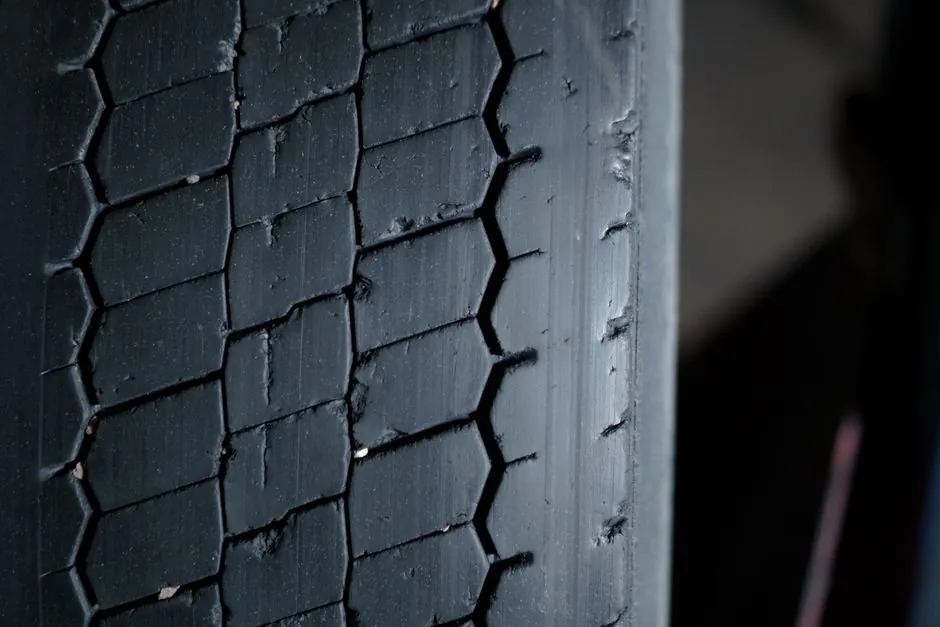
EPDM rubber is broadly unsuitable for petroleum oil, lubricant oil, fuel, and most hydrocarbon-fluid service in oil and gas systems; multiple engineering references published between April and June 2026 explicitly exclude EPDM from such duties and recommend NBR or FKM as the default alternatives [S1][S2][S3][S4][S5].
The reason is molecular: EPDM's saturated polymer backbone gives it strong resistance to ozone, UV, water, steam, and weathering, but that same backbone is readily attacked by petroleum hydrocarbons, which cause swelling, softening, cracking, and loss of sealing force [S1][S2][S5]. For an oil-and-gas specifier, the safe rule is to treat EPDM as a default for water/steam/weather service and a misapplication for hydrocarbon service.
Why EPDM Fails in Petroleum Service: the Compatibility Mechanism
Petroleum-based oils and fuels act as plasticisers for EPDM rather than as inert media, so the elastomer absorbs hydrocarbon fractions, increases in volume, loses tensile strength, and then shrinks, hardens, or cracks as the fluid leaches back out or as the elastomer continues to degrade [S2][S5]. A swollen EPDM O-ring in a valve seat or pump housing can wedge the hardware, while a cracked EPDM gland can leak hydrocarbon past what looks like an intact seal, and both failure modes are documented in industrial maintenance guidance as the classic "wrong-material" signature [S3][S5].
This is why multiple references in the past six months state the rule in the same flat way: EPDM "is not recommended for petroleum-based oil applications" [S1], is "not compatible with petroleum-based oils, fuels, or lubricants" [S2], and "should not be selected for petroleum oil, lubricant oil or fuel applications" [S5]. The same exclusion appears in the JLCMC O-ring material guide, which limits EPDM to "water, steam, glycol coolant and outdoor equipment" [S4]. For readers cross-checking broader elastomer behaviour, the EPDM rubber encyclopedia entry gives the same chemical-resistance pattern in a side-by-side format with NBR, FKM, and FFKM.
Where EPDM Is Still Correct on an Oil-and-Gas Site
Even on a hydrocarbon facility, EPDM is the right pick for several real services: firewater ring mains, potable and process water piping, cooling-water plate heat exchangers, glycol circulation loops, instrument-air and pneumatic lines, HVAC enclosures exposed to sun, and outdoor junction-box or lighting seals [S2][S3][S5]. In these duties the limiting parameters are usually temperature and compression set, not chemical attack, and EPDM's typical operating window of roughly -50°C to +150°C covers the majority of water, steam, and glycol service ranges seen on upstream, midstream, and downstream sites [S2].
For O-ring sizing against standard gland geometry, the oil seal reference and the lamps and light fittings page both cross-reference material selection in a way that is useful when, for example, you are sealing a lighting fixture on a refinery loading arm or a process-area floodlight, where the fluid is weather, not hydrocarbon. The same logic applies to any cable gland or enclosure seal that looks like an O-ring but actually sits in a dry, outdoor, or water-exposed location: EPDM is the safer choice there than NBR [S4][S5].
Material Comparison: EPDM vs NBR vs FKM on the Decision Criteria That Matter
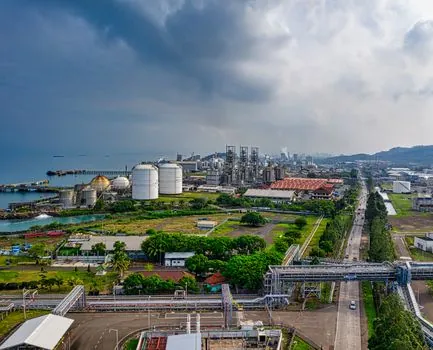
The three common choices for elastomeric seals in oil and gas, lined up against the criteria that actually drive a specification, look like this in current 2026 reference material: [S3]
NBR is the default for mineral oil, grease, hydraulics, and general industrial O-rings; it is economical and has good oil resistance, but its limitations are ozone, weather, steam, and some high-temperature fluids [S3][S4]. FKM is selected when the application needs both hydrocarbon resistance and elevated temperature or broader chemical exposure; the trade-off is higher cost and potentially limited low-temperature flexibility [S4][S5]. EPDM wins on water, steam, glycol, ozone, UV, and long-term weather resistance, with a useful thermal range of roughly -50°C to +150°C, but is "generally unsuitable for petroleum oil and fuel" and should be excluded from any direct hydrocarbon contact duty [S1][S2][S4][S5].
A quick decision shortcut: if the process fluid is on the water/steam/glycol side, pick EPDM; if it is mineral oil or hydraulic fluid, start with NBR; if the temperature is consistently above 150°C or the fluid includes aggressive aromatics, amines, or acids, escalate to FKM and confirm compound compatibility with the supplier's chemical-resistance tables [S3][S4][S5]. This three-line screening is consistent across the Thomasnet, Glorysun, Easkay, JLCMC, and Flow Engineering references cited above, which is unusual consensus for an elastomer topic.
Adjacent Material Families: HNBR, FFKM, Silicone, and FVMQ
For the harder oil-and-gas services the material family must move up the performance ladder. HNBR (hydrogenated nitrile) is the upgrade over NBR where the seal sees demanding oil, hydraulic, or dynamic service with extra strength, wear, and heat resistance, but compatibility still depends on the exact fluid and compound [S4]. FFKM (perfluoroelastomer) is reserved for aggressive chemicals, high heat, and high-purity processing, with the trade-off of very high cost and grade-specific performance that has to be qualified per service [S4].
Silicone and FVMQ are not normally the answer in oil and gas: silicone gives excellent low-temperature flexibility and wide temperature capability but has lower tear, abrasion, and dynamic-wear resistance, and FVMQ (fluorinated silicone) is mainly used where fuel exposure must be combined with low temperature, with limited mechanical performance in demanding motion [S4]. The practical takeaway is that EPDM, silicone, and FVMQ are not the right tools for hydrocarbon sealing, and any field substitution should be justified with a written compound compatibility statement, not on the basis of "it's all rubber".
Real Failure Patterns and How to Audit an Existing EPDM Specification
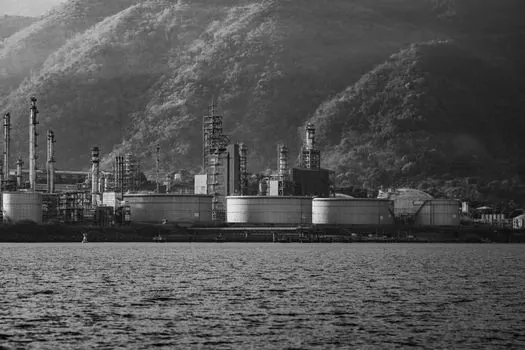
The most common field failure pattern flagged across the references is the EPDM seal sitting in an oil line: it swells, softens, and then either extrudes through the gland or leaves polymer residue on the hardware, and the maintenance team often replaces it with another EPDM rather than switching polymer, which is why the failure recurs [S2][S3][S5]. A second pattern is EPDM used on outdoor hydrocarbon equipment such as a refinery loading arm or a wellhead chemical-injection skid, where the seal sees both weather (where EPDM excels) and trace hydrocarbon aerosol (where it does not); for those hybrid exposures, FKM or HNBR is the safer spec, with EPDM confined to the weather-side enclosure seals only [S3][S4].
A practical audit step on an existing drawing is to walk every elastomeric part on the P&ID, tag the process fluid, and mark any EPDM in hydrocarbon service as a red flag for redesign. The same exercise catches the reverse error, NBR or natural rubber in outdoor, UV-exposed, or steam service, which is where the rubber hardens, cracks, and leaks within a few seasons [S1][S3][S4]. For procurement, the references recommend that EPDM compounds be specified to ASTM D2000 line callouts and ISO 1629 classification to keep material traceability consistent across batches and suppliers [S2].
Specification Workflow for an Oil-and-Gas EPDM-or-Alternative Decision
A working spec workflow in 2026 looks like this: identify the process fluid first, then the continuous and peak temperature, then the pressure and motion class (static, reciprocating, rotary), then the environment (indoor, outdoor, UV, ozone, submerged), and only then pick the polymer family. If the fluid list includes any petroleum oil, diesel, gasoline, hydraulic fluid, lube oil, or aromatic solvent, remove EPDM from the candidate list and shortlist NBR (general mineral oil), HNBR (hot oil and dynamic), or FKM (high temperature and aggressive chemicals) [S3][S4][S5].
If the fluid list is water, steam, glycol, air, or a dilute water-based chemical, EPDM stays on the list and is usually the lowest-cost, longest-life option, with a typical -50°C to +150°C operating window and good resistance to ozone and UV for outdoor enclosures and cable glands [S2][S4]. For lighting and signage on hazardous-area plants, the cross-reference between seal material and lighting equipment and electric lamps matters because the seal around a fixture is doing weather, not oil, duty even when the lamp itself sits in a Zone 1 or Zone 2 hazardous area; that is one of the cleanest fits for EPDM on an oil-and-gas site [S4][S5].
For adjacent coverage, the construction-side spec map in EPDM Rubber Selection for Construction covers the same polymer family with a different failure-trap profile (UV, compression set, water-handling hardware) and is useful when the same project team is specifying EPDM for both process and civil scopes. Two other internal references worth pulling into the same material review are Welding Mat Selection for Hot-Work Bays, which often shares the same EPDM vs NBR screening logic for hot-work area flooring and curtains, and Terminal Block Sizing and Selection, where the elastomeric gasket around an enclosure is again EPDM territory as long as hydrocarbons are not in the picture.
Trackable signals over the next planning cycle: whether compound suppliers issue updated ASTM D2000 EPDM line callouts with explicit "not for hydrocarbon service" footnotes, and whether EPC specifications begin to mandate HNBR or FKM by default for any seal downstream of a hydrocarbon pump or compressor. Both are concrete, document-level changes that an engineer can monitor without speculation.