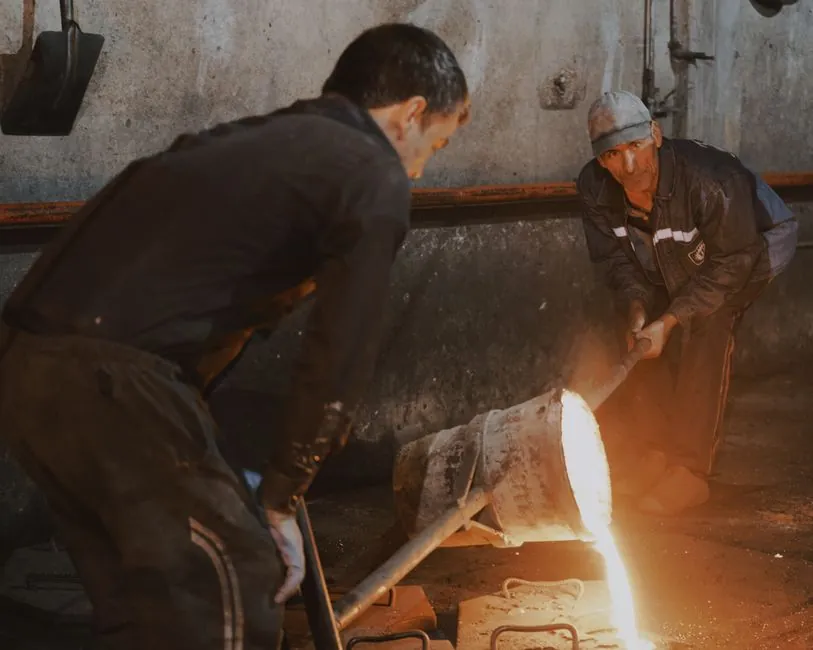
The choice affects decomposition residue, molten-metal filling, surface finish, pattern density, handling and cost, making EPMMA preferable for demanding ferrous castings but not automatically necessary for every iron component [S3][S5].
Material Comparison for Iron Casting
EPS is expanded polystyrene, EPMMA is an expandable methacrylate copolymer bead, and STMMA is a styrene-methyl methacrylate copolymer used in related lost-foam applications. EPS is the lowest-cost, most readily available pattern material, while EPMMA and STMMA reduce carbon residue but increase material and processing complexity [S1][S5].
Carbon Pickup and Ductile Iron Quality
High-carbon irons, including ductile iron, are particularly susceptible to lustrous-carbon defects when cast with EPS patterns because EPS leaves carbon-rich residue that can react with the melt [S3]. The heat of the molten metal vaporizes the EPS foam pattern as the mould is filled.
This material distinction is more consequential than a simple surface-finish comparison. Carbon pickup can contaminate the casting, interfere with graphite morphology, and compromise the mechanical properties expected from ductile iron.
EPMMA should therefore be the default candidate for ductile iron, high-carbon grey iron, thin-wall iron castings and as-cast surfaces where lustrous carbon or carbon inclusions cannot be accepted. EPS remains technically workable for simpler ferrous castings, but it should be accepted only after defect trials confirm acceptable residue and surface quality [S3][S5].
Filling Behavior and Surface Quality

Foam density controls the trade-off between complete mould filling and handling integrity: lower-density EPS fills more easily but has poorer surface finish and greater distortion risk, while higher density adds resistance to molten-metal flow and makes thin sections harder to fill [S3].
EPS patterns can collapse unevenly during pouring, producing surface roughness and veining. EPMMA offers the same general methacrylate-residue advantage over EPS, although the quoted Ra comparison specifically concerns STMMA and should not be transferred to every EPMMA grade [S1][S5].
Hot-melt adhesives used to assemble segmented patterns can also thermally degrade more slowly than EPS, obstructing the advancing metal front and causing fill defects. Low-thermal-degradation adhesive grades, restricted joint adhesive quantity and correctly located metal-entry and venting arrangements must be evaluated together with the foam [S6].
Pattern Density, Handling and Production Control
Lost-foam patterns are dimensionally sensitive because the casting reproduces every detail, while foam shrinkage during cooling can change pattern size. Patterns are normally aged after ejection, a process that may take several days at ambient conditions but can be reduced to hours in a heated environment [S3].
The process uses loose sand compacted around the pattern in a steel flask without sand binders. Pattern density must remain close to its specified value because density changes alter collapse behavior, metal-flow resistance and surface replication [S3].
For iron foundries, the practical comparison is not simply “EPMMA versus EPS per kilogram.” EPMMA usually adds material cost and pattern-processing effort, while reducing the need to clean carbon-related defects and rework imperfect surfaces. That makes it most valuable where high-carbon iron, thin walls, restrictive filling geometry, or machining allowances make defect costs substantial [S3][S5].
Coating, Adhesives and Mould Compatibility
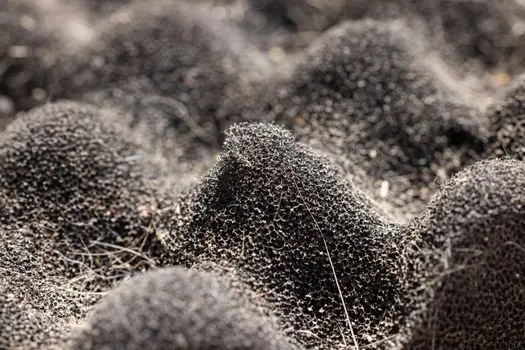
The foam pattern, casting coating, sand mould and molten iron form one interacting system, so changing polymer chemistry without revising coating permeability or venting can shift rather than eliminate filling defects [S3]. EPMMA and EPS patterns require coating formulations suitable for their different decomposition behavior, densities and collapse characteristics.
Coating permeability must support gas transport away from the metal front while retaining enough structural integrity for handling and sand compaction. Joint adhesive must not extrude into the casting cavity, because the cavity reproduces adhesive seams and displaced adhesive as surface defects [S3]. For segmented EPMMA patterns, low-thermal-degradation hot-melt adhesives are particularly important because their residue can remain longer than the decomposing foam [S6].
Multi-cavity production can improve pattern utilization, but each cavity changes gas-generation and metal-flow behavior. The lost-foam casting line should therefore qualify foam, coating, adhesive, sand density and gating as one process rather than treating EPMMA blocks as an isolated material substitution [S3].
Selection Rules by Casting Requirement
Select EPMMA when the casting is ductile iron, the metallurgical specification restricts carbon pickup, the surface is left as-cast, or repeated EPS trials have produced lustrous carbon, veining or excessive roughness [S1][S3]. Select EPS when the component is uncomplicated grey iron, metallurgical acceptance permits EPS practice, and the lower material cost offsets the risk of cleaning or machining defects [S5].
For very high-integrity ferrous parts, PMMA can be evaluated because it leaves the least residue, but it carries the highest material cost, the most demanding moulding requirements and the greatest moisture sensitivity. That option should be justified by defect economics rather than selected by default [S5].
Do not use the reported STMMA decomposition temperature, 30–40% carbon reduction, Ra 12.5 μm result, 0.8% defect rate or 12–15% strength increase as guaranteed EPMMA properties. These figures describe STMMA or a specific cited study and must be revalidated with the actual foam grade, iron chemistry, section thickness, density, coating and pouring conditions [S1].
Trial, Procurement and Acceptance Plan
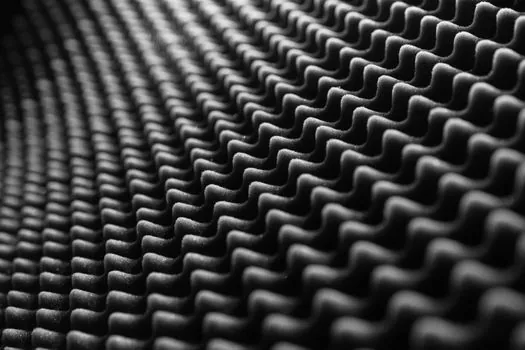
A valid comparison should compare like-for-like foam patterns at controlled density, geometry, coating, sand compaction, gating and pouring conditions, with separate trials for EPS and EPMMA. Inspect carbon defects, lustrous carbon, veining, surface roughness, fill defects, dimensional accuracy and mechanical properties against the drawing and iron specification [S1][S3].
Require the supplier to identify the polymer family rather than rely on a trade name, since short labels may describe different beads. Procurement records should also specify density, pattern dimensions, coating compatibility, storage limits and moisture controls, with trial results linked to the supplier’s lot and formulation [S5].
The decision is economically defensible when EPMMA’s higher pattern cost is lower than the combined cost of carbon-defect rejection, cleaning, machining, recoating and schedule disruption. A useful qualification gate is 10–20 representative castings from each foam type, followed by dimensional, surface, radiographic or metallographic checks, and destructive mechanical testing where the casting class requires it [S1][S3].
The next control point is a controlled EPMMA-versus-EPS trial on the actual iron grade: record foam density, decomposition residue, fill behavior, carbon defects, Ra, dimensional variation and total defect cost per casting before changing the production pattern material [S1][S3][S5].