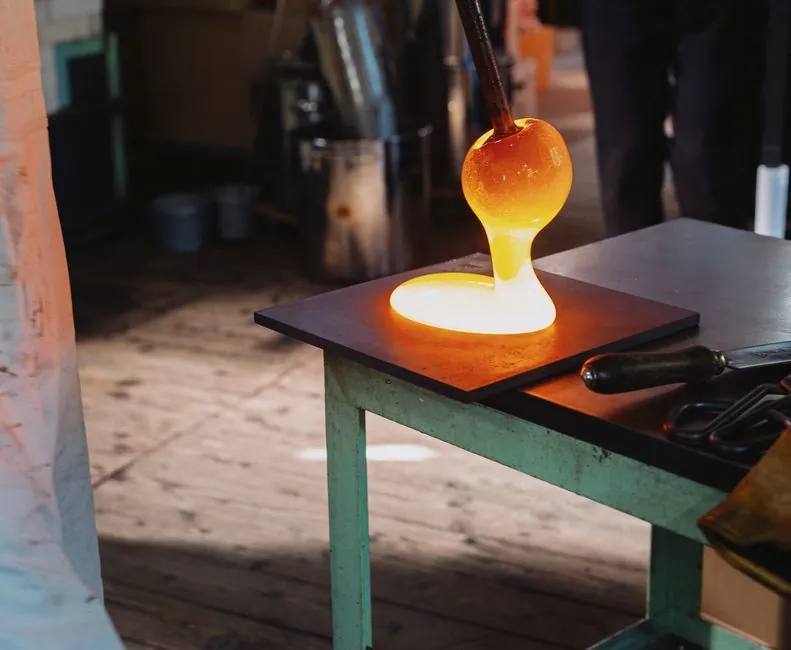
Ester-cured sodium silicate and furan no-bake molds require different trade-offs: silicate offers low-fume handling and inorganic chemistry, while furan typically provides stronger collapsibility and easier shakeout [S2][S3][S7].
This comparison covers mold and core production, cure behavior, emissions, strength retention, reclamation, and the casting conditions that favor each binder; it applies to water-based no-bake sand systems, not every silicate process [S1][S7].
Decision Criteria for No-Bake Binder Selection
The primary decision is not simply “inorganic versus organic.” Ester-cured sodium silicate uses an aqueous sodium silicate solution hardened with an organic ester catalyst, while furan binders are based on furfuryl alcohol and harden through an acid-catalyzed resin reaction [S1][S7].
For a typical production decision, compare the systems across four criteria: cure and handling, fume and workplace exposure, post-pour collapse and reclamation, and dimensional performance. The supplied research supports a qualitative comparison but does not provide a universal strength value, cure time, or collapsibility index that can be applied across sand types, binder additions, and pouring temperatures.
Inorganic sodium silicate binders have challenges including poor knock-out performance compared with organic binders, susceptibility to moisture, difficulty with reclamation, and a need for heat or CO2 for hardening, while chemical no-bake organic binders are associated with ease of use, good mold quality, process reliability, and efficient sand reclamation [S3]. A sand casting mold specification should therefore be tested on the actual sand, tooling, and alloy rather than selected from binder labels alone.
Handling, Cure, and Production Suitability
Ester-cured silicate systems are water-based sodium silicate solutions that harden on sand with an organic ester catalyst, without the CO2 gassing arrangement used by silicate cold-box processes [S1][S2]. That makes them operationally different from both gassed silicate and self-curing furan binders.
Ester-cured silicate no-bake systems have better handling properties than gassed silicate systems and have achieved wider foundry acceptance [S2]. The silicate/CO2 system uses inorganic chemicals, and because CO2 gas is non-irritating, it does not have to be captured and neutralized [S2].
Chemical no-bake organic binders are associated with ease of use, good mold quality, process reliability, and efficient sand reclamation [S3]. ASK Chemicals' polyurethane cold-box literature lists benefits including reduced odor in core production and casting, low BTX emissions, low monomer content, reduced cycle times enabled by rapid reactivity, and increased sand bench life due to high strength [S1]. Those claims apply to that product family and establish the operational priorities against which furan should be evaluated, not a guaranteed performance for every furan formulation.
Strength, Collapsibility, and Shakeout
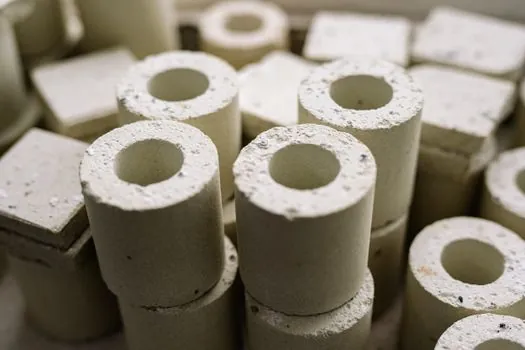
Silicate chemistry forms a hard, glass-like bond that can retain strength after pouring and make shakeout difficult, especially at ferrous casting temperatures; inorganic binders are also associated with moisture sensitivity, reclamation difficulty, and poor knock-out performance relative to organic binders [S2][S3].
Furan bonds are thermally decomposed during casting and subsequent knock-out, giving furan molds a practical advantage for breaking away cleanly and reclaiming sand. Poorly collapsible molds increase labor during shakeout and can contribute to casting defects, including hot tears and residual stress, while the comparative collapsibility study identifies collapse behavior as a central discriminator between silicate and furan [S4].
Silicate collapse can be improved, but not guaranteed, through formulation and additives. For steel or other high-temperature applications, verify that the selected additive package does not compromise mold strength, surface quality, gas generation, or reclamation.
When downstream shakeout capacity is the constraint, evaluate the comparison with batch versus continuous shakeout. The binder decision and shakeout design should be solved together: a fast-collapsing furan bond can improve reclamation, while a difficult silicate bond may create a bottleneck before the sand reaches the reclamation equipment.
Emissions, Odor, and Worker Exposure
The supplied evidence notes concerns about volatile organic compounds emitted at elevated temperatures from organic binders, while also identifying challenges faced by inorganic binders [S3]. This is the strongest technical case for ester-cured sodium silicate, especially where ventilation and exhaust capacity for organic-binder fumes are limited.
Furan no-bake binders can produce volatile organic compounds when organic resin is thermally broken down during pouring, and the choice and dosage of acid hardener materially affect emissions [S3]. The casting ventilation burden must therefore be evaluated as part of the binder package rather than treating ventilation as an unrelated foundry facility item.
The emissions advantage does not mean silicate curing is free of process exposure. Sodium silicate solutions are alkaline, and the ester catalyst and mixing operations still require a documented chemical-handling program. The practical comparison is therefore: silicate usually reduces downstream fume and odor loads, while furan adds a chemical decomposition load that may require stronger local exhaust, air filtration, and exposure monitoring [S2][S3].
Dimensional Accuracy, Surface Quality, and Defect Risk
Chemical-bonded furan systems are widely associated with good mold quality and process reliability, while sodium silicate systems have historically been constrained by dimensional expansion, moisture sensitivity, and difficult reclamation [S3]. These characteristics make furan the safer default for dimensionally critical molds and complex cores when the casting process permits organic-binder fume control.
Silicate is still suitable for molds and cores, including applications that avoid chromite facing sand, but the binder interacts with moisture and thermal expansion throughout the mold life. A trial should measure dimensions at stripping, after transport, immediately after pouring, and after shakeout, because a mold that is accurate at stripping may move before or during casting.
Compare defects by mechanism rather than by system name. Investigate hot tears and residual stress when collapse or mold movement is inadequate, gas-related porosity when binder decomposition or moisture control is poor, and surface defects when mold-face integrity or sand coating is poor [S4]. A controlled trial should hold sand grade, binder addition, catalyst, mixing energy, compacting, and pouring conditions constant before attributing a defect to the binder family.
Cost, Reclamation, and Maintenance Burden
Inorganic sodium silicate binders can cost less than organic binders and may reduce expenditure on ventilation and air-purification equipment because they avoid detrimental casting fumes and binder aerosols [S3]. Those savings can be offset by slower reclamation, greater shakeout labor, and higher maintenance if silicate remains bonded to the sand or core-box surfaces.
Furan no-bake systems support efficient sand reclamation and have good release and shakeout characteristics in commercial no-bake systems [S1][S3]. That makes the total operating cost sensitive to reclaimed-sand percentage, disposal of fines, shakeout energy, and labor. A lower delivered binder price does not establish the lower cost per acceptable casting.
The proper procurement comparison is cost per good casting after catalyst, ventilation, shakeout, sand loss, rework, and disposal. For a mold base supplier or foundry evaluating a change, record at least three consecutive production campaigns: binder consumption, catalyst addition, cure or strip failures, reclaimable sand yield, maintenance labor, and defect incidence.
Application-Specific Selection and Trial Protocol
Choose ester-cured sodium silicate for medium and complex castings where low fume, odor, and CO2 equipment reduction outweigh the need for rapid collapse, especially where dimensional tolerances can be controlled by sand additives, tooling design, and disciplined process control [S2][S3].
Choose furan no-bake for high-volume iron, steel, and demanding dimensional work where fast cycle time, high strength, collapse, and reclamation justify the required ventilation and chemical controls. Furan is generally the stronger choice where casting quality is measured by tight dimensional repeatability and rapid sand return rather than minimum binder cost [S1][S3].
Run a side-by-side foundry trial before changing a qualified system. Use the same sand grade, sand temperature, liquid addition rate, mixing time, compacting force, stripping time, and pour schedule. Record work time, strip time, initial and post-pour strength, surface condition, shakeout time, reclaimed-sand percentage, fumes at casting, and casting dimensions. Treat the published silicate-to-soda ratio range of 1.90–3.22:1, with foundry-average ratios of 2.0–2.8:1 for the cited silicate processes, as formulation context rather than a universal ester-cured recipe [S2].