
Epoxy and polyester batch reactors are shifting to continuous endpoint detection through inline viscometry, NIR/UV-Vis spectrometry, and dielectric cure monitoring, with model predictive control using the inline signal to determine cut-off in real time [S1][S3][S4].
For a 220°C-class polyester condensation or a heated epoxy advancement, the difference between a clean batch and a gelled vessel comes down to how the controller resolves the last 5–15 minutes of viscosity rise, when chain growth and crosslinking accelerate and the exotherm peaks [S2][S7].
Why Viscosity Defines the Endpoint
Viscosity correlates with the degree of polymerisation, so reaching a target viscosity curve is the de facto definition of a complete reaction [S1]. For formaldehyde-based amino resins, the endpoint determines crosslink density, chemical resistance, and dimensional stability; under-running leaves free monomer in the resin, over-running risks gelation inside the vessel [S1][S4]. The same logic applies to epoxy advancement, where the epoxy equivalent and the network build-up both manifest as a rising viscosity trace. Growing molecular chains raise mechanical viscosity by orders of magnitude, which is the variable the control loop actually trims against [S1].
Three Measurement Technologies, Three Windows
Inline viscometers (capillary, falling-needle, or vibrating-element types) deliver a direct viscosity reading and survive aqueous emulsion polymerisation, which is why they are the most common endpoint sensor on resin lines [S1][S6]. NIR and UV-Vis process spectrometers track functional-group concentration (epoxy band, hydroxyl band) and are useful where direct viscosity is hard to install or where compositional drift matters more than bulk flow [S3]. Dielectric cure monitoring (DEA) measures ion viscosity through interdigitated electrodes on a ceramic or polyimide substrate and tracks free-radical polymerisations such as methyl methacrylate, where log(ion viscosity) tracks fractional monomer conversion [S5]. On a 220°C-capable resin line, the viscometer and the NIR probe typically coexist: viscometer for cut-off, spectrometer for early-trajectory trending [S2][S3].
Inline Viscometer Selection at 220°C

A 220°C polyester reactor constrains the sensor: the wetted parts must be metal (no polymer components in contact with the process), the electronics head must be kept below roughly 80°C, and temperature compensation across the polymerisation ramp is non-trivial [S2]. Falling-needle and capillary designs tolerate the highest temperatures and the widest viscosity ranges, while vibrating-element sensors trade temperature ceiling for cleaner signal-to-noise in low-viscosity pre-polymer stages [S2]. For epoxy systems, where the working viscosity rarely exceeds 50 Pa·s and temperatures stay under 200°C, a smaller vibrating-element probe is the typical choice, mounted in a side-loop or directly in the reactor with a thermowell [S1][S2].
Dielectric Monitoring for Resin Cure
Dielectric cure monitoring observes the change in log(ion viscosity) as mobile ions lose mobility in the curing network, and the delta, not the absolute reading, is the meaningful signal because the absolute value depends on ion content and varies batch to batch [S5]. A typical configuration links a thermocouple and a dielectric sensor submerged in the batch reactor to a data acquisition PC over USB or RS-232, and the sensor uses interdigitated electrodes on a ceramic or polyimide substrate [S5]. In low-ion-viscosity batch resins the standard interdigitated layout can saturate the front end, so a simplified two-wire exposed-end electrode is preferred to keep the output inside the instrument's measurement window [S5]. This makes DEA well suited to early-cure trending where viscosity-based sensors are still in their low-signal regime.
From Sensor Signal to Model-Based Cut-Off

A single viscometer reading drifts with temperature, bubbles, and probe fouling, which is why resin reactors now run a viscosity advancement model that predicts the trajectory forward in time and only accepts inline points that fall within a noise band [S4]. In an amino-resin MPC application (Cybernetica CENIT), the controller regulates pH through base/acid dosing, holds the viscosity rate of change between minimum and maximum limits during condensation, and trims the batch endpoint by integrating the predicted viscosity curve, not by tripping on a single absolute value [S4]. The same model-predictive approach is being applied to epoxy and polyester reactors, where the reactor is also being regulated for coil cooling, jacket cooling, and steam heating in the same control layer [S4]. For a deeper look at how a side-loop viscometer compares with a direct-insertion probe in agitated vessels, the inline viscometer selection guide for 220°C batch reactors and the comparative breakdown of in-reactor and slip-stream mounting are useful reference points.
Comparison of Endpoint Detection Methods
Across the three dominant methods, the trade-off matrix is: inline viscometry scores highest on direct correlation to molecular weight, works across a 1–10⁵ mPa·s span, and is robust on aqueous emulsions, but it requires temperature compensation and a high-temperature wetted design for 220°C lines [S1][S2][S6]. NIR/UV-Vis spectroscopy adds compositional data (functional-group conversion) without contact, handles high temperatures through fibre-coupled probes, and is the preferred PAT tool under FDA/EMA framework guidance, though it needs a chemometric model per resin grade [S3]. Dielectric (DEA) cure monitoring is the most sensitive to early-stage cure and works on free-radical systems where log(ion viscosity) tracks fractional monomer conversion, but it is sensitive to ion content variation batch-to-batch, so only the change in the signal is reliable [S5]. For epoxy reactors, most production lines now run viscometer plus NIR with an MPC layer on top, while DEA stays in the lab for free-radical cure development.
Safety: Viscosity Is a Runaway Indicator
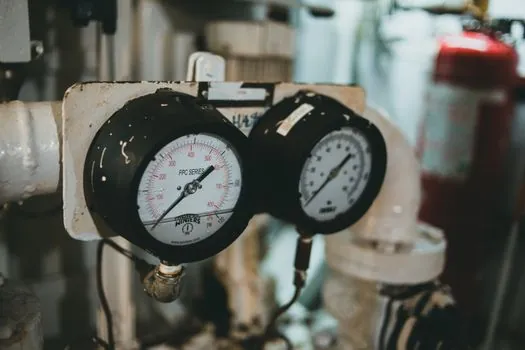
Viscosity is not just a quality variable; a sudden rise is an early warning of accidental polymerisation in the mass [S7]. In the documented French ARIA incident, an abnormal viscosity indication in a polyester resin mass was the first signal that alerted the technician before the runaway developed, and the inline viscometer is now treated as a safety instrument as well as a quality sensor on resin reactors [S4][S7]. The CENIT MPC architecture explicitly uses inline pH and viscometer measurements together to reduce the risk of runaway and gelling during condensation, with the viscosity advancement model filtering out spikes and spurious viscometer readings so that a fouled probe cannot cause an early cut-off or a missed one [S4].
When Inline Viscosity Is Not the Right Tool
Inline viscometry is not the right endpoint sensor for highly filled or pigmented systems where the probe fouls within one batch, for very low-viscosity prepolymers where the sensor signal-to-noise ratio collapses, or for fast free-radical cures where the reaction finishes faster than the viscometer's response time [S1][S2]. In those cases, NIR/UV-Vis or dielectric monitoring, paired with grab-sample confirmation, is the more reliable path [S3][S5]. Related process-side design choices, such as the Stop Category 0 vs Stop Category 1 wiring and drive selection per IEC 60204-1, matter when the same controller also handles the emergency cut-off on an agitator or jacket valve.
Track these signals over the next two quarters: (1) wider release of high-temperature (≥200°C) inline viscometers with integrated temperature-compensated viscosity output for direct cut-off, and (2) MPC packages that integrate NIR compositional trending with the viscosity advancement model into a single endpoint predictor for multi-product epoxy and polyester reactors [S2][S3][S4]. For lab-scale method development on these resin systems, high-viscosity lab reactors with PAT probe ports remain the upstream testbed before any inline signal is locked into plant DCS logic.
For component-level specifications, see gas detection, construction machinery and equipment, and lamps and light fittings.