
On 22 September 2026 the CME Aluminium European Premium Duty-Unpaid (Metal Bulletin) futures (globex AEPU6, SEP 2026) settled at $451.15/tonne, with the OCT 2026 contract (AEPV6) at $440.00/tonne, both quoted on a 25 MT lot [S2]. The LME duty-paid European aluminium premium for the April 2026 forward posted an official close of $489.50/tonne, against zero trade volume at the snapshot [S6].
The arithmetic gap between the two legs runs around $38-50/tonne on these nearby months, which lines up with the 3% EU import duty applied to the LME cash price: when LME aluminium is near $2,500/tonne, the duty itself contributes roughly $75/tonne before logistics and financing [S1]. For European extruders and aluminum alloy stockists, that single duty line is now the largest variable cost between an in-bond warehouse rotation and a delivered-to-warehouse P1020A lot.
Definitions: what the two premiums actually cover
The duty-unpaid premium is the physical premium for unalloyed P1020A aluminium (99.7% min Al) delivered in-bond to a European warehouse, with the 3% EU Common External Tariff (CET) not yet paid; the CME AEP contract (formerly Metal Bulletin AEP) settles against this assessment in USD/tonne on a 25 MT lot [S2]. The duty-paid premium is the same physical premium with the CET cleared and the metal available for free circulation in the EU single market, captured by the related CME EDP contract (Aluminium European Premium Duty-Paid, Metal Bulletin) listed in the same product family [S2].
For downstream buyers sourcing aluminum window door billet or extruding stock, the duty-paid number is the relevant delivered cost, because the metal can move freely to the press without the buyer holding an in-bond customs position. For trading desks and in-bond warehouse operators, the duty-unpaid number is the live mark, and the spread between the two is, in effect, the time value of carrying customs clearance against the 3% CET [S1].
Recent price action: what the September 2026 curve shows
The duty-unpaid curve as of 22 September 2026 prints $451.15/tonne for SEP, $440.00/tonne for OCT, and remains offered in the LME prompt structure for May 2026, July 2026, and April 2026 forward months via Metal Bulletin references [S2][S7]. The duty-paid April 2026 forward on the LME posted a $489.50/tonne official close at the snapshot, with an indicative bid size of 20 lots, signalling a two-way market at that level [S6].
CME also lists the parallel US Midwest duty-paid aluminium transaction premium (AUP, Platts, 25 MT) and the Japan premium (MJP, Platts), so the same trading screen carries US duty-paid, European duty-paid, and European duty-unpaid alongside each other; P1020A specification is consistent across all three [S2][S4]. Historical curves for the European duty-unpaid leg are mirrored on free data feeds such as Investing.com, where end-of-day, open, high, low, and percentage change are available for the AEP series back several years [S5].
Platts methodology shift on the US Midwest implied duty-unpaid

On 14 October 2025 S&P Global Commodity Insights proposed to reshape its US Midwest implied duty-unpaid premium calculation, replacing the single-country implied formula with a net-forward methodology that captures both Canadian and rest-of-world flows into the US market [S3]. Under the proposal, the new implied duty-unpaid series would run in parallel with the existing Platts US Midwest premium assessments rather than replacing them, giving subscribers a backward-compatible overlap window [S3].
The change is material for North American buyers of aluminum veneer panel coil and similar flat-rolled products, because Canada is a large primary aluminium supplier to US fabricators, and any methodology that pools Canadian duty-unpaid imports with third-country imports changes the implied basis that contracts index against [S3]. A 3 November 2025 LME update also reshaped how European duty-paid and duty-unpaid premium data is published, consolidating the premium page and reflecting shifts in supply and cost structures [S8].
Decision matrix: which leg to hedge, and when
For an EU-domiciled extruder consuming P1020A billet under a monthly volume contract indexed to the European duty-paid premium, the natural hedge is the EDP curve; the AEP duty-unpaid leg adds basis risk because the spread to duty-paid can widen or compress around the 3% CET plus financing [S1][S2]. For a trading house running in-bond Rotterdam or Antwerp stock and clearing customs on a rolling basis, the AEP duty-unpaid is the right contract, with the EDP used to lock the moment of duty payment [S2].
For a US-based consumer of aluminum ladder extrusions buying P1020A or P0611 stock, the relevant US benchmarks are the AUP US Midwest duty-paid transaction premium (CME) and the Platts US Midwest implied duty-unpaid series, which the October 2025 methodology proposal reframed as a net-forward Canadian-plus-RoW pool rather than a Canadian-only implied number [S2][S3][S4]. Choosing the wrong leg typically costs the buyer the 3% CET plus 30-90 days of financing, which on $2,500/tonne LME cash is roughly $75-100/tonne of avoidable slippage if the hedge is mis-struck [S1].
Limitations and what the spread does not capture
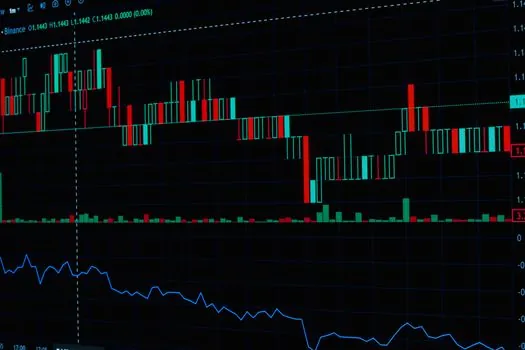
The duty-paid vs duty-unpaid spread is not a clean arbitrage. It bundles the 3% EU CET with warehouse financing, in-bond interest, insurance, and the logistics cost of moving metal from a customs-bonded warehouse to a free-circulation warehouse, so the spread can trade wider than the headline duty when financing rates are elevated or when Rotterdam duty-paid warehouse capacity is tight [S1]. Conversely, when in-bond stock is long and Rotterdam free-circulation stock is short, the spread can compress below 3% because the marginal duty-unpaid lot cannot be cleared quickly into a duty-paid position [S1].
For fabricators buying downstream converted products, the premium differential is only one of several cost layers. Alloying up from P1020A to a 6xxx extrusion billet, rolling to thin-gauge coil, and casting into aluminum die casting machine feedstock each add their own processing premium, none of which is captured in either the AEP or EDP settlement [S2]. Buyers indexing a converted-product contract to the duty-paid premium should add an explicit conversion premium line rather than assume the futures leg covers mill conversion.
Sourcing and standards anchors
P1020A, the grade underlying all four benchmarks (AEP duty-unpaid, EDP duty-paid, AUP US Midwest duty-paid, MJP Japan), is the standard unalloyed primary aluminium grade with a 99.7% minimum aluminium content, published by the LME as the global primary aluminium reference grade [S2][S4]. The 3% EU CET applied to unwrought aluminium (HS 7601) is the regulatory anchor that creates the duty-unpaid vs duty-paid bifurcation; the spread observed in late 2025 and into September 2026 of roughly $38-50/tonne tracks the duty component but also includes financing and warehouse carry [S1][S2][S6].
CME Globex codes for direct reference: AEPU6 (SEP 2026 duty-unpaid), AEPV6 (OCT 2026 duty-unpaid), AEPX6 (NOV 2026 duty-unpaid), EDP (duty-paid), AUP (US Midwest duty-paid, 25 MT), and MJP (Japan premium) [S2]. Historical end-of-day data for the European duty-unpaid leg is mirrored on Investing.com and equivalent free data feeds, and the LME's own premium page carries the most recent duty-paid European assessments after the 3 November 2025 methodology refresh [S5][S8].
For cross-checked sourcing on the US side, watch the parallel-run window on the new Platts implied duty-unpaid methodology versus the legacy series, and treat the duty-paid AUP as the live delivered-cost benchmark for any P1020A or P0611 contract written against US Midwest delivery [S3][S4]. For a closer look at how alloy and temper move the next cost layer above these premiums, the aluminum coil price premium by alloy and temper, 2026 reference lays out the conversion-premium bands that sit on top of the AEP/EDP base.