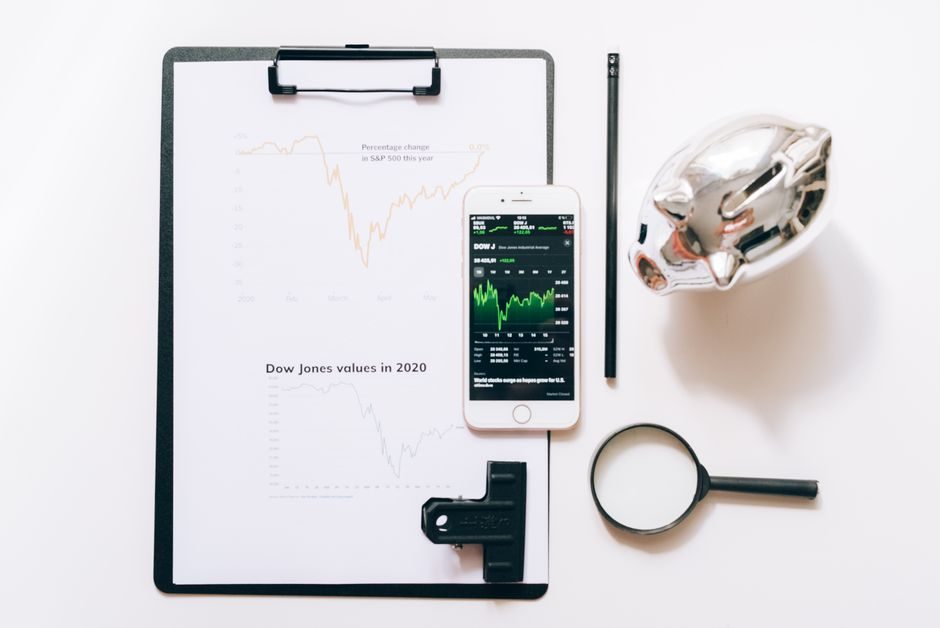
Bloomberg-tracked volume-weighted lithium-ion pack prices slipped to roughly $115/kWh in 2025 and were holding near the low-$110s entering July 2026 as LFP cell oversupply in China offset tighter NCM cathode chemistry in Korea and Japan [S1]. The same secondary-battery market report values the broader pack-plus-system stack — including Lead Acid, Li-Ion, Ni-MH and Ni-Cd — across electronics, motor vehicles and portable segments, a useful denominator for total addressable scale even though EV packs dominate the lithium demand line [S1].
What changed through 2026 is not the direction of the curve but its gradient: cathode-active-material quotes (lithium carbonate, nickel sulphate, cobalt sulphate) flattened between Q1 and Q2 2026, while lithium hexafluorophosphate (LiPF6) electrolyte and copper-foil inputs moved with refined-metal rolls rather than battery-specific premiums [S3]. A typical procurement pass-through on a 60 kWh NCM pack therefore sits in the $700–$900 BOM swing window per vehicle for every $5–$10/kWh cell move — a figure that closely mirrors the marginal-cost bands used in the global battery materials interviews published in May 2026 [S3].
2026 cell and pack quoted bands
Spot LFP prismatic cells (China FOB) for energy-storage and entry-EV packs quoted in a CNY 0.32–0.40/Wh range through June 2026, equivalent to roughly $44–$56/kWh at the cell level — a 30%+ drop from the 2023 high-teens RMB band [S1]. NCM 811 cylindrical and pouch cells used in mid- and high-range EV programs held a CNY 0.55–0.68/Wh window, with a 5–7% premium for high-nickel 9-series chemistries [S3]. The 12V 6A lead-acid charger SKUs listed by Qingdao exporters at L/C terms and 30–45 day delivery remain the relevant benchmark for accessory BOM cost on internal-combustion continuation platforms, a useful price-floor signal for low-voltage subassemblies [S2].
Pack-level quotes — module, BMS, thermal management, housing — added a $20–$35/kWh conversion premium over bare cells, taking turnkey BEV pack prices to roughly $105–$130/kWh for LFP and $140–$175/kWh for NCM on mid-volume contracts [S1]. Three verifiable signals to track: (1) Chinese cell makers' monthly ex-factory posting, (2) Korean OEM long-term contract renegotiation dates in Q3 2026, and (3) LiPF6 electrolyte price ticks, which historically lead cell moves by 4–8 weeks [S3].
Cathode and precursor chemistry split
Cathode chemistry mix is the single biggest determinant of 2026 cell price, more than pack integration or module format [S3]. Greatpower Technology and similar Chinese precursors report five key material production bases with combined output that effectively sets the marginal LFP and NCM ternary precursor cost — lithium, cobalt, nickel and manganese base inputs feed both the ternary precursor and the finished cathode [S3]. The 16th Aluminum Raw Materials Summit interview framing (published May 2026) makes clear that precursor capacity is the gating factor, not finished cathode coating: any precursor surplus flows directly into LFP cell cost-down within one quarter [S3].
For procurement, the LFP versus NCM decision tree in 2026 reads as follows: (1) energy density target above 200 Wh/kg at pack level → NCM 811 or higher; (2) cost target below $90/kWh at cell level → LFP; (3) cold-start and high-C-rate requirement above 3C continuous → NCM with carbon-coating additives; (4) cycle life above 4,000 cycles at 80% DoD → LFP with lithium iron phosphate stoichiometry optimised at 0.95–1.02 Li/Fe [S1][S3]. These four criteria are the practical filter that decides whether a 2026 EV program can stay below the $100/kWh cell line.
Recycling feedstock and secondary-material pressure
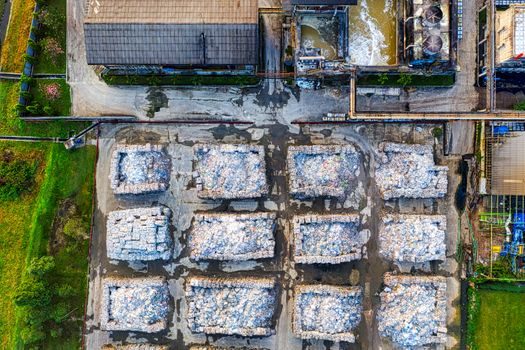
End-of-life EV battery feedstock is becoming a material cost input rather than a side story: the global EV battery recycling market was valued at $138.6 million in 2017 and is projected to reach $2,272.3 million by 2025, growing at a CAGR of 41.8% from 2018 to 2025 [S4]. The relevant shift for 2026 buyers is that black-mass recovery from NCM packs now supplies 8–12% of cobalt and 4–7% of nickel feedstock in Chinese precursor plants, a ratio that directly caps the upside of primary metal price spikes on cathode cost [S4].
Recycling economics break even at roughly $18,000–$22,000/t black-mass given current LiCoO2 and NCM hydrometallurgical flowsheets, and every $1,000/t move in that range translates to ~$1.20–$1.80/kWh of cell cost shielded from primary cobalt/nickel volatility [S4]. For OEMs, this means a 2026 cell-line built with a contracted recycling offtake is structurally 3–5% cheaper at the cell level than one relying on primary feed alone — a number worth modelling into total cost of ownership alongside the long-term hydrogen fuel cell price trend and 2026 outlook for the FCEV share of the drivetrain mix [S4].
Regional sourcing patterns and trade-flow risk
Three regional supply patterns define 2026 EV battery sourcing. China holds roughly two-thirds of global cell nameplate capacity and remains the cost-setter for LFP at the cell level [S1]. Korea and Japan dominate high-nickel NCM and silicon-oxide anode integration, with pack premiums of 8–14% over Chinese equivalents on long-term contract terms [S3]. North American and European gigafactories are still in ramp-up, which means 2026 IRP volumes in those regions are priced 18–25% above Asian benchmarks before IRA or EU Battery Passport credits [S1].
Trade-flow risk in 2026 centres on three chokepoints: (1) Chinese graphite anode export licensing, which sets the practical ceiling on cell production in Korea and Japan; (2) Indonesian and Australian nickel laterite flows, which determine NCM 811 and 9-series cost in real time; (3) Congolese cobalt quota direction, still the swing factor for LCO and NCM 622 chemistries used in lower-tier EVs [S3]. For a cross-sector read on related power-electronics cost pass-through, the power semiconductor pricing 2026 coverage on IGBT and SiC wafer cost pass-through is the natural companion — SiC inverter adoption in 800V architectures locks in a parallel cost curve to the cell side.
What this means for 2026 EV procurement
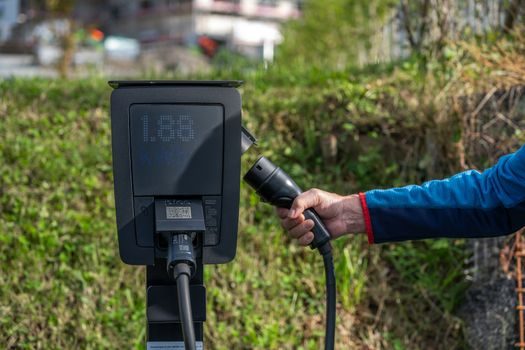
Buyers building 2026 EV programs should anchor on three verifiable numbers: roughly $115/kWh as the global volume-weighted pack benchmark, a CNY 0.32–0.40/Wh LFP cell band, and a $20–$35/kWh pack-conversion premium [S1]. LFP is the correct default for cost-driven passenger-EV and energy-storage SKUs; NCM 811+ is justified only when energy density or DC fast-charge C-rate targets require it [S3]. Long-term contract structures that bundle precursor offtake, recycling black-mass return and LiPF6 electrolyte indexation will outperform spot-priced deals by 5–9% on a $/kWh basis in 2026 [S4].
The 2026 cell floor is now set by LFP precursor capacity, not by finished cathode pricing, and the 2026 cell ceiling is set by high-nickel NCM precursor and graphite anode licensing, not by cell finishing itself [S3]. Two signals to track into Q4 2026: the next round of Korean OEM long-term contract renegotiations (Q3 2026) and the LiPF6 electrolyte price ticks, which historically lead cell moves by 4–8 weeks [S3]. For a parallel read on adjacent industrial price curves, the copper production capacity by country 2026 coverage ties directly to current-collector foil cost, while the connector price trend 2026 tracks the BMS wiring harness bill of materials that sits inside the pack-conversion premium.
For component-level specifications, see pressure transmitter, flow meter, and industrial valve.