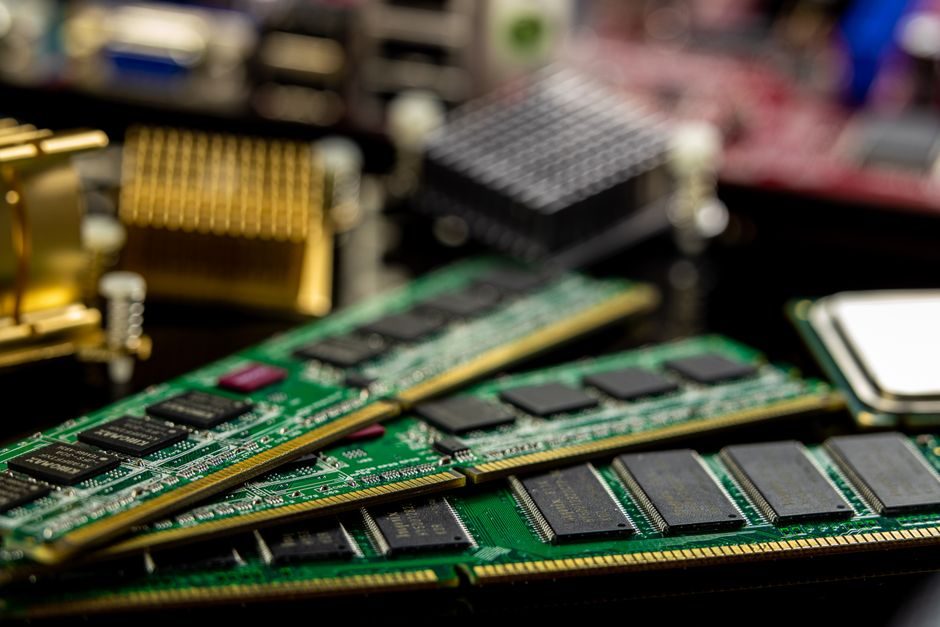
Power semiconductor pricing into the second half of 2026 is shaped by a split cycle: AI-server and high-voltage EV traction demand is pulling 600V-1700V IGBT and 650V-1200V SiC MOSFET lines tight, while mature-node industrial SKUs are still working off stock built during the 2023-2024 destock [S2]. Procurement teams locking 2026 contract prices are seeing double-digit spreads on equivalent 40A/600V TO-247 IGBT parts depending on whether the contract is indexed to wafer, copper, or finished-goods spot.
The reference price band that buyers should anchor against is the discrete-IGBT catalog line: a 40A/600V planar IGBT in TO-3PF-3L, a 25A/1200V variant, and a 20A/1350V high-voltage part in the same package are all quoted as production SKUs by Chinese IDM TRINNO with published datasheets [S3]. These parts form the cost baseline for HVAC, induction heating, welding, and small industrial drives.
IGBT Pricing 2026: Voltage Class, Package and Current Rating Spread
The voltage class is the single biggest price lever on a discrete IGBT: a 600V/40A TO-3PF-3L IGBT and a 1350V/20A TO-3PF-3L IGBT are the same package outline and die-platform generation, yet the 1350V part carries roughly 1.4x-1.8x the wafer area of the 600V part for the same current rating [S3]. On a $/unit basis, the 1200V-1350V class typically prices 25%-50% above the 600V class at the same current, and the 40A/600V IGBT prices below a 30A/650V SiC diode of the same brand line because the SiC wafer cost dominates the BOM [S3].
Three pricing rules of thumb hold for 2026 industrial procurement: 600V/40A-class IGBTs trade in the lowest absolute dollar band, 1200V/25A-class parts occupy the volume mid-band for motor drives and solar inverters, and 1350V/20A-class devices sit in the premium band because fewer foundries run the epi thickness and termination implants required for that voltage. Fast-recovery FRD co-packs (for example 30A/650V TO-3PF diodes) are line-item priced separately from the IGBT switch, and packaging choice (TO-247 vs TO-3PF vs module) can move the price more than the silicon does [S3].
SiC vs Silicon IGBT: Cost Premium, Voltage Sweet Spot and When SiC Pays Back
Silicon carbide MOSFETs and diodes carry a 1.8x-3.0x unit-price premium over equivalent silicon IGBT+FRD pairs at 650V-1200V, driven by the 6-inch SiC wafer cost, slower epi growth, and lower fab yield. At 650V the silicon IGBT still wins on cost per amp for general-purpose drives; SiC pays back at switching frequencies above 20 kHz, in totem-pole PFC stages, and where the cooling system (heatsink, fan) is more expensive than the switch [S2]. Above 1200V, SiC's thermal-conductivity advantage widens and the $/RDS(on) gap narrows, but at 600V-650V the silicon IGBT remains the procurement default unless the system-level BoM is rebuilt around SiC switching frequency.
The 2019 cycle is the clearest historical template: power-semiconductor demand "about to pick up" was signalled by Infineon and other IDMs lowering their power-chip inventories to healthy levels, not by wafer-fab capacity additions [S2]. In that cycle, the demand inflection was inventory-driven, not supply-driven, meaning spot prices could move 20%-40% in two quarters once downstream orders re-started. Procurement teams watching 2026 should not extrapolate from headline wafer-cost inflation; the bigger swing factor is the IDM inventory weeks-of-supply and distributor book-to-bill.
Wafer, Copper and Substrate Cost Pass-Through: What Buyers Can Index
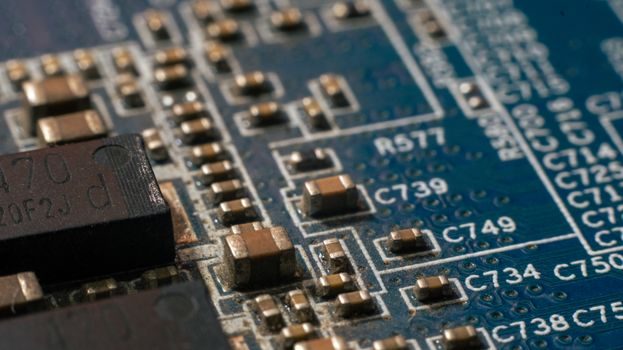
A 40A TO-3PF-3L IGBT has roughly 2x the copper mass of a 20A TO-220 part of the same voltage, so any LME copper move shows up faster in the 40A+ price band than in the 20A band [S3].
For 2026 contract negotiations, three indexation levers are workable: wafer-area cost pass-through tied to a published polysilicon or 6-inch wafer reference, copper surcharge tied to LME Cu averaged over the prior quarter, and FX adjustment on USD-denominated IDM quotes for EUR or JPY buyers. Patent activity on power-semiconductor packaging substrates (for example the US20240283356A1 filing on substrate-for-power-semiconductor-packaging constructions) signals that substrate yield and warpage control, not the silicon die, is the bottleneck for module-level cost reduction through 2026-2027 [S6]. Buyers sourcing IPMs and power modules should expect substrate-innovation cost-down to lag die-innovation cost-down by 6-12 months.
Inventory Cycle and Lead-Time Signals: The 2026 Procurement Playbook
The 2019 Taiwan-sourced industry signal was explicit: power-semiconductor demand bottoms and re-firms when IDMs reach "healthy" inventory weeks, not when foundry capacity is added [S2]. In 2026 the equivalent signal is the IDM and Tier-1 distributor book-to-bill: a book-to-bill above 1.10 sustained for two quarters is the historical trigger for allocation, while a print below 0.95 has preceded price softening in every cycle since 2018.
Three operational rules follow. First, dual-source any 1200V/40A+ IGBT and any 650V/20A+ SiC MOSFET where the application is a high-volume production line, because single-source exposure in this segment is the single largest 2026 supply-risk pattern flagged by the 2019 demand-pickup case [S2]. Second, separate the AI-server / data-centre power-conversion SKUs from industrial motor-drive SKUs in the contract, because the two pools are now on different inventory cycles. The broader cable and wire pricing 2026 picture sets the copper surcharge baseline, and any movement in LME Cu feeds through to the 40A+ IGBT and IPM price bands within one quarter.
Standards, Sourcing Quality and the Compliance Premium
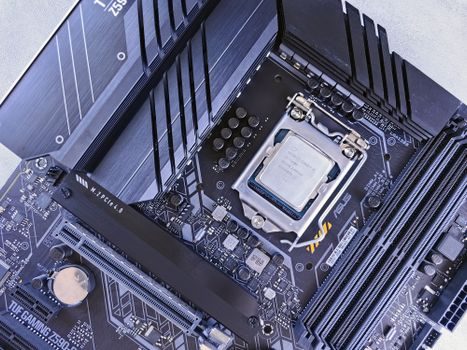
Industrial IGBT and SiC power modules for European and North American builds carry an ATEX / IECEx compliance premium on the module-level price, and the discrete IGBT is increasingly specified with automotive-grade qualification (AEC-Q101) for EV traction and solar inverter duty. The compliance premium is typically 8%-15% on the discrete IGBT line and 12%-20% on the IPM line, but it also gates which foundries can bid the part: AEC-Q101-qualified 600V/40A IGBTs are a narrower supply pool than commercial-grade equivalents [S3].
Buyers sourcing from second-tier Chinese IDMs (TRINNO, First Tech, and similar lines) get published datasheets and TO-3PF-3L package data with rated current and rated voltage clearly stamped on the catalog page, but should verify the HTRB and HTGB reliability data against the application rather than relying on headline VCE and IC ratings [S3]. Samsung's power-IC product line (mobile power, accessory power, memory power, display power) sits in the adjacent low-voltage DC-DC segment and does not directly compete in the 600V+ IGBT or SiC MOSFET band, but does compete for the same 8-inch fab capacity and is therefore a leading indicator of mature-node wafer tightness [S4].
What to Track in H2 2026: Three Verifiable Signals
Three signals are worth watching for the second half of 2026. First, the IDM book-to-bill print for the September 2026 quarter: a sustained reading above 1.10 historically precedes a 15%-25% spot-price reset on 600V/40A IGBT and 1200V/25A IGBT within two quarters, matching the 2019 inflection pattern from the Taiwan-sourced inventory signal [S2]. Second, the LME copper rolling 90-day average: a sustained print above 9500 USD/t flows through to 40A+ IGBT and IPM price bands within one quarter, while a move below 8000 USD/t is the first precondition for distributor destocking and price softening [S3].
Third, the AI-server power-conversion SKUs and high-voltage EV traction SKUs are the segment where 2026 capacity is most contested, and any allocation announcement from a Tier-1 IDM on 1200V SiC MOSFETs is the leading indicator of a 2026-2027 supply tightness that will spill over into industrial motor-drive and solar inverter lines. The 2019 demand-pickup case proves that power-semiconductor pricing can flip from destock to allocation inside two quarters, so the procurement-side rule is to lock wafer-and-copper-indexed contracts for 2027 delivery on any 1200V/40A+ IGBT, 650V/20A+ SiC MOSFET, and TO-3PF-3L module line before the book-to-bill confirms the inflection [S2]. For buyers balancing power electronics against adjacent cost lines, the linear module supplier map for 2026 and the cable and wire pricing trend are useful cross-references, because they share the same copper surcharge and FX indexation mechanics and therefore tend to move on the same procurement cycle.
For component-level specifications, see power cable, power meter, and power mixer.