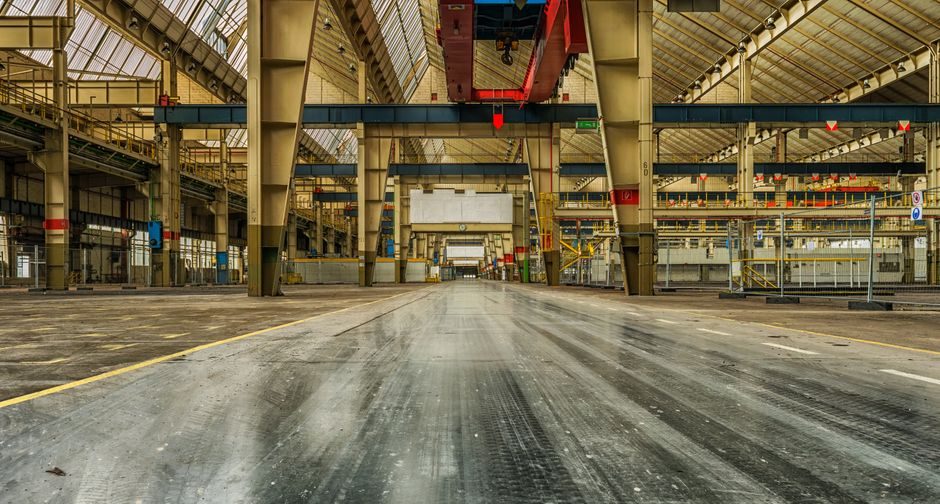
Three cell formats — prismatic, cylindrical, and pouch — drive three distinct line architectures in 2026 EV battery plant design, each with its own stacking, welding, and end-of-line test stack [S1][S2].
Line builders now bundle laser welding, cell sorting, BMS testers, and AGV-based PACK transfer into single turnkey packages, with the 587Ah prismatic module/PACK line using AGV for inter-station handoff between module assembly and pack enclosure [S2].
Cell Format Drives Line Architecture
Prismatic, cylindrical, and pouch cells route through separate upstream forming lines and reconverge at the module-PACK stage [S1]. A turnkey cylindrical battery pack line covers 18650/21700/4680 cell sorting, tab welding, and pack-level assembly; the pouch line adds lamination and hot-press sealing; the prismatic line stacks large-format cells with busbar welding and CTP integration [S2]. Reference architectures for automatic molding line integration borrow the same cell-to-pack pacing logic used in module welding. The cylindrical and prismatic module-PACK lines run as parallel assets; the pouch line branches earlier, sharing only EOL test and AGV buffering downstream [S1][S2].
Core Process Nodes and Their Spec Boundaries
Cell sorting grades by voltage, capacity, and internal resistance before stacking — typically the first gating station on every module line [S2]. Laser welding handles busbar, tab, and CTP top-cover joints, with laser cleaning used to clear oxide from terminals before each weld pass [S2]. Module assembly covers cell stacking/taping, then pack compression, BMS testing, leak detection, capacity grading, aging cycling, and end-of-line performance test before pack shipment [S1][S2]. The molding line comparison for throughput pacing applies directly: OEE on the welding station caps line rate, while aging room dwell time sets the WIP floor regardless of upstream speed.
Inline Equipment Reference List
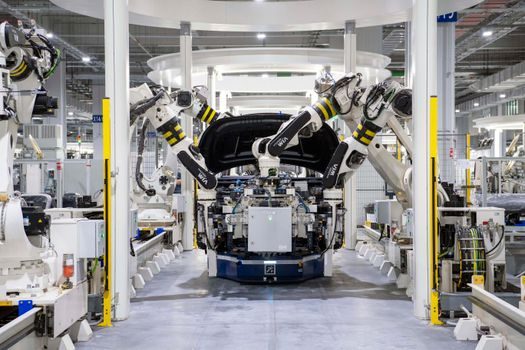
Equipment published in 2026 turnkey catalogs covers spot welders, laser welders, vacuum mixers, electrolyte filling machines, electrode coaters, slitters, stacking/winding machines, pouch formers, vacuum sealers, NMP solvent recovery, and rolling presses for electrode calendaring [S1]. Quality nodes include CCD visual inspectors, BMS testers, battery pack comprehensive testers, aging machines, and Al wire bonders for cell-to-PCB connections [S1]. Material handling extends from cell sorters, paper-sticking machines, and crimping/disassembly stations up to AGV/RGV fleets and AS/RS stacker-crane warehousing [S1][S2].
Smart Factory Layer: MES, AGV, and AS/RS
Software stack on 2026 lines pairs a manufacturing execution system (MES) with AGV/RGV transport and AS/RS stacker-crane warehousing, with each cell carrying a barcode for tracing through sort, weld, age, and ship [S2]. The same traceability database feeds the BMS tester at EOL, closing the loop between cell-level test data and pack-level warranty records [S2]. For plants scaling beyond one shift, the AS/RS becomes the throughput bottleneck because aging room dwell time is non-compressible — WIP must park somewhere, and that somewhere is the stacker-crane buffer [S2].
Selection Criteria: Cylindrical vs Prismatic vs Pouch

Cylindrical lines score on cell supply maturity and pack repairability — 21700 and 4680 cells slot into standardized module fixtures, easing field service [S1][S2]. Prismatic lines win on pack energy density and CTP compatibility, with the 587Ah prismatic module/PACK line being the most-shipped turnkey package in current vendor catalogs [S2]. Pouch lines favor flexible pack geometries and high specific energy but need tighter inline leak detection because each cell has a larger sealant area [S1]. Capital cost per GWh ranks lowest for cylindrical at high volume, mid for prismatic, and highest for pouch due to dry-room and lamination overhead [S1].
Standards, Safety, and Reference Test Loops
End-of-line test scope covers capacity grading, BMS functional test, aging cycling, and leak detection — the same four nodes cited across both 2026 vendor catalogs as mandatory gate-out steps [S1][S2]. The conveyor sorting line pattern from discrete assembly applies here only at the cell-sorting station; downstream, AGV buffers replace conveyors because cells travel in trays, not on belts. For plants adding a pilot lab, coin-cell, pouch, prismatic, cylindrical, and flow-cell assembly lines are all listed as standalone SKUs in the same vendor catalog [S1].
Trackable near-term signals: the next decision node for any 2026 EV battery plant build is whether to commit AGV-based prismatic CTP — a packaging choice that locks pack form factor for the line's 10-year life — and whether the dry-room budget absorbs pouch lamination, since that single item separates pouch-line capex from prismatic by the widest margin [S2]. The V-process line analogy breaks down here because vacuum-formed battery cells are tolerance-bound at the micron level, not the millimeter level of green-sand casting — spec discipline is the part that transfers.
Background reading: UPS System Supply Chain 2026: Tariff Refunds, ICS2 Release 3, and Logistics-Tech Sourcing.