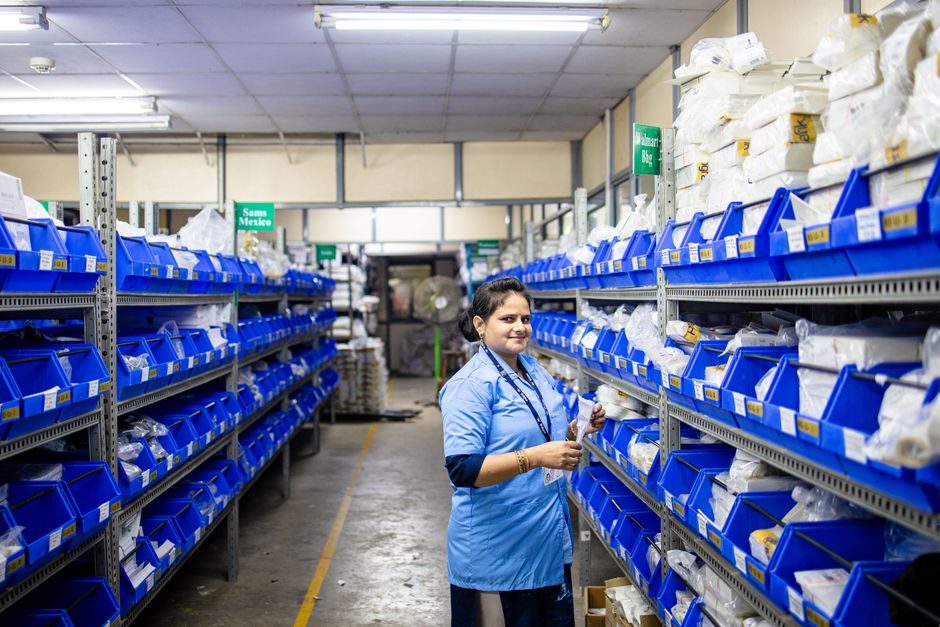
UPS system supply chains in mid-2026 are absorbing two simultaneous policy shocks — a US IEEPA tariff refund pipeline through the new CAPE process in the ACE Portal, and EU ICS2 release 3 pre-loading data requirements — while freight forwarders re-cost landed values and customs filings [S3][S7].
The market is now running with explicit cost-side signals: UPS Supply Chain Solutions states it spends more than $1 billion annually on technology to support freight processing, dock-to-door visibility, and customer-facing tools [S5]. That spend, combined with the Section 122 and IEEPA tariff developments flagged in UPS's 2026 supply chain outlook webinar, frames the operating envelope for anyone specifying industrial UPS hardware, lithium battery cells, and power-conversion components that move through trans-Pacific lanes [S1][S5].
IEEPA Tariff Refund Mechanics: Phase 1 CAPE Process in ACE Portal
US Customs and Border Protection began accepting Phase 1 IEEPA tariff refund requests on 30 January 2026, covering tariffs already paid and not yet settled, processed through a new CAPE workflow in the ACE Portal [S2][S3]. For shipments where UPS is the importer of record and the refund eligibility criteria are met, UPS Supply Chain Solutions is actively filing on the customer's behalf [S2]. The refund scope is tied to the US Supreme Court ruling that invalidated portions of the IEEPA tariffs, and UPS has published a phased implementation note in its Chinese-language freight guide documenting the rollback windows [S2][S6].
Industrial buyers carrying DC power supply and switching power supply assemblies from Chinese contract manufacturers should run a 2025-to-2026 landed-cost reconciliation on the affected HTS subheadings and queue documentation while the Phase 1 window is open [S3][S6]. The CAPE process adds documentation overhead but lets a buyer recover the duty differential that previously sat in the unit cost — effectively a retroactive 5–25% input cost correction, depending on the HTS line and origin [S2][S3].
EU ICS2 Release 3: Pre-Loading Data for Air, Sea, Road, Rail
EU Import Control System 2 release 3 took effect on 29 September 2025 and broadens pre-arrival security and safety filings to all transport modes — air, sea, road, and rail — entering or transiting the EU, Norway, Switzerland, and Northern Ireland, including through-transit shipments bound for the UK that pass any EU country [S7]. The data-driven customs security model requires complete pre-loading entries even for goods that never clear EU customs at destination, which extends filing obligations to UPS-system cabinets, transformer kits, and battery racks routed via Rotterdam or Hamburg [S7].
ICS2 is rolled out in three release waves; release 3 is the broadest and catches the largest pool of economic operators, with release 1 dating to 2021 and release 2 covering additional transport modes and operator classes [S7]. Buyers should confirm their freight forwarder is filing the ENS (Entry Summary Declaration) data elements — including HS code, consignor/consignee, and routing — at the correct pre-loading lead time, because non-filing now triggers carrier-level rejection rather than simple customs delay [S7].
Section 122, IEEPA, and 2026 Tariff Architecture

UPS's recorded webinar "2026 Supply Chain Outlook" highlights the layering of IEEPA tariffs with Section 122 authority, framing the regulatory environment for importers of industrial UPS subsystems and lithium battery modules [S1]. The combined regime has shifted the cost baseline for Chinese-origin power electronics and energy-storage components, which historically run 15–25% landed-cost premiums during the IEEPA enforcement window and are now reverting as refund phases complete [S1][S2].
For a spec engineer, the practical impact is that the duty and FX columns of the bill of materials need a versioned ledger — 2024 baseline, 2025 IEEPA peak, and 2026 post-refund — so procurement can place POs against the correct duty line and avoid stranded cost in the WIP ledger [S1][S3]. UPS has published tariff resource pages for both the US and Chinese markets to support this analysis, with the German site explicitly walking through Phase 1 eligibility [S3][S6].
Logistics-Tech Stack: $1B+ Annual Spend and Visibility Implications
UPS Supply Chain Solutions reports an annual technology spend exceeding $1 billion supporting internal freight-processing systems and customer-facing tracking, dock scheduling, and trade-compliance tools [S5]. For a buyer running multi-modal UPS-system shipments, the relevant outputs are API-level tracking events, ACE Portal CAPE filing status, and the visibility layer that ties a battery cabinet's serial number to its customs entry, HTS code, and chain-of-custody [S5].
The spend figure also signals that the carrier side of the supply chain is consolidating compliance tooling — a 2026 supply chain analyst role now requires data visualization, data storytelling, and ACE Portal fluency, per the Coursera 2026 salary guide [S4]. For sourcing teams, the takeaway is that visibility tooling is no longer a competitive differentiator; it is table stakes for filing CAPE refunds and ICS2 ENS declarations on time [S4][S5][S7].
Outsourced Warehousing and Distribution: Webinar Signal
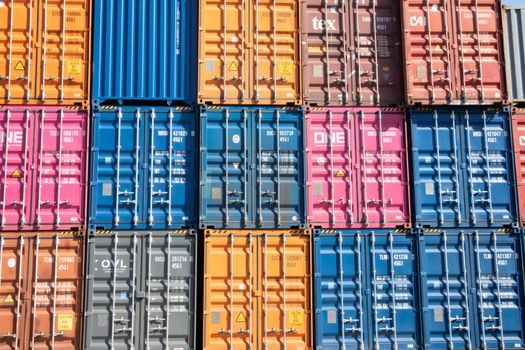
UPS's 22 August 2025 webinar "The Rise and Importance of Outsourcing Warehousing and Distribution" frames the second half of the 2026 supply chain story: as tariff volatility and ICS2 filings eat into internal logistics capacity, more OEM and tier-1 buyers are evaluating 3PL warehousing for roller chain and conveyor chain spare parts, finished-goods buffer stock, and reverse-logistics flows [S8]. The webinar is positioned as a decision aid for buyers weighing 3PL insourcing versus outsourcing for warehousing and distribution, with cost, visibility, and compliance as the three decision axes [S8].
The connected risk is lead-time bifurcation: long-lead Chinese-origin chain conveyor sub-assemblies now sit alongside shorter-cycle EU-domestic spare-parts flows, and the warehouse network design must accept both cadence profiles without inflating safety stock [S7][S8].
2026 Supply Chain Outlook: Geopolitics, Trade, and Technology
UPS's 2026 outlook webinar identifies three pressure vectors for the year — geopolitical shifts, evolving trade regulation, and accelerating technology — and explicitly names IEEPA and Section 122 tariff developments as the near-term flashpoints [S1]. The webinar was positioned as a readiness brief for importers, with practical steps to improve visibility and evaluate impact across the import book [S1].
Specifying engineers should treat the three vectors as a single decision matrix: a UPS-system cabinet sourced from China in Q3 2026 carries IEEPA-refund upside, ICS2 release 3 filing overhead, and a visibility-tooling requirement that may or may not be met by the existing 3PL [S1][S3][S7]. The matrix resolves to a single operational answer — extend the 3PL contract, file on time, queue the refund, version the BOM — and the next signal to watch is the CAPE Phase 2 cutover, which will determine whether the refund pipeline scales to the remaining 2025 duty pool [S2][S3].
For cross-engineering context, the same tariff-and-logistics stack is reshaping the immersion cooling supply chain 2026 fluid bottlenecks single phase lead sourcing and the liquid cooling supply shortage 2026 lead times risk map and sourcing cues markets, where Phase 1 IEEPA refund eligibility, ICS2 ENS filing status, and ACE Portal visibility are now required inputs to a Q3 2026 landed-cost model.