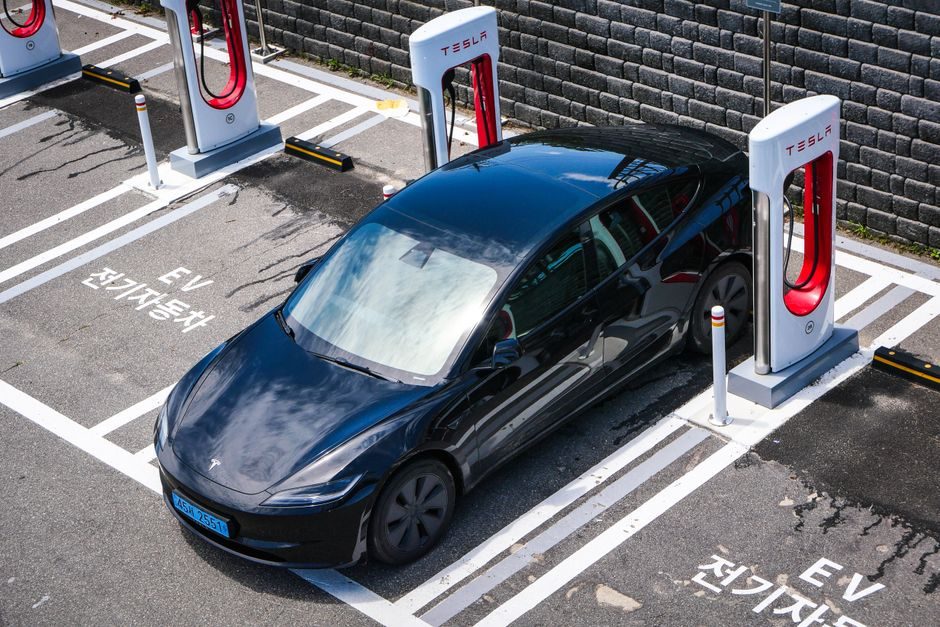
As of 2026-06-11, a 2024 Xpeng Mona M03 in 610 km / 640 km / 702 km extra-long-range trims was listed at US$15,000-16,000 per unit (1-piece MOQ) by Chengdu Himore Zhonghuan Automobile Exports Trading on Made-in-China.com, with a 5.0/5.0 "Fast Dispatch" supplier rating [S1].
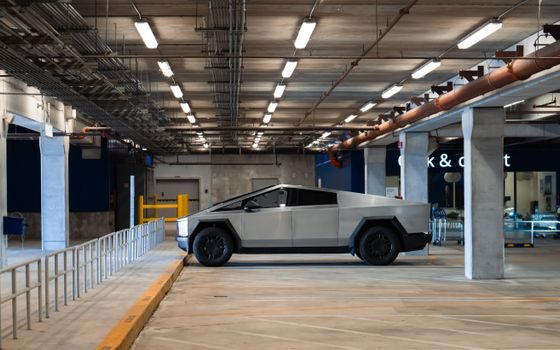
On the same index, a 2024 MG Cyberster 580 km-range factory-priced BEV was quoted around US$41,000 starting point [S1], and a 2026 LHD/RHD high-speed 300 km-range compact EV from Geelong Automotive (Shandong) was offered at US$6,800-8,980 with a 24-piece MOQ [S2]. These three quotes bracket the spread a sourcing engineer sees when comparing sedans, sport coupes and entry-level commuter BEVs out of China.
Passenger BEV: 2024 model-year export price bands
The 2024 Xpeng Mona M03 at US$15,000-16,000 sits in the same band as the Geelong 300 km high-speed compact at US$6,800-8,980, meaning a buyer moving up from a 300 km A-segment city car to a 702 km B-segment sedan pays roughly a 2× premium for the range upgrade [S1][S2]. The MG Cyberster at ~US$41,000 is in another tier entirely — it is a 580 km-range dual-motor sport coupe, not a volume commuter, so its price is closer to a premium-segment import than a Chinese-domestic BEV [S1].
For procurement, the relevant levers are clear: range (km per full charge, WLTP/NEDC not stated on the listing), trim level, LHD vs RHD configuration, and MOQ. A 1-piece MOQ on the Xpeng listing makes sample orders feasible, whereas the Geelong 300 km EV enforces 24 pieces minimum, which already shifts the unit logistics calculation for a small African or ASEAN distributor [S1][S2].
Used and parallel-import EV pricing
The used-car channel adds a parallel price surface: a 2024 Exeed Zhuifeng PHEV (0 km odometer, described as a "used car" listing) was offered at US$18,380-18,980 per unit by Wenling Tenglong Automobile Trade on the Made-in-China.com index dated 2026-06-06 [S2]. That price point is informative because PHEVs typically sell below comparable BEVs in the same segment, and the 0 km descriptor on a "used" listing indicates dealer stock, not consumer trade-ins.
For a buyer building a mixed fleet (BEV commuter + PHEV long-haul), the Exeed PHEV data point gives a rough 18-19k USD benchmark for a mid-size Chinese-brand plug-in hybrid, which is below the 41k USD MG Cyberster coupe but above the sub-9k USD 300 km city car [S1][S2]. The key engineering question for the buyer is whether the PHEV powertrain fits the duty cycle, not just the sticker.
Light electric mobility: scooters, folding motorcycles, mobility vehicles
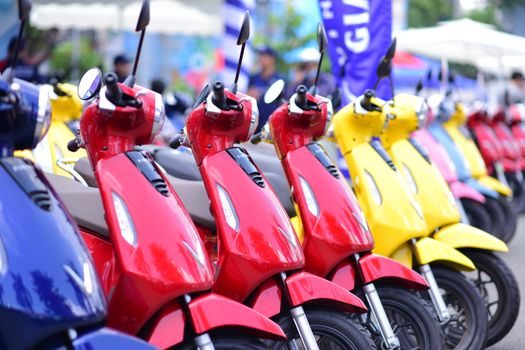
Below the passenger-car band, the price floor collapses: a Yongkang Dahai adult mobility scooter with seat for disabled users was listed at US$391-466 per unit, 1-piece MOQ, 4.8/5.0 audited Zhejiang supplier, on the 2026-06-06 Made-in-China.com index [S3]. A 800 W high-carbon-steel foldable electric bicycle/motorcycle from Shandong Kaiwande was quoted at US$198-245 per unit with a 50-piece MOQ and 4.0/5.0 supplier rating on the same day [S5].
The 800 W motor class, high-carbon-steel frame, and foldable footboard configuration all sit inside the EN 15194 / e-bike regulatory envelope used by EU importers for pedal-assisted cycles up to 250 W continuous-rated, which is why suppliers flag 800 W as a "daily commuting" spec rather than a road-legal e-bike in Europe. Buyers in Africa, Southeast Asia, and South America, where 800 W e-mopeds are road-legal, are the natural end market for this price band [S5].
Electric truck market: 2026 published forecast framework
The Business Research Company's "Electric Truck Global Market Report 2026" (published January 2026, 150 pages, PDF, US$4,490 list price, 2-3 business-day delivery) segments the market along four axes: vehicle type (light-duty, medium-duty, heavy-duty), propulsion (BEV, HEV, FCEV), range (up to 150 miles / 150-300 / 300-500 / above 500), and a further regional split [S4].
That segmentation matters for spec selection: an electric pallet truck in a warehouse stays inside the "light-duty / short-range / BEV" cell, whereas a port drayage tractor falls into the medium-duty FCEV-or-BEV cell. The report does not publish unit numbers on the listing page, so any adoption percentage quoted downstream must be treated as analyst-derived, not as a sourced statistic from the publisher [S4].
Industrial context: shared supply-chain cost pressure
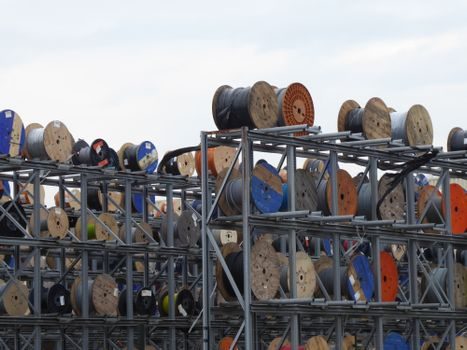
EV pricing is downstream of the same metal, motor and electronics costs that drive industrial equipment. Procurement teams that already manage aluminum veneer panel price and cost guide 2026 line items, or that negotiate IBC tank price & cost guide 2026: material, UN rating and sourcing levers on the same PO, will see correlated moves in copper, aluminum and lithium pricing — which directly hits BEV battery and motor BOM. [S1]
For factory-floor electrification, an electric actuator retrofit on a process valve, or a flow meter swap to a smart digital type, is governed by the same OEM cost-down cycles as passenger BEVs. Likewise, the industrial valve supply chain feeds both the truck coolant loop and the chemical plant, so the 2026 truck forecast has knock-on effects on valve and instrument demand [S4].
Selection criteria: matching EV class to duty cycle
A spec-driven shortlist against three decision criteria — range, payload/load, unit cost — looks like this for 2026 sourcing out of China: sub-9k USD gets a 300 km A-segment city BEV (Geelong, 24-piece MOQ) [S2]; 15-19k USD gets either a 610-702 km B-segment sedan (Xpeng, 1-piece MOQ) or a mid-size PHEV (Exeed, 1-piece MOQ) [S1][S2]; 41k USD and up gets into sport-coupe territory (MG Cyberster) [S1].
For light commercial, the same three-criteria frame maps to the Business Research Company segmentation: light-duty short-haul BEV truck is the lowest-cost cell; medium-duty FCEV (where hydrogen refuelling exists) is a higher capex but higher-utilization cell; heavy-duty long-haul BEV is the most capex-intensive and needs depot-charging infrastructure [S4]. The procurement engineer should not mix cells: a 300 km city car spec into a delivery-fleet duty cycle, or a heavy-duty BEV truck into a route with no depot charger, both fail on TCO.
What the 2026 listings do not tell you
Made-in-China.com FOB-style quotes are opening-price indications, not landed-cost prices — they exclude sea freight, destination port handling, homologation (e.g. EU WVTA, GCC GSO, US DOT/EPA), and any local incentive or tariff regime. They also do not state whether the listed battery is LFP or NCM, what the DC fast-charge curve is in kW, or what the cycle-life warranty is in years/km, all of which dominate TCO on a fleet purchase [S1][S2].
The Business Research Company report at US$4,490 list price is itself a paid forecast, not a primary dataset, so any "X% market share by 2030" number sourced from it is a publisher's projection, not an audited installed base [S4]. For sourcing decisions, treat the China-export listings as RFQ reference points and the truck report as a directional segmentation tool, not as a price benchmark.
Trackable signals for the next sourcing cycle: (1) whether Geelong and similar Shandong A-segment suppliers drop MOQs below 24 pieces as 2026 H2 order books fill; (2) whether the 300 km compact EV price floor breaks below US$6,000 ex-works, which would reset the ASEAN / Latin America entry-level BEV benchmark; (3) publication of the Business Research Company mid-year update, which typically revises the 2026 truck forecast in October and would move the FCEV vs BEV split in the medium-duty cell [S1][S2][S4].