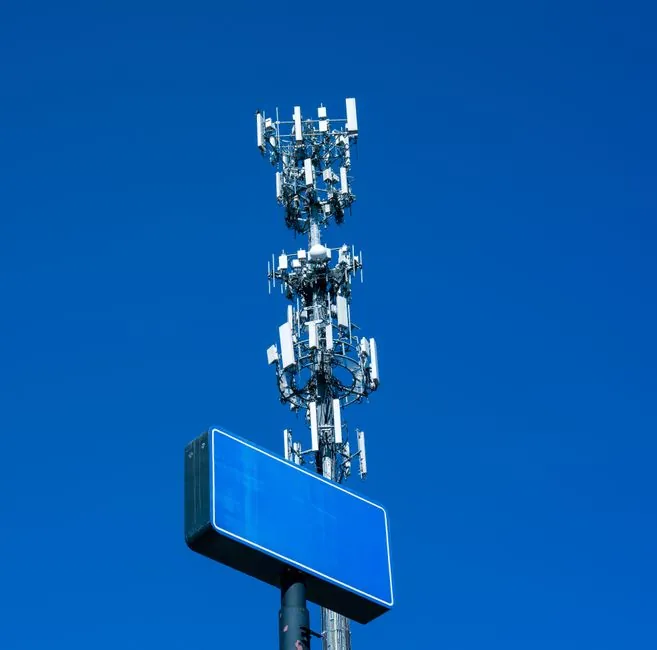
LED signal tower lights provide compact, low-maintenance machine-state indication, with one documented MT51 model rated IP65, powered by DC24V and rated from -30°C to +60°C [S1].
These towers suit production lines, factories and automation systems where operators need to recognize running, stopped, warning and fault conditions at a glance [S1][S4].
Define the signal tower light and its operating role
A signal tower light, also called an industrial tower light or stack light, indicates machine status through colored light and can add flashing, sound or simulated motion to distinguish operating states [S1][S4].
The basic signal methods are steady illumination for a stable condition, flashing for attention, an audible alarm for conditions requiring response, and rotating or simulated motion [S5]. A steady segment provides the visual anchor for normal operation, while flash speed and tone must be assigned distinct, documented meanings [S5].
LED signal towers are suited to production lines, automotive and electronics plants, and other automation environments [S1][S4]. They are not a universal replacement for every alarm system: visual status indication still requires site-specific definitions, operator training and line-of-sight checks.
Compare LED, incandescent and hybrid tower technologies
The same LED architecture also replaces frequent bulb changes with a more durable light source, making it the practical choice for continuous-duty status indication.
Compared with LED-based tower lights, incandescent bulbs need to be replaced often and are thought to be less energy efficient [S7].
Hybrid towers combine LED and incandescent sections. They can fit an established legacy color scheme, but they retain bulb-failure and replacement disadvantages wherever an incandescent segment remains. For a new installation, the decision criteria are maintenance exposure, vibration, environmental protection, available space and whether existing infrastructure requires legacy segments.
Select protection, power and acoustic performance
Environmental protection is a procurement threshold, not a cosmetic preference. The documented Patlite MT51 has an IP65 rating for dust and water resistance and operates from -30°C to +60°C [S1].
Audible output must be matched to the environment rather than maximized. Sound should remain reserved for conditions that justify immediate intervention, because excessive or indiscriminate alarms train operators to ignore them [S5].
Programmable settings and control-system connectivity are available in modern tower designs [S8]. These functions suit line builders that need machine-state integration, but a simple fixed-color tower remains easier to commission and less dependent on control logic. The signal conditioner and signal isolator pages provide adjacent controls-engineering references when a tower is driven through conditioned or isolated electrical interfaces.
Apply human factors before adding more colors
Color is useful only when the signal set remains understandable. Approximately 8% of men are colorblind, so a multi-color tower can be ineffective or dangerous for part of the workforce [S5]. The engineering rule is direct: define a limited color set, distinguish flash rates, document every state and train operators against that same scheme.
Complex or inconsistent indications cause slower reactions and confusion, particularly when every production line uses a different pattern [S5]. For facilities handling colored status devices alongside local controls, the pushbutton pilot light reference helps distinguish a compact panel-mounted indicator from a tower-style machine-status assembly.
Audible and visual signals should complement one another rather than duplicate every condition. A steady green state can communicate normal running, a flashing amber segment can indicate a warning, and a flashing red segment plus controlled audible alarm can identify a fault. Exact color assignments must follow the machine risk assessment and site standard, not vendor preference.
Use towers where rapid state recognition adds value
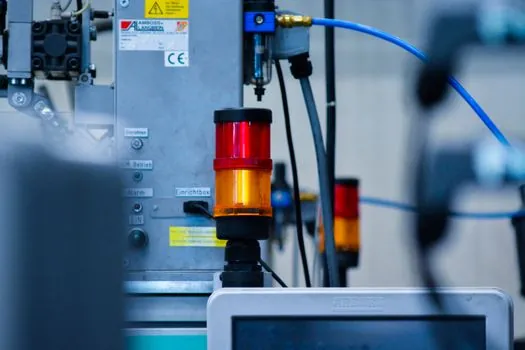
Stack lights are effective on production cells where supervisors cannot monitor every HMI and operators may face background noise, moving equipment or obstructed sightlines [S5]. Consistent towers support faster recognition of stopped machinery, warnings and faults across a production line [S6].
Extra colors and new patterns can create confusion, and colorblind operators may find multiple-colored signals ineffective or even dangerous [S5]. The correct quantity of segments follows the number of states operators must distinguish, not the number of colors available.
For local maintenance reference, the Signal Tower Light Types and Classification Guide organizes tower configurations for readers comparing fixed, audible and machine-status variants.
Account for failure modes and lifecycle constraints
LEDs solve bulb-burnout exposure but do not eliminate the need for environmental verification. Condensation, washdown, dust, temperature extremes and wind-driven water can defeat an enclosure rating that does not match the installation location [S1]. Mounting position and orientation also determine whether operators can see the active segment from the working area.
Incandescent towers carry frequent bulb replacement, higher energy use and greater fragility under continuous use [S5][S7]. LED towers reduce those issues, yet failures can still occur at connectors, internal drives or sealed lenses. Preventive inspection should therefore cover lens condition, segment visibility, buzzer audibility, wiring, mounting stability and agreement between displayed and actual machine state.
For exposed or harsh installations, verify the required ingress rating before ordering rather than assuming a general-purpose tower is adequate. The MT51 example demonstrates the decision variables engineers should require in a datasheet: IP65, -30°C to +60°C, DC24V, 98 dB at 0.3 m and a 500 mm lead [S1].
Match the tower to the application and procurement scope
Signal tower lights are best for operators, maintenance technicians and supervisors who need fast visual machine-state recognition from a shared work area [S1][S4]. They are less suitable as the sole alarm channel where color cannot be distinguished, the tower is hidden by machinery, or hazardous-area and hearing-protection requirements make local visual and audible signaling unsuitable.
For simple applications, common tower lights offer very low price and easy availability, but durability and service life trail established premium products [S1]. Higher-cost models can provide brighter output, stable operation, broader model ranges and stronger environmental performance [S1]. Select on total installed value: lamp technology, ingress protection, temperature range, voltage, acoustic output, connector arrangement, available states and maintenance access.
During purchasing review, record the intended color and flash logic, operating voltage, required ingress protection, ambient-temperature limits, audible output test distance, mounting orientation and cable length. A tower that satisfies all 7 records is more defensible than one selected on brightness alone.
Track 3 signals during trial operation: operator recognition time, unscheduled lamp or buzzer replacements, and the number of state assignments that require clarification. These observations expose whether the selected tower is functionally aligned before wider deployment.