
An industrial buzzer can provide audible notification from a DC-powered device, with one cited example powered through 6 V DC.
The main choice is between piezoelectric and electromagnetic or electromechanical mechanisms, with selection based on power consumption, acoustic frequency, construction, environmental resistance, and required integration [S1][S2].
What an Industrial Buzzer Does
An industrial buzzer converts an electrical signal into audible output for equipment indication, alarms, timers, printers, computers, and other control products [S1]. The basic two-terminal device is powered from DC, with the positive terminal identified by the “+” mark or longer lead and the negative terminal connected to ground in the cited example [S1].
Buzzer construction is not a single category. The documented buzzer families include electromechanical, piezoelectric, and mechanical types. A buzzer may be an electromechanical, piezoelectric, or mechanical audio-signaling device that converts an electrical signal into sound.
For panel builders, the buzzer is a local output rather than a complete information system. A programmable industrial relay or control panel must still handle the alarm condition, while an HMI panel may provide visual detail and a pushbutton pilot light may provide a parallel status indication.
Piezoelectric and Electromagnetic Compared
Piezo buzzers are described as compact, lightweight, efficient, and low in power consumption.
Piezoelectric units are the stronger fit for compact panels and low-power DC equipment where high efficiency matters. Electromagnetic or mechanical units can suit applications seeking a different tonal character, but the additional electromagnetic and moving-mechanism architecture must be considered against enclosure space and power demand [S1][S2][S3].
Advantages That Matter in Equipment Design

The strongest practical advantages are compact size, low energy demand, and simple electrical integration [S1][S3]. A compact buzzer can add an audible output without the footprint of a full speaker, and piezoelectric efficiency can suit battery-operated or low-power products [S3].
Frequency response and sound-pressure capability make the buzzer more useful than a visual-only indication when operators must hear a machine state from outside the operator’s normal line of sight [S1].
A useful engineering interpretation is simple integration: DC power and a controlled electrical input replace a separate audio amplifier and loudspeaker.
Disadvantages and Failure Modes
The primary disadvantage is constrained acoustic output and tonal flexibility compared with a full audio transducer or speaker. The cited magnetic comparison notes disadvantages for both indicators and transducers, including the inability to select certain operating characteristics freely when using fixed-purpose devices [S2]. A buzzer should therefore be treated as a signaling component, not as a general-purpose sound system.
Environmental limits are equally important. Electromagnetic mechanisms also contain a coil and moving diaphragm, making mechanical life and mounting stability relevant. Piezo units avoid the same moving armature arrangement but still require controlled mounting and resonant clearance.
Application Fit and Exclusions
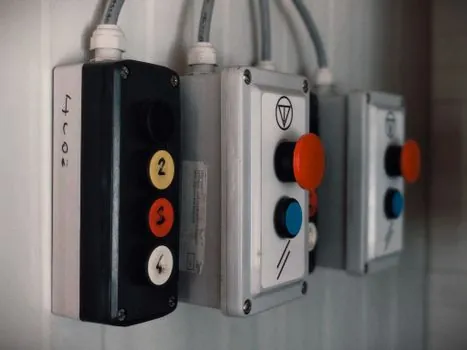
Industrial buzzers fit compact control cabinets, operator stations, equipment alarms, printer notifications, computer equipment, and timer products [S1]. They are particularly useful where an audible prompt must remain distinct from normal equipment noise but does not require speech, music, or adjustable audio content.
They are not the right primary interface where operators need to hear a spoken fault description, distinguish multiple detailed messages, or adjust volume across a wide acoustic environment. They are also a weak substitute for redundant visual indication in areas where hearing loss, hearing protection, high ambient noise, or remote observation makes an audible signal unreliable.
For a larger warning system, an industrial display can carry text or diagnostic details, while a buzzer supplies the immediate local prompt. That division of responsibility is more reliable than encoding every alarm condition into a different fixed tone, particularly when the product list does not establish user-programmable tone selection [S2].
Selection Criteria and Sourcing Requirements
Specify at least 6 criteria: operating voltage, supply current, acoustic frequency, sound-pressure level, operating temperature, and acoustic test distance. The reference example provides 3–24 V DC, below 15 mA, 3.3 kHz, 85 dBA at 10 cm, and −20 °C to +60 °C [S1]. These values create a concrete initial screening point for an industrial buzzer procurement specification.
Next, confirm whether the device needs a built-in oscillator and driving circuit. Piezo and magnetic products differ in their drive arrangements, and the comparison material specifically identifies a built-in driving circuit as a relevant feature and limitation [S2]. If the product page does not state the drive architecture, the buyer should request the circuit diagram, maximum input current, and recommended drive waveform before release.
No named IEC, ISO, ATEX, IECEx, UL, or NEMA certification should be inferred from the generic benefits of buzzers. Hazardous-area, ingress-protection, EMC, and acoustic-performance claims require product-specific documentation. Likewise, the 85 dBA figure is tied to 10 cm and must not be substituted for a field sound-pressure claim without acoustic testing.
For installation planning, define the mounting surface, sound direction, enclosure material, ambient noise level, and required warning distance before ordering. A buzzer drawing rated 85 dBA at 10 cm [S1] may perform differently after enclosure reflection, obstruction, aging, or the presence of machinery noise.
Track the exact operating voltage, current, frequency, temperature range, and measured sound-pressure level for every approved model, then request the drive circuit and environmental approvals before production release.