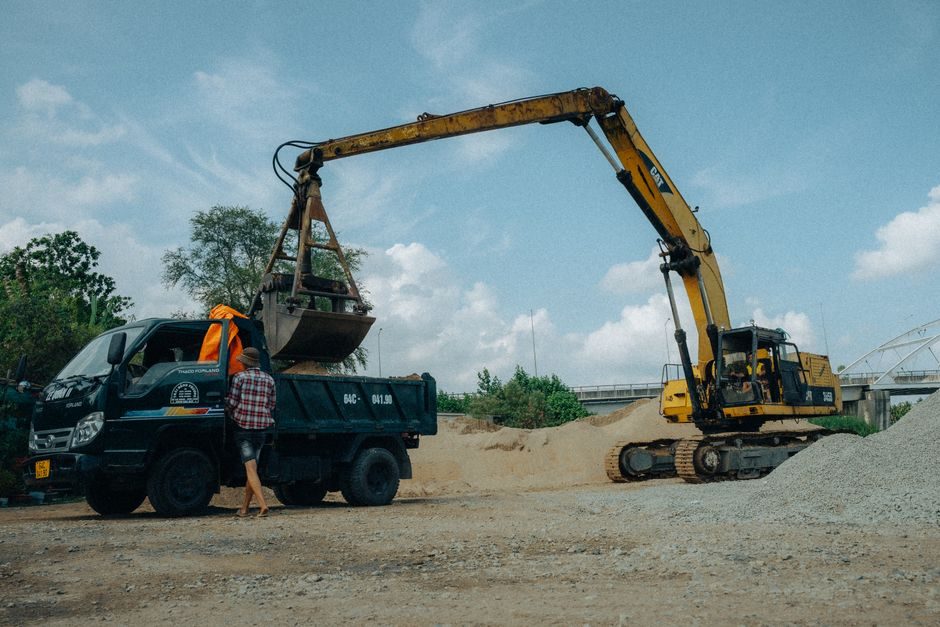
On 2026-04-07 Made-in-China listings, factory-grade 1-2 t mini hydraulic crawler excavators with CE/EPA/Euro 5 engine packages opened at US$1,000-2,000 per unit, FOB terms, with free shipping quoted on the headline SKU [S3]. The same listing window puts a typical mid-class 20-30 t new crawler at a price band several multiples above the micro class, while dealer-listed used units of the same tonnage cluster at roughly one-third of new pricing [S2].
For a 2026 buyer the practical decision is not "excavator vs not" but which combination of operating weight, engine-emission tier, brand-OEM vs China-domestic, and new vs used fits the job. The four reference sources used in this guide span factory pricing, dealer used stock, OEM-branded wholesale and spare-part cost [S1][S2][S3][S4]. Tonnage and emission class move the headline number more than any other specification, and the spread inside each class is wider than most first-time buyers expect.
Price bands by tonnage class on 2026 listings
Factory listings from 2026-04-07 place a 1 t micro crawler (CE/EPA/Euro 5, hydraulic pilot) in a US$1,000-2,000 FOB band, with the 2 t sibling in the same listing window [S3]. A Hitachi-branded new-build enquiry page on 2026-04-27 surfaces factory wholesale and OEM sourcing options for mid- and large-class Hitachi units, with price quoted on application rather than as a fixed SKU [S1].
Used Japanese-brand 20-30 t crawler stock (Caterpillar, Komatsu, Hitachi, Volvo) clears at low price points on a 2026-06-30 dealer inventory pull, framed explicitly as a cost-down alternative to a new equivalent [S2]. Reading the two windows together, expect roughly a 3:1 ratio between a factory-new 20 t machine and a same-class used unit, before freight, duties and refurbishment are added.
New vs used: the real cost math
Used excavator stock on 2026-06-30 dealer pages is positioned for buyers who can absorb a wear-factor risk in exchange for capital cost: typical entries cover machines from Caterpillar, Komatsu, Hitachi and Volvo, with no fixed per-unit price visible on the index page and condition-based quote requests [S2]. A new factory unit at 1-2 t carries a published US$1,000-2,000 headline because the build is highly commoditised and the engine is a mass-produced Chinese diesel [S3].
Total cost of ownership breaks into four buckets: acquisition (FOB price + freight + duty), commissioning (attachments, hydraulic lines, GPS), operating (fuel, AdBlue if Euro 5/V, filters), and overhaul (undercarriage, swing bearing, final drives). On 20-30 t used stock the first bucket shrinks, but the fourth bucket widens because undercarriage life on a 5,000-8,000 h machine is often the binding constraint. Buyers who skip a borescope inspection of the swing bearing typically discover that cost in year two.
Spec levers that move the price
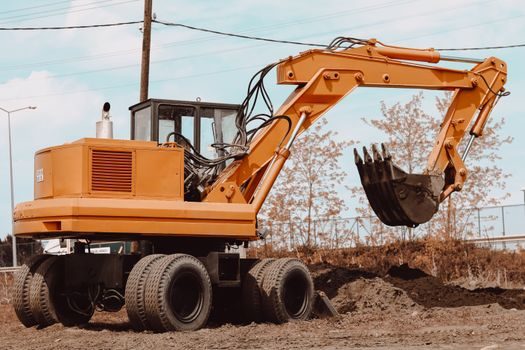
Four specifications dominate the spread inside a tonnage class: engine emission tier (Euro 5 / EPA Tier 4 Final vs unregulated Stage II / Tier 3), hydraulic system architecture (load-sensing pilot vs open-centre), undercarriage build (mass-produced vs reinforced), and cab spec (open ROPS vs enclosed A/C). The micro 1-2 t listings on 2026-04-07 explicitly badge CE, EPA and Euro 5 as headline features, which is the only way a China-factory 1 t digger can be exported to both the EU and North America [S3].
A higher emission tier alone can add a double-digit percentage to a factory quote, driven by the aftertreatment package (DOC + DPF + SCR with AdBlue dosing for the heavier diesel classes). Hydraulic pilot control, almost standard on 5 t+ units by 2026, is still a line-item option on the micro class. A buyer comparing two 22 t quotes that differ by 12% should first check whether both are Stage V / Tier 4 Final, then whether both run load-sensing hydraulics, before negotiating the headline number.
OEM brand vs China-domestic sourcing
Hitachi factory-source enquiries on 2026-04-27 are framed around OEM and wholesale channels, with a price-on-application model rather than a published SKU [S1]. Carter (a brand commonly associated with Chinese OEM packaging on Alibaba) shows up on 2026-06-12 Alibaba listing pages under "Construction & Building Machinery" with its own quality/efficiency framing [S5]. Made-in-China.com aggregates both OEM-branded wholesale and China-domestic factory options in the same crawler category [S3].
For a fleet owner with an existing service contract and telematics stack, OEM-brand premium is justified by parts commonality, dealer coverage and residual value. For a contractor buying a single 1-2 t unit for site clearing, the China-domestic factory line at US$1,000-2,000 FOB is the rational pick, because the brand premium buys nothing the operator can monetise [S3]. The same logic inverts at 20 t and above, where residual value and after-sales network start to dominate the lifecycle cost calculation.
Spare-part cost as a hidden price driver
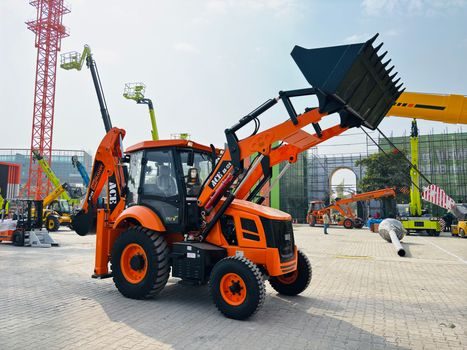
Excavator spare-part listings on 2026-05-21 Made-in-China.com carry XCMG-official truck-crane, excavator, loader and road-roller SKUs together, signalling that the genuine-parts channel in China bundles part numbers across machine types from a single OEM family [S4]. For a non-OEM buyer the question is whether the chosen machine's wear parts (bucket teeth, track shoes, idlers, filters, hydraulic hoses) are cross-compatible with a stocked genuine-parts line or only available on long lead time.
A pragmatic rule: a unit whose wear parts are stocked on the same platform as a major China-domestic OEM (XCMG, SANY, LiuGong, SDLG) will out-price an equivalent unit from a smaller or rebadged maker on a 5-year total cost basis, even if the acquisition cost is identical. Genuine-part lead time in inland markets has been a binding constraint in 2025-2026 for several smaller brands, and that risk does not show up in the FOB quote.
Comparison: spec criteria across the main price tiers
Four reference price points from the 2026 sources line up against the four spec criteria that matter to a buyer: micro 1-2 t new factory at US$1,000-2,000 FOB (low tonnage, low emission, no brand premium) [S3]; mid-class Hitachi OEM-sourced unit on price-on-application (mid tonnage, brand premium, dealer coverage) [S1]; used 20-30 t Japanese-brand dealer stock (mid tonnage, no emission warranty, condition risk) [S2]; and spare-parts line at OEM-bundled pricing (XCMG family, multi-machine cross-stock) [S4].
On the four criteria - acquisition cost, emission compliance, parts commonality, residual value - the micro 1-2 t wins on acquisition, the used 20-30 t wins on capex per ton of digging capacity, the Hitachi OEM line wins on parts commonality and residual value, and the XCMG-family parts line wins on wear-part availability across an existing fleet. No single tier wins on all four, which is why fleet managers typically run a mixed fleet rather than standardising on one.
Use cases and limits of the cheap end
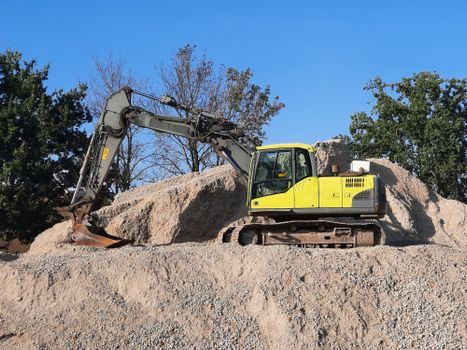
A US$1,000-2,000 FOB 1-2 t micro excavator on 2026-04-07 listings is a credible tool for landscaping, trenching on soft ground, small demolition and rental fleets in regions with relaxed emission rules [S3]. It is not a credible tool for deep utility trench in hard ground, for highway-class production digging, or for any job site in the EU / California / China urban areas where Stage V / Tier 4 Final is enforced.
Used 20-30 t dealer stock from 2026-06-30 is a credible tool for bulk earthworks on short contract windows, but the buyer must price in a borescope, an undercarriage measurement and a hydraulic-pressure test, or budget a 10-15% contingency for year-one repairs [S2]. The same advice applies to OEM-brand factory-sourced new units: the FOB quote is the start of the cost, not the end of it [S1].
Track the XCMG-family genuine-parts lead time and any 2026-Q3 emissions-related export controls out of China for the under-3.5 t diesel band; both will move the headline price of the micro 1-2 t class faster than steel or freight indices. Also track the 2026-H2 used 20-30 t dealer inventory depth, because the spread between Japanese-brand used and China-domestic new has been narrowing through 2025-2026 as new-factory capacity has caught up.
For related coverage, see Plug Valve 2026 Price & Cost Guide: Body, Lining and Sourcing Levers.